
BuddhistCatholicContemplativeEvangelicalGeneral ChristianHinduJewishLatter-day SaintMuslimNew VisionsProgressive Christian
Beliefs
- Buddhist
- Catholic
- Contemplative
- Evangelical
- General Christian
- Hindu
- Jewish
- Latter-day Saint
- More Voices
- Muslim
- New Visions
- Pagan
- Progressive Christian
Topics
- Religion News
- Food and Religion
- Sports and Religion
- Religious Art
- Religious Music and Entertainment
- Religious Events
- History and Religion
- Style and Religion
- Politics and Religion
- Women in Religion
- Recreation Outdoors and Religion
- Business Finance and Religion
- Careers Workplace and Religion
- Education and Religion
- Family Parenting and Religion
- Health Fitness and Religion
- Home and Religion
- Relationships and Religion
- Technology and Religion
- Travel and Religion
Columnists
- Buddhist Columnists
- Business Finance and Religion Columnists
- Careers Workplace and Religion Columnists
- Catholic Columnists
- Contemplative Columnists
- Education and Religion Columnists
- Evangelists Columnists
- Family Parenting and Religion Columnists
- General Christian Columnists
- Health Fitness and Religion Columnists
- Hindu Columnists
- History and Religion Columnists
- Home and Religion Columnists
- Jewish Columnists
- More Voices Columnists
- Latter Day Columnists
- Muslim Columnists
- New Visions Columnists
- Nonreligious Columnists
- Pagan Columnists
- Politics and Religion Columnists
- Progressive Columnists
- Recreation Outdoors and Religion Columnists
- Relationships and Religion Columnists
- Religion News Columnists
- Religious Art Columnists
- Religious Events Columnists
- Religious Music and Entertainment Columnists
- Sports and Religion Columnists
- Style and Religion Columnists
- Technology and Religion Columnists
- Travel and Religion Columnists
- Women in Religion Columnists
Resource Library
- 2026 Calendar
- Library of World Religions
- The 100 Most Holy Places on Earth
- Patheos Answers
- Podcasts
- Videos
- Faith Leaders Database
- Anglican Episcopalian
- Bahai
- Baptist
- Buddhism
- Christianity
- Confucianism
- Eastern Orthodoxy
- Hinduism
- Holiness and Pentecostal
- ISKCON
- Islam
- Judaism
- Lutheran
- Methodist
- The Church of Jesus Christ of Latter-day Saints
- New Age
- Paganism
- Presbytarian and Reformed
- Protestantism
- Religion Behind the Scenes
- Roman Catholic
- Scientology
- Shia Islam
- Sikhism
- Sufism
- Sunni Islam
- Taoism
- Zen
- See all religions
Research Tools
 Ad-Free & Subscriber Log-In Subscription Support
Ad-Free & Subscriber Log-In Subscription Support
Follow Patheos 

- Trending:
- Forgiveness
- |
- Marriage
- |
- Consciousness
- |
- Death Penalty
- |
- Election
- |
- Halloween
Patheos answers the question:
Why Do Christians Celebrate Christmas?
by Kathleen Mulhern, Ph.D.
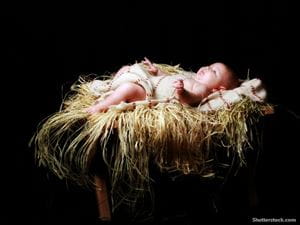
For Christians, Christmas is the celebration of the birth of Jesus Christ. The feast's original name was “Christ Mass,” or the celebration of the Christ. “Christ” is the Greek word that translates the Hebrew word “Messiah.” Thus, Christmas is a celebration of the coming of the Messiah, the birth of the one who would save the world. This brings such a spirit of hope to Christians that celebrating this event is always joyous.
While Christmas Day is recognized on 25 December each year, this was an intentional choice by the ancient church. Because of references to the story in scripture that talk about shepherds in the fields, which is more commonly a spring activity, it is unlikely that he was actually born on 25 December. The early church chose 25 December in part because it was close to the winter solstice, which is the point in the northern hemisphere when the darkness begins to give way to the light.
When Christians talk about the birth of Jesus, they remember his humble beginnings. He was not born as a king in a palace or born with great human fanfare. Rather, he was born to a peasant girl, Mary, who was traveling with her husband, Joseph, far from home. The only place they could find to stay was in a stable.
Despite these circumstances, the young family was not alone. The Bible says that upon his birth, angels showed up to some shepherds tending their flocks in the fields. They announced to them the good news (“gospel”), the wonderful message that Christ the Lord had been born. The shepherds rushed to Bethlehem, found the baby, and told Mary and Joseph about the angelic visitation (Luke 2.1-20). This scene—Mary, Joseph, the newborn infant, and the shepherds, along with a variety of animals that might have been in a stable—comprises the nativity scene, or crêche, that many families have in their homes. Sometimes these scenes include the magi—astrologers or wise men who, having seen a brilliant star, understood it to be a sign of a great king being born. They journeyed to Bethlehem as well, offering gifts of gold, frankincense, and myrrh to the child (Matthew 2.1-12).
The real mystery of Christmas, however, is not just the birth of a hero, but, according to Christians, the birth of God himself as a human being. This concept is called the Incarnation. Scripture teaches that Mary was a virgin, and that Jesus would be conceived within her by an action of the Holy Spirit, and that therefore the child would be holy, divine (Luke 1.26-38). Another name for Jesus is Immanuel, which means “God with us” (Matthew 1.18-25). So for Christians, Christmas Day is a day to remember, celebrate, and rekindle hope in the kindness of God who became a man to save the world. Jesus was fully human, born as a baby, but also fully divine, born of God. His life begins like any other human life, as a helpless infant, but Christmas initiates the events that would lead to the adult Jesus dying on the cross, making reconciliation with God possible, and then, after three days, rising from the dead to vanquish all death.
Today, Christmas has become fully commercialized in ways that make the most secular, or even those of other faiths, comfortable celebrating it. It is often presented as a holiday of good cheer, celebration of families and gift-giving, friendship, and general goodwill toward everyone. Christmas trees, many-colored lights, festive songs and carols, brightly wrapped gifts, eggnog, and Santa Claus have taken over the holiday in many ways. Christians enjoy these traditions as well, but they also strive to remember the events that lie at the heart of the holiday—the birth of their Lord and Savior, Jesus Christ.
Read more about Christians and their beliefs about Jesus here.
6/6/2025 9:13:58 PM
About About Kathleen Mulhern, Ph.D.
Kathleen Mulhern is a writer, editor, historian, speaker, and professor. She teaches courses in world history, European history, and history of Christianity. She has taught at Colorado School of Mines and Regis University, and is currently an adjunct professor at Denver Seminary in the areas of Church History and Spiritual Formation. Kathleen graduated with a B.A. from Wheaton College, earned an M.A. in French Literature from the University of Denver, an M.A. degree in Church History from Denver Seminary, and a Ph.D. in History from the University of Colorado.
More From Patheos About Christmas
What Is The True Meaning Of Christmas?
The Story of the Birth of Jesus in the Bible
How Did We Get Our Christmas Traditions?
Why the Details of Jesus' Birth Don't Matter
What Mary Knew
Most Popular

Evangelical
The REST of Your Life: A Creative Wrestles With Sabbath

#107: Cast of Character(s): This Weeks Episode of The...
Progressive Christian
BONUS SHOW: Autism and RFK Jr.'s Cameo

57th Dove Awards Honor Dolly Parton, Crown New Voices

General Christian
A Biblical Vision of Success in Christian Life and...

General Christian
What a Stop Sign Can Teach Us About God’s Will

Catholic

The Real AI Story Is Adoption Without Trust

The First Eucharistic Controversy: Christ’s Real Presence

General Christian
Archdiocese Hosts Military Marriage Retreat in Germany

Catholic
Swimfan: Forgotten Aughts Pleasures

Catholic
Top Three Anti-Catholic Lies About Catholicism
Patheos Explore the world's faith through different perspectives on religion and spirituality! Patheos has the views of the prevalent religions and spiritualities of the world.
Ad-Free & Subscriber Log-In Subscription Support
- About Us
- 2026 Calendar
- Videos
- Podcasts
- Library of World Religions
- Faith In Media Tracker
- Advertise With Us
- Write for Us
- Privacy Policy
- Terms of Service
- Do Not Sell My Data
- Contact Us
- Radiant Digital
- Manage Newsletter Subscriptions
- Unsubscribe From Notifications
- Sitemap
Copyright 2008-2026, Patheos. All rights reserved.
Subscription Support Ad-Free & Subscriber Log-In
Follow Patheos