
BuddhistCatholicContemplativeEvangelicalGeneral ChristianHinduJewishLatter-day SaintMuslimNew VisionsProgressive Christian
Beliefs
- Buddhist
- Catholic
- Contemplative
- Evangelical
- General Christian
- Hindu
- Jewish
- Latter-day Saint
- More Voices
- Muslim
- New Visions
- Pagan
- Progressive Christian
Topics
- Religion News
- Food and Religion
- Sports and Religion
- Religious Art
- Religious Music and Entertainment
- Religious Events
- History and Religion
- Style and Religion
- Politics and Religion
- Women in Religion
- Recreation Outdoors and Religion
- Business Finance and Religion
- Careers Workplace and Religion
- Education and Religion
- Family Parenting and Religion
- Health Fitness and Religion
- Home and Religion
- Relationships and Religion
- Technology and Religion
- Travel and Religion
Columnists
- Buddhist Columnists
- Business Finance and Religion Columnists
- Careers Workplace and Religion Columnists
- Catholic Columnists
- Contemplative Columnists
- Education and Religion Columnists
- Evangelists Columnists
- Family Parenting and Religion Columnists
- General Christian Columnists
- Health Fitness and Religion Columnists
- Hindu Columnists
- History and Religion Columnists
- Home and Religion Columnists
- Jewish Columnists
- More Voices Columnists
- Latter Day Columnists
- Muslim Columnists
- New Visions Columnists
- Nonreligious Columnists
- Pagan Columnists
- Politics and Religion Columnists
- Progressive Columnists
- Recreation Outdoors and Religion Columnists
- Relationships and Religion Columnists
- Religion News Columnists
- Religious Art Columnists
- Religious Events Columnists
- Religious Music and Entertainment Columnists
- Sports and Religion Columnists
- Style and Religion Columnists
- Technology and Religion Columnists
- Travel and Religion Columnists
- Women in Religion Columnists
Resource Library
- 2026 Calendar
- Library of World Religions
- The 100 Most Holy Places on Earth
- Patheos Answers
- Podcasts
- Videos
- Faith Leaders Database
- Anglican Episcopalian
- Bahai
- Baptist
- Buddhism
- Christianity
- Confucianism
- Eastern Orthodoxy
- Hinduism
- Holiness and Pentecostal
- ISKCON
- Islam
- Judaism
- Lutheran
- Methodist
- The Church of Jesus Christ of Latter-day Saints
- New Age
- Paganism
- Presbytarian and Reformed
- Protestantism
- Religion Behind the Scenes
- Roman Catholic
- Scientology
- Shia Islam
- Sikhism
- Sufism
- Sunni Islam
- Taoism
- Zen
- See all religions
Research Tools
 Ad-Free & Subscriber Log-In Subscription Support
Follow Patheos 

- Trending:
- Advent
- |
- Forgiveness
- |
- Thanksgiving
- |
- Election
- |
- Seasonal Holidays
- |
- Marriage
Patheos answers the question:
Why Do Catholics Confess to Priests Rather Than Right to God?
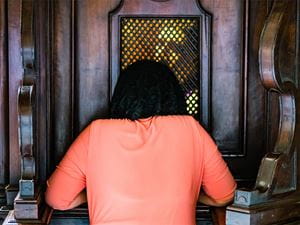
Shutterstock.com
The practice of Catholic confession can be a mystery to people outside the Roman Catholic Church. While most can understand the feelings of guilt or shame that can come with bad behavior, they cannot understand how or why telling a priest about this would be necessary or helpful. Christians outside of the Roman Catholic Church find private confession directly to God more logical and meaningful.
The first way to explore this is to understand what the Church teaches about sin, which is something much deeper than moral infractions. According to the Church, sin is a rejection of God and a brokenness within the soul that needs mending. Thus, dealing with sin in the life of a believer is not just about ridding oneself of the shadow of personal mistakes; it is an act of reconciliation with God and a healing. The Church teaches that priests are mediators who are authorized to provide this reconciliation and make possible the healing. According to the Catechism, “the priest is the sign and the instrument of God’s merciful love for the sinner.”
This act is formalized in the Sacrament of Penance and Reconciliation, by which the repenting sinner returns to God and is restored to right relationship with God and with the Church. Catholics teach that confession to a priest is essential because it offers the sinner a way to be fully honest about his or her sins and to receive fully the forgiveness offered by God. Regular confession disciplines the believer to understand evil tendencies in the heart and to recognize the offer of grace that God provides through the Church.
In the Catholic Church, bishops serve as the successors to the apostles and priests are their partners in the apostolic ministry. The apostles were sent out by Christ to heal and to set people free from evil, and thus priests represent this healing and restoring act of Christ. After the resurrection, Jesus gave the apostles the Holy Spirit and taught them that they were to exercise the power of forgiveness (John 20.22-23). The priest does not impart forgiveness, or absolution, by his own power, but as a servant of Jesus Christ.
As the priest listens to confessions, he guides sinners toward true repentance, assures them of God’s mercy, and leads them to new ways of living that honor God and the Christian community. This guidance also involves the imposition of penance, which usually requires, if possible, repairing the harm done to anyone and doing something further to make amends for the sin. This could involve saying certain prayers, taking on a practice of fasting for a time, serving a neighbor, or volunteering at a charity.
Confession to a priest is always necessary for anyone who has committed a mortal sin, that is, a sin that is a grave offense against the life of God in us and that can lead to damnation. Venial sins—those offenses against God and neighbor that can wound, but not kill, these relationships—should also be confessed regularly. The priest has the power to guide the sinner in understanding the difference and in receiving the new life offered through the Holy Spirit.
Read more about Roman Catholic sacraments here.
3/23/2021 6:32:41 PM

About About Kathleen Mulhern, Ph.D
Kathleen Mulhern is a writer, editor, historian, speaker, and professor. She teaches courses in world history, European history, and history of Christianity. She has taught at Colorado School of Mines and Regis University, and is currently an adjunct professor at Denver Seminary in the areas of Church History and Spiritual Formation. Kathleen graduated with a B.A. from Wheaton College, earned an M.A. in French Literature from the University of Denver, an M.A. degree in Church History from Denver Seminary, and a Ph.D. in History from the University of Colorado.
More From Patheos About Catholic Confession
The 7 Types of Catholic Confessions
Why Bother Going To Confession?
Ten Things Every Catholic Should Know About Confession
Confession: Strength through Humility
How First Confession Blew My Mind
Why Is Confession Necessary If We’re Already Forgiven?
Most Popular
Evangelical
Ghosts, Spirits, and Wizards in Post-Puritan New England
Progressive Christian
The Secret behind A Charlie Brown Thanksgiving

Latter-day Saint
Catholic
Book III, Chapter 3: Christ "Classic" (Matt. 9:9-34)

Catholic
Peggy Sue Got Married: Coppola’s Always Been Like This

Progressive Christian
Psalm 64 for When Slander Hits From the Shadows

Catholic
Catholic

Progressive Christian
Bridging the Gap Between God and Man

Catholic
When Worry Gets You Nowhere, How Can Faith Help You?
God and the Contingency of This World
Patheos Explore the world's faith through different perspectives on religion and spirituality! Patheos has the views of the prevalent religions and spiritualities of the world.
Ad-Free & Subscriber Log-In Subscription Support
- About Us
- 2026 Calendar
- Videos
- Podcasts
- Library of World Religions
- Faith In Media Tracker
- Advertise With Us
- Write for Us
- Privacy Policy
- Terms of Service
- Do Not Sell My Data
- Contact Us
- Radiant Digital
- Manage Newsletter Subscriptions
- Unsubscribe From Notifications
- Sitemap
Copyright 2008-2026, Patheos, part of the Radiant Digital network of media brands. All rights reserved.
Subscription Support Ad-Free & Subscriber Log-In
Follow Patheos