
BuddhistCatholicContemplativeEvangelicalGeneral ChristianHinduJewishLatter-day SaintMuslimNew VisionsProgressive Christian
Beliefs
- Buddhist
- Catholic
- Contemplative
- Evangelical
- General Christian
- Hindu
- Jewish
- Latter-day Saint
- More Voices
- Muslim
- New Visions
- Pagan
- Progressive Christian
Topics
- Religion News
- Food and Religion
- Sports and Religion
- Religious Art
- Religious Music and Entertainment
- Religious Events
- History and Religion
- Style and Religion
- Politics and Religion
- Women in Religion
- Recreation Outdoors and Religion
- Business Finance and Religion
- Careers Workplace and Religion
- Education and Religion
- Family Parenting and Religion
- Health Fitness and Religion
- Home and Religion
- Relationships and Religion
- Technology and Religion
- Travel and Religion
Columnists
- Buddhist Columnists
- Business Finance and Religion Columnists
- Careers Workplace and Religion Columnists
- Catholic Columnists
- Contemplative Columnists
- Education and Religion Columnists
- Evangelists Columnists
- Family Parenting and Religion Columnists
- General Christian Columnists
- Health Fitness and Religion Columnists
- Hindu Columnists
- History and Religion Columnists
- Home and Religion Columnists
- Jewish Columnists
- More Voices Columnists
- Latter Day Columnists
- Muslim Columnists
- New Visions Columnists
- Nonreligious Columnists
- Pagan Columnists
- Politics and Religion Columnists
- Progressive Columnists
- Recreation Outdoors and Religion Columnists
- Relationships and Religion Columnists
- Religion News Columnists
- Religious Art Columnists
- Religious Events Columnists
- Religious Music and Entertainment Columnists
- Sports and Religion Columnists
- Style and Religion Columnists
- Technology and Religion Columnists
- Travel and Religion Columnists
- Women in Religion Columnists
Resource Library
- 2026 Calendar
- Library of World Religions
- The 100 Most Holy Places on Earth
- Patheos Answers
- Podcasts
- Videos
- Faith Leaders Database
- Anglican Episcopalian
- Bahai
- Baptist
- Buddhism
- Christianity
- Confucianism
- Eastern Orthodoxy
- Hinduism
- Holiness and Pentecostal
- ISKCON
- Islam
- Judaism
- Lutheran
- Methodist
- The Church of Jesus Christ of Latter-day Saints
- New Age
- Paganism
- Presbytarian and Reformed
- Protestantism
- Religion Behind the Scenes
- Roman Catholic
- Scientology
- Shia Islam
- Sikhism
- Sufism
- Sunni Islam
- Taoism
- Zen
- See all religions
Research Tools
 Ad-Free & Subscriber Log-In Subscription Support
Ad-Free & Subscriber Log-In Subscription Support
Follow Patheos 

- Trending:
- Forgiveness
- |
- Marriage
- |
- Consciousness
- |
- Death Penalty
- |
- Election
- |
- Halloween
Patheos answers the question:
Who Are the Hindu Gods and Goddesses?
by Kathleen Mulhern, PH.D.
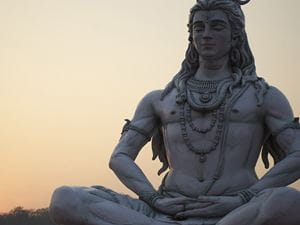
Shutterstock.com
Hinduism is an ancient religion that recognizes a vast diversity of Hindu gods and goddesses while also believing that a divine principle or essence runs through all things. Most Hindu scriptures, especially The Vedas, that talk about the origins of existence begin with Brahman, who is the divine life source, universal reality itself pervading all things. Brahman is the cosmic principle of life and existence. Before Brahman, there was nothing, and from Brahman comes the existence of all Hindu gods and goddesses.
While some say that there are over 300 million different Hindu gods and goddesses, there are three central divinities that garner the most devotion: Brahma (not to be confused with Brahman), Vishnu, and Shiva. These three are sometimes referred to as the Hindu trinity, or trimurti. Some others argue that in truth Hinduism is monotheistic—that there is only one god and all these millions of other deities are merely manifestations of the one. Those Hindus who believe that all the gods and goddesses are manifestations of one see them as expressions of Brahman, pure divine essence.
Brahma is called the god of creation. When Vishnu first appeared, a lotus grew out of his belly, and in the lotus was Brahma. Vishnu instructed Brahma to create, and, using the lotus, Brahma created the skies and stars and earth, and then populated earth with all creatures.
Vishnu is called the preserver god, the one who stabilizes the world and protects it from chaos. In the Puranas, another body of Hindu sacred texts, Vishnu is deeply involved with the human world and has many different incarnations called avatars. Krishna and Rama are two of the most well-known, but some Vishnu devotees believe that Gautama Buddha was also an avatar of Vishnu.
Shiva is known as the destroyer, the one who demolishes creation at the end of every cosmic cycle thus allowing for a new creation to arise. These deities also have consorts, goddess wives, who have their own powers and devotees. One of Shiva’s consorts, Parvati, bore him a son who, after some misadventures, was given an elephant’s head, thus becoming the elephant-headed god Ganesha, popular among many Hindus.
Each of these gods can also take many different forms. Families can choose a particular god, an Ishta Devata, for their family’s spiritual practices. Local or regional pieties can have specific adaptations or manifestations of a god. Hinduism can thus be divided into major sects according to the devotees of each of these gods.
Hinduism, then, is a broad umbrella of religious beliefs with a dizzying diversity of traditions and practices. Many overlap, but there is no single system of beliefs or practices that can define Hindu devotion or theology. The different traditions, however, all share a similar worldview, one that accepts an endless cycle of rebirth (samsara), that operates within an inescapable law of cause and effect (karma), and that believes individual thoughts and actions determine present existence and all future rebirths. They also all anticipate an ultimate escape from samsara and the absorption of the self, the atman, into its source, Brahman.
Learn more about the Hindu trinity here.
3/27/2021 12:09:18 AM
About About Kathleen Mulhern, PH.D.
Kathleen Mulhern is a writer, editor, historian, speaker, and professor. She teaches courses in world history, European history, and history of Christianity. She has taught at Colorado School of Mines and Regis University, and is currently an adjunct professor at Denver Seminary in the areas of Church History and Spiritual Formation. Kathleen graduated with a B.A. from Wheaton College, earned an M.A. in French Literature from the University of Denver, an M.A. degree in Church History from Denver Seminary, and a Ph.D. in History from the University of Colorado.
More from Patheos about Hindu Gods and Goddesses
In ‘5 facts about religion in India’ Pew misses some crucial ones
Give Ancient People Credit
God Commands Free Will
Most Popular

General Christian
A Biblical Vision of Success in Christian Life and...

General Christian
How to Make a Decision When You Can't Hear God

Catholic

The Real AI Story Is Adoption Without Trust

General Christian
Archdiocese Hosts Military Marriage Retreat in Germany

Catholic
Swimfan: Forgotten Aughts Pleasures

Catholic
Top Three Anti-Catholic Lies About Catholicism

Latter-day Saint

Catholic
Pope Leo Celebrates Mass for Nurses & Docs While in...

Catholic
The Sermon on the Mount, Part I: Matthew 4:12-5:12

Catholic
Janie Learns the Way of the Cross: A Catholic Review

Entertainment
Patheos Explore the world's faith through different perspectives on religion and spirituality! Patheos has the views of the prevalent religions and spiritualities of the world.
Ad-Free & Subscriber Log-In Subscription Support
- About Us
- 2026 Calendar
- Videos
- Podcasts
- Library of World Religions
- Faith In Media Tracker
- Advertise With Us
- Write for Us
- Privacy Policy
- Terms of Service
- Do Not Sell My Data
- Contact Us
- Radiant Digital
- Manage Newsletter Subscriptions
- Unsubscribe From Notifications
- Sitemap
Copyright 2008-2026, Patheos. All rights reserved.
Subscription Support Ad-Free & Subscriber Log-In
Follow Patheos