
BuddhistCatholicContemplativeEvangelicalGeneral ChristianHinduJewishLatter-day SaintMuslimNew VisionsProgressive Christian
Beliefs
- Buddhist
- Catholic
- Contemplative
- Evangelical
- General Christian
- Hindu
- Jewish
- Latter-day Saint
- More Voices
- Muslim
- New Visions
- Pagan
- Progressive Christian
Topics
- Religion News
- Food and Religion
- Sports and Religion
- Religious Art
- Religious Music and Entertainment
- Religious Events
- History and Religion
- Style and Religion
- Politics and Religion
- Women in Religion
- Recreation Outdoors and Religion
- Business Finance and Religion
- Careers Workplace and Religion
- Education and Religion
- Family Parenting and Religion
- Health Fitness and Religion
- Home and Religion
- Relationships and Religion
- Technology and Religion
- Travel and Religion
Columnists
- Buddhist Columnists
- Business Finance and Religion Columnists
- Careers Workplace and Religion Columnists
- Catholic Columnists
- Contemplative Columnists
- Education and Religion Columnists
- Evangelists Columnists
- Family Parenting and Religion Columnists
- General Christian Columnists
- Health Fitness and Religion Columnists
- Hindu Columnists
- History and Religion Columnists
- Home and Religion Columnists
- Jewish Columnists
- More Voices Columnists
- Latter Day Columnists
- Muslim Columnists
- New Visions Columnists
- Nonreligious Columnists
- Pagan Columnists
- Politics and Religion Columnists
- Progressive Columnists
- Recreation Outdoors and Religion Columnists
- Relationships and Religion Columnists
- Religion News Columnists
- Religious Art Columnists
- Religious Events Columnists
- Religious Music and Entertainment Columnists
- Sports and Religion Columnists
- Style and Religion Columnists
- Technology and Religion Columnists
- Travel and Religion Columnists
- Women in Religion Columnists
Resource Library
- 2026 Calendar
- Library of World Religions
- The 100 Most Holy Places on Earth
- Patheos Answers
- Podcasts
- Videos
- Faith Leaders Database
- Anglican Episcopalian
- Bahai
- Baptist
- Buddhism
- Christianity
- Confucianism
- Eastern Orthodoxy
- Hinduism
- Holiness and Pentecostal
- ISKCON
- Islam
- Judaism
- Lutheran
- Methodist
- The Church of Jesus Christ of Latter-day Saints
- New Age
- Paganism
- Presbytarian and Reformed
- Protestantism
- Religion Behind the Scenes
- Roman Catholic
- Scientology
- Shia Islam
- Sikhism
- Sufism
- Sunni Islam
- Taoism
- Zen
- See all religions
Research Tools
 Ad-Free & Subscriber Log-In Subscription Support
Ad-Free & Subscriber Log-In Subscription Support
Follow Patheos 

- Trending:
- Forgiveness
- |
- Marriage
- |
- Consciousness
- |
- Death Penalty
- |
- Election
- |
- Halloween
Patheos answers the question:
What is Wicca?
by Kathleen Mulhern, PH.D.
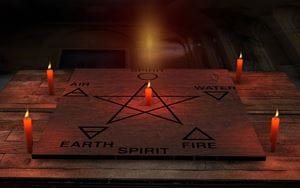
Pixabay.com
Wicca is a modern neo-Pagan religious movement initiated in the early 20th century. It draws on a wide diversity of esoteric traditions, including ancient Celtic lore, theosophical teachings, nature spirituality, and witchcraft. Like most Pagan traditions, Wicca is diverse, without universally embraced or strictly articulated belief systems, sacred narratives, or requisite rituals.
Most Wiccans trace their roots to the work of Gerald Brousseau Gardner (1884-1964), a British author who fashioned a new system of spirituality that reflected both ancient lore and modern sensibilities. Gardner published several essential texts, many of which are central to the practice of many Wiccans. Wicca has grown increasingly popular in the decades since Gardner’s death, though most of its followers are in North America or Europe.
Most Wiccans worship a divine pair, a Goddess (sometimes associated with the moon) and the Great Horned God (Cernunnos or Kernunno), that together express the divine that pervades all Nature. Because this worship includes both the masculine and the feminine aspects of divinity, rituals usually include both a priest and priestess. One of their central rituals is called Drawing Down the Moon, which takes place during a full moon. In a coven (a Wiccan community gathering), the priestess opens herself to be possessed by the moon Goddess, who then speaks to the community prophetically or instructionally. Some Wiccans are solitaries, meaning they associate with no covens. Their practices are not dissimilar to Wiccan communities, but their magical rituals are tailored to their own spiritual experiences and needs.
Wiccans practice “white magic” (or magick), which involves spells and incantations that are meant to heal or benefit the self or others. Wiccans reject any practice of magic that may inflict curses or harm on another, as does “black magic.” Wiccan rituals utilize a variety of implements from nature or the occult—crystals, candles, herbs, incense, and tarot cards. Their major festivals are tied to seasonal changes and together they are sometimes referred to as the Wheel of the Year. They include Imbolc (in early February), Ostara (the Spring equinox), Beltane (in early May), Midsummer (the Summer solstice), Lughnasadh (in early August), Mabon (the Fall equinox), Samhain (Halloween), and Yule (the Winter solstice). Each of these is an opportunity to worship the Horned God and the Goddess, welcome the changes of nature, draw on spiritual powers, and practice healing magic.
Wiccans are known in part for their moral code, referred to by many as the Wiccan Rede. It is summarized as “If it harms none, do what you will.” This ethic allows for maximum individuality and freedom, and yet warns followers that malice and rituals that seek to manipulate others or inflict harm will redound on the practitioner.
Many Wiccans believe in reincarnation, finding death a natural transition into a new opportunity for life. They may also embrace Dharmic notions of karma, believing that individuals’ experiences reflect their ethical integrity or lack thereof, and shape their future. Other Wiccans, who might draw more heavily on pre-Christian traditions, envision the afterlife in concepts reminiscent of Celtic lore (Tir na n’Og, a paradisal land) or Norse lore (Valhalla, the destiny of the heroic) or Greek mythology (Elysium, the place of the virtuous).
Read more about Pagan ethics here.
3/14/2023 6:51:52 PM
About About Kathleen Mulhern, PH.D.
Kathleen Mulhern is a writer, editor, historian, speaker, and professor. She teaches courses in world history, European history, and history of Christianity. She has taught at Colorado School of Mines and Regis University, and is currently an adjunct professor at Denver Seminary in the areas of Church History and Spiritual Formation. Kathleen graduated with a B.A. from Wheaton College, earned an M.A. in French Literature from the University of Denver, an M.A. degree in Church History from Denver Seminary, and a Ph.D. in History from the University of Colorado.
More from Patheos about Paganism
Crossroad Vision - Or - We're All Naked At The End
The Magick of Being Silent
Learning Witchcraft Uphill Both Ways
Rebirth Yourself
Most Popular

General Christian
When Halloween Unmasks Married Hearts

Evangelical

Evangelical
The REST of Your Life: A Creative Wrestles With Sabbath
#107: Cast of Character(s): This Weeks Episode of The...
Progressive Christian
BONUS SHOW: Autism and RFK Jr.'s Cameo

57th Dove Awards Honor Dolly Parton, Crown New Voices

General Christian
A Biblical Vision of Success in Christian Life and...

General Christian
What a Stop Sign Can Teach Us About God’s Will

Catholic

The Real AI Story Is Adoption Without Trust

The First Eucharistic Controversy: Christ’s Real Presence

General Christian
Archdiocese Hosts Military Marriage Retreat in Germany
Patheos Explore the world's faith through different perspectives on religion and spirituality! Patheos has the views of the prevalent religions and spiritualities of the world.
Ad-Free & Subscriber Log-In Subscription Support
- About Us
- 2026 Calendar
- Videos
- Podcasts
- Library of World Religions
- Faith In Media Tracker
- Advertise With Us
- Write for Us
- Privacy Policy
- Terms of Service
- Do Not Sell My Data
- Contact Us
- Radiant Digital
- Manage Newsletter Subscriptions
- Unsubscribe From Notifications
- Sitemap
Copyright 2008-2026, Patheos. All rights reserved.
Subscription Support Ad-Free & Subscriber Log-In
Follow Patheos