
BuddhistCatholicContemplativeEvangelicalGeneral ChristianHinduJewishLatter-day SaintMuslimNew VisionsProgressive Christian
Beliefs
- Buddhist
- Catholic
- Contemplative
- Evangelical
- General Christian
- Hindu
- Jewish
- Latter-day Saint
- More Voices
- Muslim
- New Visions
- Pagan
- Progressive Christian
Topics
- Religion News
- Food and Religion
- Sports and Religion
- Religious Art
- Religious Music and Entertainment
- Religious Events
- History and Religion
- Style and Religion
- Politics and Religion
- Women in Religion
- Recreation Outdoors and Religion
- Business Finance and Religion
- Careers Workplace and Religion
- Education and Religion
- Family Parenting and Religion
- Health Fitness and Religion
- Home and Religion
- Relationships and Religion
- Technology and Religion
- Travel and Religion
Columnists
- Buddhist Columnists
- Business Finance and Religion Columnists
- Careers Workplace and Religion Columnists
- Catholic Columnists
- Contemplative Columnists
- Education and Religion Columnists
- Evangelists Columnists
- Family Parenting and Religion Columnists
- General Christian Columnists
- Health Fitness and Religion Columnists
- Hindu Columnists
- History and Religion Columnists
- Home and Religion Columnists
- Jewish Columnists
- More Voices Columnists
- Latter Day Columnists
- Muslim Columnists
- New Visions Columnists
- Nonreligious Columnists
- Pagan Columnists
- Politics and Religion Columnists
- Progressive Columnists
- Recreation Outdoors and Religion Columnists
- Relationships and Religion Columnists
- Religion News Columnists
- Religious Art Columnists
- Religious Events Columnists
- Religious Music and Entertainment Columnists
- Sports and Religion Columnists
- Style and Religion Columnists
- Technology and Religion Columnists
- Travel and Religion Columnists
- Women in Religion Columnists
Resource Library
- 2026 Calendar
- Library of World Religions
- The 100 Most Holy Places on Earth
- Patheos Answers
- Podcasts
- Videos
- Faith Leaders Database
- Anglican Episcopalian
- Bahai
- Baptist
- Buddhism
- Christianity
- Confucianism
- Eastern Orthodoxy
- Hinduism
- Holiness and Pentecostal
- ISKCON
- Islam
- Judaism
- Lutheran
- Methodist
- The Church of Jesus Christ of Latter-day Saints
- New Age
- Paganism
- Presbytarian and Reformed
- Protestantism
- Religion Behind the Scenes
- Roman Catholic
- Scientology
- Shia Islam
- Sikhism
- Sufism
- Sunni Islam
- Taoism
- Zen
- See all religions
Research Tools
 Ad-Free & Subscriber Log-In Subscription Support
Ad-Free & Subscriber Log-In Subscription Support
Follow Patheos 

- Trending:
- Forgiveness
- |
- Marriage
- |
- Consciousness
- |
- Death Penalty
- |
- Election
- |
- Halloween
Patheos answers the question:
What is the One Unforgivable Sin in Islam?
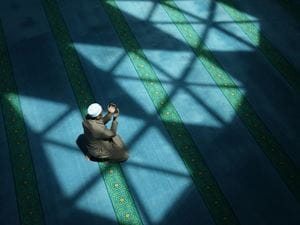
shutterstock.com
The most fundamental belief in Islam is the belief in one God, or Allah. Associating Allah with equals or partners is considered ‘shirk,’ or idolatry. This is considered the most severe sin in Islam.
In the Quran, shirk is considered so terrible an offence that if a person dies without repenting of this sin, it is considered as if they will never be forgiven. This is why shirk, or idolatry, is sometimes known as the one unforgiveable sin in Islam.
That designation is something of a misnomer, however, since in a person’s lifetime they can repent of this sin and seek forgiveness. Nonetheless, it is the only act for which death ends the possibility of atonement in Islam, and that it is why it is also considered an unforgiveable sin in Islam. The fact that there is an option for it to be unforgiveable makes it a distinctly terrible sin. Shirk can have many interpretations as to what it means, and what constitutes idolatry.
At its core, most fundamental level, to commit shirk is to believe in multiple gods. The concept, however, also includes a variety of other actions which might associate Allah with other powers. One can commit shirk by associating Allah with a lesser divine being, for example, or with a deified human being. Sometimes shirk is not intentional, and there is much discussion over how prayer to intermediaries, or reliance on other sources of religious interpretation, might stray into the sin of shirk.
Some examples include when somebody turns to a source outside of Allah for help or guidance. This might include praying to a source of nature for assistance, such as a river, mountain, or even the sun, or even attributing lucky qualities to an inanimate object. Wearing a talisman, carrying around good luck objects, or even reserving a lucky item of clothing for a big day could all be considered inappropriately associating another power with the power that should be limited only to Allah. Of course, such manifestations are more complicated than when shirk is much more explicit, and includes the actual belief in multiple gods or deities. Today, however, as polytheism has become less widely practices, the discussions of shirk in many Muslim communities includes these more subtle distinctions of practices. Some people even believe that fortune-telling, magic, and other activities designed to see into the future or peer into the afterlife could be considered shirk, because one is seeking answers from people, and powers developed by people, and not from Allah.
To learn more about Islam, click here.
3/23/2021 6:32:41 PM
More From Patheos
Islam is Not About Being Perfect
Is It Possible to Be Forgiven (Reconciled) but Not Born Again (Regenerated)?
Seeking Forgiveness and Forgiving Oneself in Ramadan
Most Popular

General Christian
A Biblical Vision of Success in Christian Life and...

General Christian
How to Make a Decision When You Can't Hear God

Catholic

The Real AI Story Is Adoption Without Trust

The First Eucharistic Controversy: Christ’s Real Presence

General Christian
Archdiocese Hosts Military Marriage Retreat in Germany

Catholic
Swimfan: Forgotten Aughts Pleasures

Catholic
Top Three Anti-Catholic Lies About Catholicism

Latter-day Saint

Catholic
Pope Leo Celebrates Mass for Nurses & Docs While in...

Catholic
The Sermon on the Mount, Part I: Matthew 4:12-5:12

Catholic
Janie Learns the Way of the Cross: A Catholic Review
Patheos Explore the world's faith through different perspectives on religion and spirituality! Patheos has the views of the prevalent religions and spiritualities of the world.
Ad-Free & Subscriber Log-In Subscription Support
- About Us
- 2026 Calendar
- Videos
- Podcasts
- Library of World Religions
- Faith In Media Tracker
- Advertise With Us
- Write for Us
- Privacy Policy
- Terms of Service
- Do Not Sell My Data
- Contact Us
- Radiant Digital
- Manage Newsletter Subscriptions
- Unsubscribe From Notifications
- Sitemap
Copyright 2008-2026, Patheos. All rights reserved.
Subscription Support Ad-Free & Subscriber Log-In
Follow Patheos