
BuddhistCatholicContemplativeEvangelicalGeneral ChristianHinduJewishLatter-day SaintMuslimNew VisionsProgressive Christian
Beliefs
- Buddhist
- Catholic
- Contemplative
- Evangelical
- General Christian
- Hindu
- Jewish
- Latter-day Saint
- More Voices
- Muslim
- New Visions
- Pagan
- Progressive Christian
Topics
- Religion News
- Food and Religion
- Sports and Religion
- Religious Art
- Religious Music and Entertainment
- Religious Events
- History and Religion
- Style and Religion
- Politics and Religion
- Women in Religion
- Recreation Outdoors and Religion
- Business Finance and Religion
- Careers Workplace and Religion
- Education and Religion
- Family Parenting and Religion
- Health Fitness and Religion
- Home and Religion
- Relationships and Religion
- Technology and Religion
- Travel and Religion
Columnists
- Buddhist Columnists
- Business Finance and Religion Columnists
- Careers Workplace and Religion Columnists
- Catholic Columnists
- Contemplative Columnists
- Education and Religion Columnists
- Evangelists Columnists
- Family Parenting and Religion Columnists
- General Christian Columnists
- Health Fitness and Religion Columnists
- Hindu Columnists
- History and Religion Columnists
- Home and Religion Columnists
- Jewish Columnists
- More Voices Columnists
- Latter Day Columnists
- Muslim Columnists
- New Visions Columnists
- Nonreligious Columnists
- Pagan Columnists
- Politics and Religion Columnists
- Progressive Columnists
- Recreation Outdoors and Religion Columnists
- Relationships and Religion Columnists
- Religion News Columnists
- Religious Art Columnists
- Religious Events Columnists
- Religious Music and Entertainment Columnists
- Sports and Religion Columnists
- Style and Religion Columnists
- Technology and Religion Columnists
- Travel and Religion Columnists
- Women in Religion Columnists
Resource Library
- 2026 Calendar
- Library of World Religions
- The 100 Most Holy Places on Earth
- Patheos Answers
- Podcasts
- Videos
- Faith Leaders Database
- Anglican Episcopalian
- Bahai
- Baptist
- Buddhism
- Christianity
- Confucianism
- Eastern Orthodoxy
- Hinduism
- Holiness and Pentecostal
- ISKCON
- Islam
- Judaism
- Lutheran
- Methodist
- The Church of Jesus Christ of Latter-day Saints
- New Age
- Paganism
- Presbytarian and Reformed
- Protestantism
- Religion Behind the Scenes
- Roman Catholic
- Scientology
- Shia Islam
- Sikhism
- Sufism
- Sunni Islam
- Taoism
- Zen
- See all religions
Research Tools
 Ad-Free & Subscriber Log-In Subscription Support
Ad-Free & Subscriber Log-In Subscription Support
Follow Patheos 

- Trending:
- Forgiveness
- |
- Marriage
- |
- Consciousness
- |
- Death Penalty
- |
- Election
- |
- Halloween
- Home
- More Voices
- Answers
- What is Shinto
Patheos answers the question:
What is Shinto?
by Kathleen Mulhern, PH.D.
credit: shutterstock
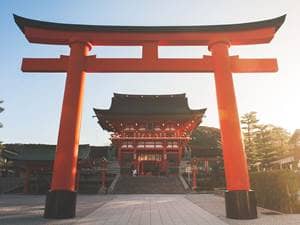
Shinto is Japan’s oldest religion—an indigenous belief system that predates Buddhism (which, itself is deeply embedded in Japanese culture and belief). Shinto is a living religion, practiced by many Japanese, often in combination with Buddhism. Shinto is an animist religion, which means that every object has a resident spirit. These spirits are called kami, and they are worshipped, appeased, and shone great respect so as to ensure their blessings, and ward of their punishment. The word Shinto actually means “the way of the kami.”
Shinto’s origins predate written history, and it has no record of a founder or beginning. It began to be called Shinto around the 6th century as a way to distinguish it from the teachings of Buddhism, which had been brought into the country around A.D. 552. Most Japanese merged many of the teachings and practices of Buddhism with their Shinto beliefs. They also incorporated hierarchical elements of Confucianism into this syncretic faith system.
Unlike Buddhism (or any of the western religions), Shinto has no canonical texts, no concern for the next life, and no absolute doctrines. It is built around the shared worship of the kami as divinities who may influence human life; and the reverencing of Japan—its history, people and culture—which are held to divine in their origins. Since humans may become kami upon death, ancestors are also revered. For most practitioners of Shinto, Amaterasu-Ōmikami, known as the Sun Goddess, is the most important kami and often called the founder of the Japanese people. While Shinto does not have scriptures that serve as the source of religious belief, they do have several texts that incorporate the traditions and lore of Shinto history and religious practice. The Records of Ancient Matters and the Chronicles of Japan, both written in the 8th century, tell of Amaterasu-Ōmikami’s origins and adventures.
Once Buddhism began to merge with Shinto (in Japan), the most ancient forms of Shinto began to disappear. As the Japanese people began to encounter western cultures, they also began to recover Shinto as a nationalist expression of belief and practice and, in 1890, Shinto was named the official religion of the country. Shinto has many expression or denominations, two of which are State Shinto and Sect Shinto. State Shinto became associated with the imperial government, and the emperor, who was held to be a descendant of Amaterasu-Ōmikami and, thus, he was recognized as a divine figure—a descendant of the gods. In many ways, State Shinto is akin to Japanese patriotism. Sect Shinto, on the other hand, relied on individual practices and sectarian interpretations, and functioned more like a structured, organized religion. State Shinto was disconnected from its political status after World War II, and the emperor at that time disavowed his personal divinity.
Today, Shinto thrives in more than a dozen sects and minor groupings. These emphasize different aspects of the ancient religion, such as healing, personal purity, worship of nature, rituals of thanksgiving, and more. Many family homes have a Shinto shrine (or kamidana) which the devout may visit daily (or even more frequently) to make offerings which will appease the kami and, thereby, protect the individual, the family, the community, or even the nation. Partitioners of Shinto celebrate fall annual festivals, known as matsuri, in which parades are held and special prayers and purification rituals are engaged in. These are thought to please the kami and protect those who participate. The primary concern is to ward off evil and obtain blessings, and this is accomplished through remaining pure, and doing things which will make the kami happy.
Read about Japan’s unique expression of Buddhism here.
3/10/2023 5:33:36 PM
About About Kathleen Mulhern, PH.D.
Kathleen Mulhern is a writer, editor, historian, speaker, and professor. She teaches courses in world history, European history, and history of Christianity. She has taught at Colorado School of Mines and Regis University, and is currently an adjunct professor at Denver Seminary in the areas of Church History and Spiritual Formation. Kathleen graduated with a B.A. from Wheaton College, earned an M.A. in French Literature from the University of Denver, an M.A. degree in Church History from Denver Seminary, and a Ph.D. in History from the University of Colorado.
More from Patheos about Buddhism
How to change your life
What is Zen Mastery?
Knowing or Not Knowing? The Stages of Not Being William James
What is Enlightenment and What does It Matter Anyway?
Create Enlightened Society or Head for the Hills?
Most Popular

- Home
- More Voices
- Answers
- What is Shinto
General Christian
A Biblical Vision of Success in Christian Life and...

- Home
- More Voices
- Answers
- What is Shinto
Catholic

- Home
- More Voices
- Answers
- What is Shinto
The Real AI Story Is Adoption Without Trust

- Home
- More Voices
- Answers
- What is Shinto
Catholic
Swimfan: Forgotten Aughts Pleasures

- Home
- More Voices
- Answers
- What is Shinto
Catholic
Top Three Anti-Catholic Lies About Catholicism

- Home
- More Voices
- Answers
- What is Shinto
Latter-day Saint

- Home
- More Voices
- Answers
- What is Shinto
Catholic
Pope Leo Celebrates Mass for Nurses & Docs While in...

- Home
- More Voices
- Answers
- What is Shinto
Catholic
The Sermon on the Mount, Part I: Matthew 4:12-5:12

- Home
- More Voices
- Answers
- What is Shinto
Catholic
Janie Learns the Way of the Cross: A Catholic Review

- Home
- More Voices
- Answers
- What is Shinto
Entertainment

- Home
- More Voices
- Answers
- What is Shinto
Evangelical
How the author of the world's best hymn became a Christian

- Home
- More Voices
- Answers
- What is Shinto
Catholic
Looking For Good Catholic Writing - October 2026
Patheos Explore the world's faith through different perspectives on religion and spirituality! Patheos has the views of the prevalent religions and spiritualities of the world.
Ad-Free & Subscriber Log-In Subscription Support
- About Us
- 2026 Calendar
- Videos
- Podcasts
- Library of World Religions
- Faith In Media Tracker
- Advertise With Us
- Write for Us
- Privacy Policy
- Terms of Service
- Do Not Sell My Data
- Contact Us
- Radiant Digital
- Manage Newsletter Subscriptions
- Unsubscribe From Notifications
- Sitemap
Copyright 2008-2026, Patheos. All rights reserved.
Subscription Support Ad-Free & Subscriber Log-In
Follow Patheos