
BuddhistCatholicContemplativeEvangelicalGeneral ChristianHinduJewishLatter-day SaintMuslimNew VisionsProgressive Christian
Beliefs
- Buddhist
- Catholic
- Contemplative
- Evangelical
- General Christian
- Hindu
- Jewish
- Latter-day Saint
- More Voices
- Muslim
- New Visions
- Pagan
- Progressive Christian
Topics
- Religion News
- Food and Religion
- Sports and Religion
- Religious Art
- Religious Music and Entertainment
- Religious Events
- History and Religion
- Style and Religion
- Politics and Religion
- Women in Religion
- Recreation Outdoors and Religion
- Business Finance and Religion
- Careers Workplace and Religion
- Education and Religion
- Family Parenting and Religion
- Health Fitness and Religion
- Home and Religion
- Relationships and Religion
- Technology and Religion
- Travel and Religion
Columnists
- Buddhist Columnists
- Business Finance and Religion Columnists
- Careers Workplace and Religion Columnists
- Catholic Columnists
- Contemplative Columnists
- Education and Religion Columnists
- Evangelists Columnists
- Family Parenting and Religion Columnists
- General Christian Columnists
- Health Fitness and Religion Columnists
- Hindu Columnists
- History and Religion Columnists
- Home and Religion Columnists
- Jewish Columnists
- More Voices Columnists
- Latter Day Columnists
- Muslim Columnists
- New Visions Columnists
- Nonreligious Columnists
- Pagan Columnists
- Politics and Religion Columnists
- Progressive Columnists
- Recreation Outdoors and Religion Columnists
- Relationships and Religion Columnists
- Religion News Columnists
- Religious Art Columnists
- Religious Events Columnists
- Religious Music and Entertainment Columnists
- Sports and Religion Columnists
- Style and Religion Columnists
- Technology and Religion Columnists
- Travel and Religion Columnists
- Women in Religion Columnists
Resource Library
- 2026 Calendar
- Library of World Religions
- The 100 Most Holy Places on Earth
- Patheos Answers
- Podcasts
- Videos
- Faith Leaders Database
- Anglican Episcopalian
- Bahai
- Baptist
- Buddhism
- Christianity
- Confucianism
- Eastern Orthodoxy
- Hinduism
- Holiness and Pentecostal
- ISKCON
- Islam
- Judaism
- Lutheran
- Methodist
- The Church of Jesus Christ of Latter-day Saints
- New Age
- Paganism
- Presbytarian and Reformed
- Protestantism
- Religion Behind the Scenes
- Roman Catholic
- Scientology
- Shia Islam
- Sikhism
- Sufism
- Sunni Islam
- Taoism
- Zen
- See all religions
Research Tools
 Ad-Free & Subscriber Log-In Subscription Support
Follow Patheos 

- Trending:
- Advent
- |
- Forgiveness
- |
- Thanksgiving
- |
- Election
- |
- Seasonal Holidays
- |
- Marriage
Patheos answers the question:
What is the Islamic Holiday of Lailat al Miraj?
by ALONZO L. GASKILL, PH.D.

Shutterstock.com
Lailat al Miraj is an annual Islamic holiday which commemorates the “nigh journey” (al-Isrā‘) and “ascent” (al-Mi‘rāj) of the prophet Muhammad (PBUH) into the presence of Allah (in the year 621 CE). The holiday is known by various names (in Persian and Arabic): most commonly, “The Night Journey and Ascension” (“Isra‘ and Miraj”), “Shab e Mi‘rāj” (meaning “a young man’s ascent”), or just “Isrā‘” (“night journey”) or “Mi‘rāj” (“ascent”).
While most of what we know about the events this holiday commemorates comes from the Hadith (the “stories” or “traditions” of the Prophet), the Qur’an does reference Muhammed’s night journey and ascent, saying: “Glory to Allah, who did take His servant [Muhammed] for a journey by night from the Sacred Mosque [or Ka‘bah, in Mecca] to the Farthest Mosque [i.e., the site of the Temple of Solomon, in Jerusalem], whose precincts We did bless—in order that We might show [the Prophet] some of Our signs…” (Sūra 17:1).
According to Islamic teaching, sometime near the end of 7th month of the Muslim calendar (Rajab), God’s final Messenger, Muhammed, was asleep in the sanctuary next to the Ka‘bah. Suddenly, the angel Gabriel appeared to him, awakening him from his sleep. Muhammed mounted a “beast” called the “Burāq”—which is said to have been a winged creature with a human face; the animal being “smaller than a mule, but larger than an ass.”
The Prophet flew, with Gabriel by his side, from Mecca to Jerusalem. They landed on the former temple mount, where Solomon’s Temple once stood. There, Muhammed met with many former Messengers of Allah, including Abraham, Moses, Jesus, and others. The Prophet led them in prayer (salat), after which Muhammed was offered two vessels of drink—one containing wine and the other milk. The Prophet chose the milk. Of this event, the Hadith informs us: “On the night of the Ascension, the Prophet, peace and blessings be upon him, was presented with two vessels, one full of wine and the other full of milk. The Prophet looked at them both and he chose the vessel full of milk. The Angel Gabriel, upon him be peace, said, ‘All praise is due to Allah who has guided you to that which is natural, for had you selected the wine your nation would have been led astray.’”(Ṣaḥīḥ al-Bukhārī 4432) To this day, Islam discourages the consumption of wine, following the example of the Prophet Muhammed. The Qur’an states: “[If] they ask thee concerning wine and gambling… Say: ‘In them is great sin, and some profit, for men; but the sin is greater than the profit.’” (Sūra 2:219)
After the announcement that Muhammed had chosen the better path (by accepting the milk and rejecting the wine), he was transported by the angel Gabriel upwards to paradise (or heaven), ascending from the “rock” of the Temple Mount, which is believed to have been the site of the ancient Solomonic Holy of Holies, and over which stands today the Dome of the Rock sanctuary. The site of the former Jewish temple is referred to in the Qur’an as the “Farthest Mosque” (Sūra 17:1).
Muhammed’s ascent into paradise required that he pass through the “seven heavens” (Sūra 41:12)—understood in Islam to symbolically represent various degrees which separate the non-manifest (or heavenly) from the manifest (or earthly). As he passed through these seven degrees or firmaments, Muhammed noticed that Gabriel and the other prophets he had been communing with had taken on a spiritual form—no longer being in the form of mortals. Indeed, in his ascent, Muhammed re-encountered each of those whom he had prayed with previously, but now in this celestial form.
Once in paradise, the Prophet encountered the “Lote-tree beyond which none may pass” (Sūra 53:14)—a symbol for the closest one may come to the actual presence of the divine or Absolute (i.e., Allah or God). Many Muslims believe that this indicates that Muhammed did not “see” the invisible God, nor did he actually physically enter the very presence of God but, instead, enjoyed sufficient closeness to receive of Allah’s “signs” (Sūra 17:1).
During his time in paradise, the Prophet was given the instruction from Allah to command the people to pray fifty times each day. However, upon his descent, Moses encouraged Muhammed to return to Allah with a request that the number of daily prayers be reduced to something more realistically achievable. Thus, the bulk of Muslims today believe that God reduced the requirement to five required prayers a day.
The Hadith states that there were actually three gifts of Mi‘rāj—or three gifts that God extended to His creations as a result of Muhammed’s ascent. First, the people would only have to pray five times a day but, if they faithfully did so, they would receive the reward of having said fifty prayers each day. Second, as articulated in Sura 2:285-286, God would be gracious in dealing with His creations—including promising them that He would not “place a burden greater” than could be borne upon any faithful “soul” (almost echoing the worlds of 1 Corinthians 10:13). And finally, all the major sins of the “ummah” (or “community” of believers) would be forgiven, so long as they did not “associate partners” with Allah—something Muslims typically believe polytheism and the doctrine of the Trinity do. Thus, among other things, this holiday reminds the faithful that Allah is “oft forgiving, most merciful.” (Sūra 2:173).
As he flew back from Jerusalem, Muhammed passed over some caravans heading toward Mecca. The next day, when he told people that he had been to Jerusalem the night before, some mocked him. (Because of that mockery, he only shared the details of his ascent into paradise with his “companions” or closest disciples.) In his defense against those who doubted him, Muhammed conveyed some of the most minute details regarding the caravans he had seen. When the caravans arrived in Mecca, this stood as proof to Muhammed’s disciples that he indeed had been on the Night Journey and Ascension, as he had claimed.
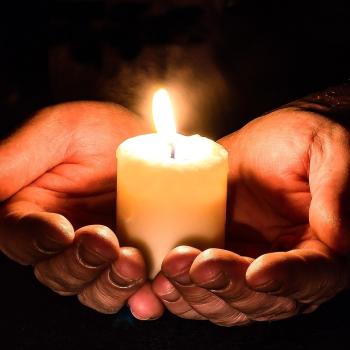
Although the exact date of the Isrā‘ (or “night journey”) is not known, it is typically commemorated on the 27th day of Rajab (one of four holy months in which any form of fighting is seen an impermissible). Traditional elements of this holiday include fasting—with the promise that, according to Muhammed, “If someone fasts during that day, and keeps vigil throughout that night, he will be entitled to a reward like the one that would be earned by a person who fasted for 100 years.” Other elements of the holiday include attending special prayer services at the mosque, illuminating the city and home with candles or additional lights, and telling the story of Muhammed’s sacred journey, and how it purified the Prophet’s heart, preparing him to enter into paradise and receive instruction from Allah. At the conclusion of the fast, various foods and special treats are commonly consumed.
One reason this holiday is such an important part of Islam is that the events it commemorates stand as a witness to the world that Muhammed was indeed the Messenger of Allah, having a unique and divinely established relationship with the Creator of all things—a message faithful Muslims feel it is their duty to proclaim.
To learn more about Islam, click here.
3/23/2021 6:32:39 PM
About ABOUT ALONZO L. GASKILL, PH.D.
Alonzo L. Gaskill is an author, editor, theologian, lecturer, and professor of World Religions. He holds degrees in philosophy, theology/comparative religion, and biblical studies. He has authored more than two-dozen books and numerous articles on various aspects of religion with topics ranging from world religions and interfaith dialogue, to scriptural commentaries, texts on symbolism, sacred space, and ritual, and even devotional literature.
More From Patheos About Islam
Where Did Islam Start?
Who is Muhammad and Do Muslims Worship Him?
Where Are the Pillars of Islam?
Most Popular

Family
How to Have Financial Transparency in Marriage
Family
The Healing Power of Forgiveness in Marriage
General Christian
How Does Tôḏâ Connect Florida & Thanksgiving?

‘Fjord’ Director Mungiu on Religious Family, Bias,...
Catholic
The West's Christian Moral Inheritance: A Legacy Denied
New Visions
Were Early Christians Drinking Psychedelic Wine?

Latter-day Saint

Progressive Christian

Catholic
If Baptism Washes Away Sin, Why Do Catholics Still Suffer?

Spirituality without Supernaturalism
Finding Gratitude in the Growth You Didn't Choose
Catholic
Patheos Explore the world's faith through different perspectives on religion and spirituality! Patheos has the views of the prevalent religions and spiritualities of the world.
Ad-Free & Subscriber Log-In Subscription Support
- About Us
- 2026 Calendar
- Videos
- Podcasts
- Library of World Religions
- Faith In Media Tracker
- Advertise With Us
- Write for Us
- Privacy Policy
- Terms of Service
- Do Not Sell My Data
- Contact Us
- Radiant Digital
- Manage Newsletter Subscriptions
- Unsubscribe From Notifications
- Sitemap
Copyright 2008-2026, Patheos. All rights reserved.
Subscription Support Ad-Free & Subscriber Log-In
Follow Patheos