
BuddhistCatholicContemplativeEvangelicalGeneral ChristianHinduJewishLatter-day SaintMuslimNew VisionsProgressive Christian
Beliefs
- Buddhist
- Catholic
- Contemplative
- Evangelical
- General Christian
- Hindu
- Jewish
- Latter-day Saint
- More Voices
- Muslim
- New Visions
- Pagan
- Progressive Christian
Topics
- Religion News
- Food and Religion
- Sports and Religion
- Religious Art
- Religious Music and Entertainment
- Religious Events
- History and Religion
- Style and Religion
- Politics and Religion
- Women in Religion
- Recreation Outdoors and Religion
- Business Finance and Religion
- Careers Workplace and Religion
- Education and Religion
- Family Parenting and Religion
- Health Fitness and Religion
- Home and Religion
- Relationships and Religion
- Technology and Religion
- Travel and Religion
Columnists
- Buddhist Columnists
- Business Finance and Religion Columnists
- Careers Workplace and Religion Columnists
- Catholic Columnists
- Contemplative Columnists
- Education and Religion Columnists
- Evangelists Columnists
- Family Parenting and Religion Columnists
- General Christian Columnists
- Health Fitness and Religion Columnists
- Hindu Columnists
- History and Religion Columnists
- Home and Religion Columnists
- Jewish Columnists
- More Voices Columnists
- Latter Day Columnists
- Muslim Columnists
- New Visions Columnists
- Nonreligious Columnists
- Pagan Columnists
- Politics and Religion Columnists
- Progressive Columnists
- Recreation Outdoors and Religion Columnists
- Relationships and Religion Columnists
- Religion News Columnists
- Religious Art Columnists
- Religious Events Columnists
- Religious Music and Entertainment Columnists
- Sports and Religion Columnists
- Style and Religion Columnists
- Technology and Religion Columnists
- Travel and Religion Columnists
- Women in Religion Columnists
Resource Library
- 2026 Calendar
- Library of World Religions
- The 100 Most Holy Places on Earth
- Patheos Answers
- Podcasts
- Videos
- Faith Leaders Database
- Anglican Episcopalian
- Bahai
- Baptist
- Buddhism
- Christianity
- Confucianism
- Eastern Orthodoxy
- Hinduism
- Holiness and Pentecostal
- ISKCON
- Islam
- Judaism
- Lutheran
- Methodist
- The Church of Jesus Christ of Latter-day Saints
- New Age
- Paganism
- Presbytarian and Reformed
- Protestantism
- Religion Behind the Scenes
- Roman Catholic
- Scientology
- Shia Islam
- Sikhism
- Sufism
- Sunni Islam
- Taoism
- Zen
- See all religions
Research Tools
 Ad-Free & Subscriber Log-In Subscription Support
Follow Patheos 

- Trending:
- Advent
- |
- Forgiveness
- |
- Thanksgiving
- |
- Election
- |
- Seasonal Holidays
- |
- Marriage
Patheos answers the question:
What is Excommunication, and Who Gets Excommunicated?
by Kathleen Mulhern, Ph.D.
Shutterstock.com
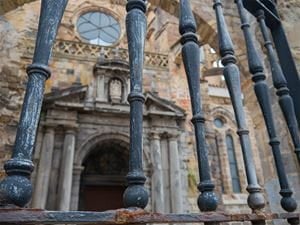
Excommunication is the most severe penalty the Roman Catholic Church can impose on one of its members. Excommunication is reserved for grave sins that attack the foundation of the Catholic Church or otherwise reject her teachings. Those who are excommunicated have been ritually cut off from the Church, and they are thus denied all sacraments except the Sacrament of Penance. In addition, those who have been excommunicated are forbidden from holding any position of authority or being employed directly by a diocese or parish. So, an excommunicated Catholic could not teach at a Catholic school. Those who die while excommunicated are denied a Catholic burial. Excommunication does not “undo” a person’s baptism, however, for that is considered permanent. Nor does excommunication automatically condemn a person to hell. If excommunicated persons sincerely repent before death, even if they have not been reconciled to the Church, their salvation is sure.
Despite the gravity of excommunication, the practice is not meant to be punitive or vindictive. Instead, it is meant to serve as a form of “tough love” and help a person realize that his or her conduct has been unacceptable for a member of the Catholic Church. The goal of excommunication is to lead a person to true repentance and reconciliation with the Catholic Church in full faithfulness. Excommunication is not meant to be permanent, and those who have been excommunicated can still attend Catholic Mass. They are forbidden from taking the Eucharist, but they are allowed and welcome to continue attending Mass.
There are two subsets of offenses that merit excommunication. The first subset requires a Church authority to judge the offense and issue an order of excommunication. The violation of a confessional seal or the celebration of the Eucharist or conferral of absolution by someone who is not a priest would be punishable by excommunication. In such cases, the clerical leader that imposes the excommunication is usually a local bishop or a person of similar authority.
The second subset of excommunicable offenses are what are referred to as automatic excommunications. This means that a person is excommunicated the moment the offense is committed regardless of whether anyone else is aware it happens. Automatic excommunications are far more numerous and include such offenses as: procuring or performing an abortion, apostasy, heresy, schism, desecration of the Holy Eucharist, a physical attack on the pope, direct violation of a confessional seal by a confessor, and unauthorized consecration of another bishop. In the case of the excommunicable offense that no one else knows of, it is up to the offender to recognize the gravity of the sin and seek absolution.
While excommunication is not permanent, reversing it is not always easy. Local bishops have the authority to remove most excommunications when there is clear and sincere repentance, but other excommunications require intervention from the pope himself. The one who has been excommunicated must seek full reconciliation through confession and penance. Once restored, the excommunicated are fully embraced by the Church and offered all its graces.
3/23/2021 6:32:39 PM
About About Kathleen Mulhern, Ph.D.
Kathleen Mulhern is a writer, editor, historian, speaker, and professor. She teaches courses in world history, European history, and history of Christianity. She has taught at Colorado School of Mines and Regis University, and is currently an adjunct professor at Denver Seminary in the areas of Church History and Spiritual Formation. Kathleen graduated with a B.A. from Wheaton College, earned an M.A. in French Literature from the University of Denver, an M.A. degree in Church History from Denver Seminary, and a Ph.D. in History from the University of Colorado.
More From Patheos About Excommunication
Does Excommunication Make Any Sense?
Excommunication: Cruel and Unusual Punishment
The Effects of Excommunication on All of Us: Healing Perspectives
Most Popular

Progressive Christian
Progressive Christian
Reasons for Restraint: Ricardo Gonzalez, Florida and Dec 1

General Christian
Psalm 5: David Pleads His Case
Progressive Christian
It All Counts: A Conversation With Natalia Terfa
General Christian
Reflections of a Recovered Evangelical: Honoring the...

Latter-day Saint
Progressive Christian
'Statements of Faith' never get shorter

Evangelical
Michele's Reviews - Future Grace by John Piper

Evangelical
Bama Gramma's Blackout Christmas: the Power of Light...

Catholic
Thanksgiving as a Way of Life: A Christian Perspective
Two Women Doctors Who Went Against the Current
Patheos Explore the world's faith through different perspectives on religion and spirituality! Patheos has the views of the prevalent religions and spiritualities of the world.
Ad-Free & Subscriber Log-In Subscription Support
- About Us
- 2026 Calendar
- Videos
- Podcasts
- Library of World Religions
- Faith In Media Tracker
- Advertise With Us
- Write for Us
- Privacy Policy
- Terms of Service
- Do Not Sell My Data
- Contact Us
- Radiant Digital
- Manage Newsletter Subscriptions
- Unsubscribe From Notifications
- Sitemap
Copyright 2008-2026, Patheos, part of the Radiant Digital network of media brands. All rights reserved.
Subscription Support Ad-Free & Subscriber Log-In
Follow Patheos