
BuddhistCatholicContemplativeEvangelicalGeneral ChristianHinduJewishLatter-day SaintMuslimNew VisionsProgressive Christian
Beliefs
- Buddhist
- Catholic
- Contemplative
- Evangelical
- General Christian
- Hindu
- Jewish
- Latter-day Saint
- More Voices
- Muslim
- New Visions
- Pagan
- Progressive Christian
Topics
- Religion News
- Food and Religion
- Sports and Religion
- Religious Art
- Religious Music and Entertainment
- Religious Events
- History and Religion
- Style and Religion
- Politics and Religion
- Women in Religion
- Recreation Outdoors and Religion
- Business Finance and Religion
- Careers Workplace and Religion
- Education and Religion
- Family Parenting and Religion
- Health Fitness and Religion
- Home and Religion
- Relationships and Religion
- Technology and Religion
- Travel and Religion
Columnists
- Buddhist Columnists
- Business Finance and Religion Columnists
- Careers Workplace and Religion Columnists
- Catholic Columnists
- Contemplative Columnists
- Education and Religion Columnists
- Evangelists Columnists
- Family Parenting and Religion Columnists
- General Christian Columnists
- Health Fitness and Religion Columnists
- Hindu Columnists
- History and Religion Columnists
- Home and Religion Columnists
- Jewish Columnists
- More Voices Columnists
- Latter Day Columnists
- Muslim Columnists
- New Visions Columnists
- Nonreligious Columnists
- Pagan Columnists
- Politics and Religion Columnists
- Progressive Columnists
- Recreation Outdoors and Religion Columnists
- Relationships and Religion Columnists
- Religion News Columnists
- Religious Art Columnists
- Religious Events Columnists
- Religious Music and Entertainment Columnists
- Sports and Religion Columnists
- Style and Religion Columnists
- Technology and Religion Columnists
- Travel and Religion Columnists
- Women in Religion Columnists
Resource Library
- 2026 Calendar
- Library of World Religions
- The 100 Most Holy Places on Earth
- Patheos Answers
- Podcasts
- Videos
- Faith Leaders Database
- Anglican Episcopalian
- Bahai
- Baptist
- Buddhism
- Christianity
- Confucianism
- Eastern Orthodoxy
- Hinduism
- Holiness and Pentecostal
- ISKCON
- Islam
- Judaism
- Lutheran
- Methodist
- The Church of Jesus Christ of Latter-day Saints
- New Age
- Paganism
- Presbytarian and Reformed
- Protestantism
- Religion Behind the Scenes
- Roman Catholic
- Scientology
- Shia Islam
- Sikhism
- Sufism
- Sunni Islam
- Taoism
- Zen
- See all religions
Research Tools
 Ad-Free & Subscriber Log-In Subscription Support
Ad-Free & Subscriber Log-In Subscription Support
Follow Patheos 

- Trending:
- Forgiveness
- |
- Marriage
- |
- Consciousness
- |
- Death Penalty
- |
- Election
- |
- Halloween
- Home
- Catholic
- Religious Events
- Answers
- What is Ash Wednesday
Patheos answers the question:
What is Ash Wednesday?
by Alonzo L. Gaskill, PH.D.
Public Domain
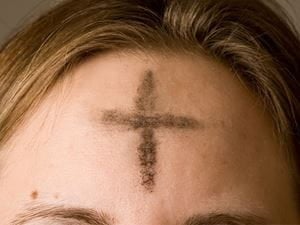
Ash Wednesday marks the beginning of the Christian season of Lent—a solemn day of prayer, fasting, and repentance observed in many Christian traditions. It is most visibly recognized by the imposition of ashes on the forehead, a practice rooted in ancient symbols of humility, mortality, and sorrow for sin. As the church turns toward spiritual preparation for Easter, Ash Wednesday stands at the threshold of this penitential journey, shaped not only by its own rituals but also by the days that immediately precede it.
Mardi Gras means “Fat Tuesday” (in French). It refers to a religious holiday known as Shrove Tuesday (meaning literally, “to absolve” one’s sins through confession). Shrove Tuesday or Mardi Gras is the day before Ash Wednesday. On that holy Tuesday many go to confession, select what they will “sacrifice” or “give up” for Lent, (at the church) ashes are burned in preparation for Ash Wednesday, and the eating of pancakes or other treats is common—in anticipation of a more restrictive diet during the Lenten season.
While Shrove Tuesday has a moderate celebratory tone, it received the French name Mardi Gras because some participants saw that Tuesday before Lent as a time to “get out” any excess or sinful desires prior to starting their repentance (beginning with Ash Wednesday). If you have ever participated in the Mardi Gras celebrations of New Orleans, you know all about excess! Thus, Mardi Gras is seen by the more faithful as a corruption of Shrove Tuesday, and as contrary to the spirit of repentance that is supposed to accompany the season of Lent.
Ash Wednesday—or the day after Mardi Gras—is the first day of the Lenten season in many Christian traditions; most notably Roman Catholicism, Eastern Orthodoxy, Anglicanism, Lutheranism, and Methodism—though others also participate. It is a day of prayer, penance, and fasting; and it inaugurates the six-week season of Lent, through which many observant Christians prepare themselves for Easter via daily sacrifices in the form of fasting, prayer, engagement in self-examination, and seeking to improve their devotion to God.
The name “Ash Wednesday” comes from the fact that, in many High-Church Christian denominations, this holy day is commemorated by making a trek to one’s local church to receive the placement of ashes upon the forehead—often in the shape of a cross—as a symbol of repentance and remorse for one’s sinful ways. Other common observances of Ash Wednesday include creating what is traditionally known as a “Lenten calendar” (i.e., a 40-day countdown calendar, marking off the days between Ash Wednesday and Easter Sunday), and beginning one’s “Lenten sacrifice” (i.e., the item or items one will give up or “sacrifice” during the 40-days of Lent, and perhaps beyond. See our “Answer” to the question, “Why Do Christians Celebrate Lent?”).
Ashes were a common symbol in antiquity for repentance, mourning and sorrow—particularly sorrow for sin. (See, for example, 2 Samuel 13:19; Esther 4:1-3; Job 2:8; Isaiah 58:5; Matthew 11:21; Luke 10:13) Thus, the penitent receives blessed ashes upon the head, while the priest pronounces the words “Repent ye, and believe the gospel” (Mark 1:15) or “Dust thou art, and unto dust shalt thou return” (Genesis 3:19). (The former of these two declarations has been more common than the latter in Roman Catholicism in the post-Vatican II era.)
Lent, which Ash Wednesday begins, is based on something Jesus did in the New Testament, where He is said to have spent 40-days in the wilderness, praying, fasting, and battling the temptations of the Devil. During the Lenten season, Christians seek to mirror Jesus’s spiritual journey by trying to renew themselves spiritually through acts of self-denial, which help them to more deeply connect with God. Since Easter commemorates Jesus’s resurrection from the dead, for many Christians, Lent is a time to prepare to symbolical be raised from “spiritual death” through the self-denial and spiritual improvement practiced during these six weeks. Thus, Ash Wednesday applies the ashes that symbolize our fallenness; and Easter Sunday—the day on which baptisms commonly took place—washes away those ashes through the redemptive sacrifice of the Lord Jesus Christ. The entire Lenten season is a process of sorrow, repentance, change, forgiveness and ultimate redemption.
The ashes used on Ash Wednesday are often made by burning palm branches kept from the previous year’s Palm Sunday services—Palm Sunday being the Sunday immediately before Easter Sunday. (It is the Sunday that commemorates Christ’s “triumphal entry” into Jerusalem only days prior to his crucifixion.) The palm branches are burnt, blessed—often by sprinkling holy water on them—and then applied to the crown of the head or to the forehead of the penitent. While in times past sprinkling ashes on top of the head, or on the crown of the head, was most common; because in certain denominations (e.g., Roman Catholicism and Eastern Orthodoxy) women often kept their heads covered when it a church building, placing the ashes on the forehead in the form of the cross became the more popular way to perform this sacramental act—particularly in English-speaking congregations.
While each denomination does things differently, many Christians will fast from meats on Ash Wednesday, Good Friday, and on other Fridays throughout the Lenten season. Some highly observant Christians will not eat meat at all during six-week Lenten season, starting on Ash Wednesday and carrying on until Eastern Morn.
With all of that said, the basic focus of Ash Wednesday is on the fallen and sinful state of humanity. It is an invitation to contemplate the ways in which one has let down one’s God, one’s family, and one’s self; and to repent, change, increase one’s spirituality, and become more holy—more like the God we profess to worship.
Read more about Ash Wednesday here.
2/17/2026 8:27:00 PM
About About Alonzo L. Gaskill, PH.D.
Alonzo L. Gaskill is an author, editor, theologian, lecturer, and professor of World Religions. He holds degrees in philosophy, theology/comparative religion, and biblical studies. He has authored more than two-dozen books and numerous articles on various aspects of religion with topics ranging from world religions and interfaith dialogue, to scriptural commentaries, texts on symbolism, sacred space, and ritual, and even devotional literature.
More From Patheos About Ash Wednesday
"Why We Don't Do Ashes on Ash Wednesday"
'You've Got Some Dirt on Your Forehead': Ash Wednesday Reflection
Ashes: What We Wear
A Reflection on Ash Wednesday
Most Popular

- Home
- Catholic
- Religious Events
- Answers
- What is Ash Wednesday
Evangelical
Letters on Living the Faith by C.S. Lewis

- Home
- Catholic
- Religious Events
- Answers
- What is Ash Wednesday
General Christian
When Halloween Unmasks Married Hearts

- Home
- Catholic
- Religious Events
- Answers
- What is Ash Wednesday
Evangelical

- Home
- Catholic
- Religious Events
- Answers
- What is Ash Wednesday
Evangelical
The REST of Your Life: A Creative Wrestles With Sabbath

- Home
- Catholic
- Religious Events
- Answers
- What is Ash Wednesday
#107: Cast of Character(s): This Weeks Episode of The...
- Home
- Catholic
- Religious Events
- Answers
- What is Ash Wednesday
Progressive Christian
BONUS SHOW: Autism and RFK Jr.'s Cameo

- Home
- Catholic
- Religious Events
- Answers
- What is Ash Wednesday
57th Dove Awards Honor Dolly Parton, Crown New Voices

- Home
- Catholic
- Religious Events
- Answers
- What is Ash Wednesday
General Christian
A Biblical Vision of Success in Christian Life and...

- Home
- Catholic
- Religious Events
- Answers
- What is Ash Wednesday
General Christian
What a Stop Sign Can Teach Us About God’s Will

- Home
- Catholic
- Religious Events
- Answers
- What is Ash Wednesday
Catholic
What If You Are God’s Currency?

- Home
- Catholic
- Religious Events
- Answers
- What is Ash Wednesday
The Real AI Story Is Adoption Without Trust

- Home
- Catholic
- Religious Events
- Answers
- What is Ash Wednesday
The First Eucharistic Controversy: Christ’s Real Presence
Patheos Explore the world's faith through different perspectives on religion and spirituality! Patheos has the views of the prevalent religions and spiritualities of the world.
Ad-Free & Subscriber Log-In Subscription Support
- About Us
- 2026 Calendar
- Videos
- Podcasts
- Library of World Religions
- Faith In Media Tracker
- Advertise With Us
- Write for Us
- Privacy Policy
- Terms of Service
- Do Not Sell My Data
- Contact Us
- Radiant Digital
- Manage Newsletter Subscriptions
- Unsubscribe From Notifications
- Sitemap
Copyright 2008-2026, Patheos. All rights reserved.
Subscription Support Ad-Free & Subscriber Log-In
Follow Patheos