
BuddhistCatholicContemplativeEvangelicalGeneral ChristianHinduJewishLatter-day SaintMuslimNew VisionsProgressive Christian
Beliefs
- Buddhist
- Catholic
- Contemplative
- Evangelical
- General Christian
- Hindu
- Jewish
- Latter-day Saint
- More Voices
- Muslim
- New Visions
- Pagan
- Progressive Christian
Topics
- Religion News
- Food and Religion
- Sports and Religion
- Religious Art
- Religious Music and Entertainment
- Religious Events
- History and Religion
- Style and Religion
- Politics and Religion
- Women in Religion
- Recreation Outdoors and Religion
- Business Finance and Religion
- Careers Workplace and Religion
- Education and Religion
- Family Parenting and Religion
- Health Fitness and Religion
- Home and Religion
- Relationships and Religion
- Technology and Religion
- Travel and Religion
Columnists
- Buddhist Columnists
- Business Finance and Religion Columnists
- Careers Workplace and Religion Columnists
- Catholic Columnists
- Contemplative Columnists
- Education and Religion Columnists
- Evangelists Columnists
- Family Parenting and Religion Columnists
- General Christian Columnists
- Health Fitness and Religion Columnists
- Hindu Columnists
- History and Religion Columnists
- Home and Religion Columnists
- Jewish Columnists
- More Voices Columnists
- Latter Day Columnists
- Muslim Columnists
- New Visions Columnists
- Nonreligious Columnists
- Pagan Columnists
- Politics and Religion Columnists
- Progressive Columnists
- Recreation Outdoors and Religion Columnists
- Relationships and Religion Columnists
- Religion News Columnists
- Religious Art Columnists
- Religious Events Columnists
- Religious Music and Entertainment Columnists
- Sports and Religion Columnists
- Style and Religion Columnists
- Technology and Religion Columnists
- Travel and Religion Columnists
- Women in Religion Columnists
Resource Library
- 2026 Calendar
- Library of World Religions
- The 100 Most Holy Places on Earth
- Patheos Answers
- Podcasts
- Videos
- Faith Leaders Database
- Anglican Episcopalian
- Bahai
- Baptist
- Buddhism
- Christianity
- Confucianism
- Eastern Orthodoxy
- Hinduism
- Holiness and Pentecostal
- ISKCON
- Islam
- Judaism
- Lutheran
- Methodist
- The Church of Jesus Christ of Latter-day Saints
- New Age
- Paganism
- Presbytarian and Reformed
- Protestantism
- Religion Behind the Scenes
- Roman Catholic
- Scientology
- Shia Islam
- Sikhism
- Sufism
- Sunni Islam
- Taoism
- Zen
- See all religions
Research Tools
 Ad-Free & Subscriber Log-In Subscription Support
Ad-Free & Subscriber Log-In Subscription Support
Follow Patheos 

- Trending:
- Forgiveness
- |
- Marriage
- |
- Consciousness
- |
- Death Penalty
- |
- Election
- |
- Halloween
- Home
- General Christian
- History and Religion
- Answers
- what is a quaker
History and Religion
Patheos answers the question:
What is a Quaker?
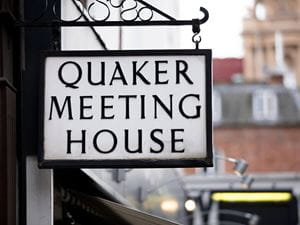
Electric Egg Ltd. / Adobe Stock
History and Beliefs of the Quakers
Founded in 1652, by an English preacher named George Fox, the movement got its start when its founder had a vision in which he saw what he called “a great people to be gathered.” Shortly thereafter, Fox delivered a three-hour sermon in a place called “Firbank Fell” (Northeast of Leeds). The congregation was so moved by what he shared that a group of hearers (now known as the “Valiant Sixty”) took Fox’s message and began spreading it throughout England.
Rather than “Quakerism,” the proper name of the faith is actually the “Religious Society of Friends.” That name was derived from Jesus’ declaration (in the Gospel of John), “You are my friends if you do what I command.” (John 15:14 NIV) Thus, the Society sees themselves as Jesus’ “friends” because they seek to live lives which are in harmony with what Jesus commanded of Christians.
The nickname “Quaker” is said to have been given to them because of “their tendency to tremble under divine conviction.” The Quakers (or “Friends,” as they are often called) should not be confused with the “Shakers”—a related but separate religion. About 100 years after Fox founded the original movement, a group of Quakers broke off from the main body of the faith, and (under the direction of their founder, “Mother” Anne Lee) became known as “Shakers” (or, as they were often called in the 19th century, “Shaking Quakers”). The Shakers had a much stricter lifestyle, placing even more emphasis (than Quakers) on the need for personal “purity.” Hence, Shakers committed to not marry and to live celibate lives. As a consequence, the Shakers are almost entirely extinct as a religion.
There are technically four major denominations (or groupings) of Quakers in the United States:
- The Friends General Conference (or “Hicksite” group)—a non-pastoral and somewhat theologically liberal Quaker movement;
- The Friends United Meeting—a branch having pastors and upholding fairly “orthodox” Quaker theological beliefs;
- The Evangelical Friends International—a branch embracing pastors and also theologically conservative ideas; and
- The Conservative Friends (or “Wilburite” movement)—a non-pastoral branch that is theologically conservative.
Each of the various branches have their own “Constitution & Discipline” (or “Faith & Practice”) statement, in which is laid out the central doctrinal tenants and moral codes for their adherents.
Though the Religious Society of Friends is formally “non-creedal,” in a number of their beliefs, most theologically conservative Friends are like other Christians. For example, they traditionally believe in a singular all-wise and everlasting God. They accept Jesus as their savior. They believe in the sanctifying power of the Holy Spirit. And they believe that the Bible is authoritative, inspired, and divinely given. While they are formally trinitarian, the various branches are not all on the same page as it relates to their understanding of the Godhead.
Though Quakers are similar to creedal Christians in a number of ways, they also have several distinct beliefs which set them apart, to some degree, from other denominations of Christianity. For example, most Quakers emphasize the need for “unmediated worship.” Essentially, Friends believe that each of us have direct access to God (as Adam and Eve did in Eden). Thus, we don’t need a priest, pastor, or other person to mediate our relationship with the Divine. Related to this, Quakers also believe in the “spiritual nature” of the sacraments. For them, life is intended to be sacramental (or holy). So, they do not traditionally embrace outward sacraments (like the seven sacraments of the Roman Catholic tradition). They often point to Jesus’ prediction that there would be a time when “true worshippers would worship in spirit and truth” (John 4:23, emphasis added). Thus, “worshiping in spirit” means (for Quakers) downplaying outward sacraments that distract from God and, instead, focusing on the spiritual meaning behind such rites.
So, a “spiritual baptism” (in which the life of the believer is clearly changed and bettered) is more important than the “ceremony” or “outward ordinance” of baptism. Similarly, “authentic communion” is not when one partakes of bread and wine, but when one abides in Christ and He abides in the believer. Quakers, unlike some in High Church Traditions, believe in the immediacy of God and religious (or spiritual) experience. So, many Quakers hold that they can have “meetings with God” or receive “guidance” as given by the Holy Spirit; encounters that are sudden, inspired, and revelatory for the individual receiving them.
Worship among the various denominations of Friends can look quite different, contingent upon whether the branch of Quakers is an “unprogrammed” or “programed” denomination. Those who identify as “unprogrammed” don’t employ pastors, and typically enter the “meetinghouse” and sit in silence (during the approximately hour-long worship service) while all “center” themselves on God and various individuals stand and speak as “moved upon” by the Holy Spirit. “Programed” Quakers, on the other hand, engage in worship that looks very similar to other Low Church Protestant denominations; not formal, but more structured. Unprogrammed Quakers have pastors and leaders in the congregation, and typically use hymns, public prayers, and a sermon as part of their services—though they may also have “unprogrammed” time for those moved upon by the Holy Spirit to stand and share what they are feeling.
The Quaker tradition has always had a high moral code. Practitioners are expected to live a simple, clean, and honest lifestyle. (While their mode of dress early on was often plain grey or black clothing; today, they simply encourage dress which does not “set one apart” or emphasize “status” in dress or ornamentation.) Though Quakers do not “swear oaths” (in court or otherwise), they will “affirm” that they are telling the truth. They have fought for the abolition of slavery, the end of racism, and for prison reform—in addition to women’s right to vote and the movement toward protecting and preserving the planet. Quakers are expected to embrace a form of employment which does not stand in contradiction to the high mortal standards of the faith. They are famous for their strict pacifism—typically refusing to serve in the military and always expected to seek and propagate peace in the world. While most have been against capital punishment, many are also against corporal punishment in disciplining children.
There are approximately 400,000 Quakers worldwide (as of January 2024). Some rather noteworthy individuals have been practicing Friends (or have had a Quaker background). They include Presidents Herbert Hoover and Richard Nixon, frontiersman Daniel Boone, entertainers James Dean, Dame Judi Dench, Bonnie Raitt, and Joan Baez, and famed news anchor Edward R. Murrow.
After Willim Penn—himself a member of the Religious Society of Friends—founded Pennsylvania (in the 1680s), many Quakers migrated to the colonies. As a consequence, they had a significant impact on America’s social ethos—such as its position on slavery and even civil rights. The Friends have also influenced the formulation of the America’s democratic republic. For their size (being quite small as a faith tradition), they have wielded unusually large influence on early American morals and politics. While some of that influence has waned in recent decades, one cannot discount the significance of the Quakers and their impact on the thinking of Western nations.
Check out Patheos' Library of World Religions:
4/9/2024 8:37:40 PM
The real international man of mystery who has graced...
Who Wrote Each Book of the Bible?
Dozens of authors are credited with having penned the...

Does The Bible Say The Earth Is Flat?
There is no question, a literal reading of the Bible could...

What Does The Bible Say About Judging Others?
Judge not lest ye be judge. Judge a righteous judgement....

What Does The Bible Say About Marriage?
Marriage is what brings us to click here today. The Bible...

What Does The Bible Say About Tithing?
Dive into the biblical roots of tithing, its significance...

About Alonzo L. Gaskill, PhD
Alonzo L. Gaskill is a Professor of Church history and doctrine. He holds a bachelor's degree in philosophy, a masters in theology, and a PhD in biblical studies.
Most Popular

- Home
- General Christian
- History and Religion
- Answers
- what is a quaker
Catholic
The Sermon on the Mount, Part I: Matthew 4:12-5:12

- Home
- General Christian
- History and Religion
- Answers
- what is a quaker
Catholic
Janie Learns the Way of the Cross: A Catholic Review

- Home
- General Christian
- History and Religion
- Answers
- what is a quaker
Entertainment

- Home
- General Christian
- History and Religion
- Answers
- what is a quaker
Evangelical
How the author of the world's best hymn became a Christian

- Home
- General Christian
- History and Religion
- Answers
- what is a quaker
Catholic
Looking For Good Catholic Writing - October 2026

- Home
- General Christian
- History and Religion
- Answers
- what is a quaker

- Home
- General Christian
- History and Religion
- Answers
- what is a quaker
INNER CIRCLE: Profound Mystery (Of Christ In All Of Us)

- Home
- General Christian
- History and Religion
- Answers
- what is a quaker
General Christian
What Does Gêvâh Mean For Kimberley Guifoyle & Pete...

- Home
- General Christian
- History and Religion
- Answers
- what is a quaker
General Christian

- Home
- General Christian
- History and Religion
- Answers
- what is a quaker
Evangelical
Do Not Rejoice When Your Enemy Falls: The Cheers for Death

- Home
- General Christian
- History and Religion
- Answers
- what is a quaker
Progressive Christian
The purpose-driven labor priest
- Home
- General Christian
- History and Religion
- Answers
- what is a quaker
The Golden Rule Demands More than We Think
Patheos Explore the world's faith through different perspectives on religion and spirituality! Patheos has the views of the prevalent religions and spiritualities of the world.
Ad-Free & Subscriber Log-In Subscription Support
- About Us
- 2026 Calendar
- Videos
- Podcasts
- Library of World Religions
- Faith In Media Tracker
- Advertise With Us
- Write for Us
- Privacy Policy
- Terms of Service
- Do Not Sell My Data
- Contact Us
- Radiant Digital
- Manage Newsletter Subscriptions
- Unsubscribe From Notifications
- Sitemap
Copyright 2008-2026, Patheos. All rights reserved.
Subscription Support Ad-Free & Subscriber Log-In
Follow Patheos