
BuddhistCatholicContemplativeEvangelicalGeneral ChristianHinduJewishLatter-day SaintMuslimNew VisionsProgressive Christian
Beliefs
- Buddhist
- Catholic
- Contemplative
- Evangelical
- General Christian
- Hindu
- Jewish
- Latter-day Saint
- More Voices
- Muslim
- New Visions
- Pagan
- Progressive Christian
Topics
- Religion News
- Food and Religion
- Sports and Religion
- Religious Art
- Religious Music and Entertainment
- Religious Events
- History and Religion
- Style and Religion
- Politics and Religion
- Women in Religion
- Recreation Outdoors and Religion
- Business Finance and Religion
- Careers Workplace and Religion
- Education and Religion
- Family Parenting and Religion
- Health Fitness and Religion
- Home and Religion
- Relationships and Religion
- Technology and Religion
- Travel and Religion
Columnists
- Buddhist Columnists
- Business Finance and Religion Columnists
- Careers Workplace and Religion Columnists
- Catholic Columnists
- Contemplative Columnists
- Education and Religion Columnists
- Evangelists Columnists
- Family Parenting and Religion Columnists
- General Christian Columnists
- Health Fitness and Religion Columnists
- Hindu Columnists
- History and Religion Columnists
- Home and Religion Columnists
- Jewish Columnists
- More Voices Columnists
- Latter Day Columnists
- Muslim Columnists
- New Visions Columnists
- Nonreligious Columnists
- Pagan Columnists
- Politics and Religion Columnists
- Progressive Columnists
- Recreation Outdoors and Religion Columnists
- Relationships and Religion Columnists
- Religion News Columnists
- Religious Art Columnists
- Religious Events Columnists
- Religious Music and Entertainment Columnists
- Sports and Religion Columnists
- Style and Religion Columnists
- Technology and Religion Columnists
- Travel and Religion Columnists
- Women in Religion Columnists
Resource Library
- 2026 Calendar
- Library of World Religions
- The 100 Most Holy Places on Earth
- Patheos Answers
- Podcasts
- Videos
- Faith Leaders Database
- Anglican Episcopalian
- Bahai
- Baptist
- Buddhism
- Christianity
- Confucianism
- Eastern Orthodoxy
- Hinduism
- Holiness and Pentecostal
- ISKCON
- Islam
- Judaism
- Lutheran
- Methodist
- The Church of Jesus Christ of Latter-day Saints
- New Age
- Paganism
- Presbytarian and Reformed
- Protestantism
- Religion Behind the Scenes
- Roman Catholic
- Scientology
- Shia Islam
- Sikhism
- Sufism
- Sunni Islam
- Taoism
- Zen
- See all religions
Research Tools
 Ad-Free & Subscriber Log-In Subscription Support
Ad-Free & Subscriber Log-In Subscription Support
Follow Patheos 

- Trending:
- Forgiveness
- |
- Marriage
- |
- Consciousness
- |
- Death Penalty
- |
- Election
- |
- Halloween
Patheos answers the question:
What Does the Bible Say About Swearing?
by Kathleen Mulhern, Ph.D.
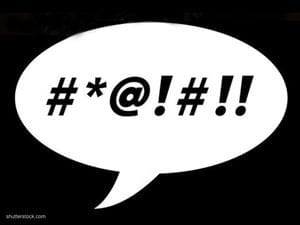
Most of what people today would consider swear words would not have been considered such in biblical times. Many of the modern words that are considered unacceptable today originated as ordinary terms that were first used to describe specific actions, bodily functions, or things in nature but which have since become derogatory terms.
From a biblical standpoint, the goal is a wholistic understanding of speech and action that lend themselves to holiness and kindness. Jesus pointed out to his disciples that the heart is the source of evil words and deeds, so foul language makes visible what is really in a person (Matthew 15.18-19). Paul wrote to the Christian community that God’s holy people should never give themselves to “obscenity, foolish talk or coarse joking, which are out of place” (Ephesians 5.4). Christian faith is incompatible with dirty jokes, obscene talk or gestures, vulgarity, rudeness, and crude humor. In this light, the contemporary terms we call cuss words or swearing would be inappropriate for Christians.
The Bible explicitly forbids, however, taking God’s name in vain. The Ten Commandments are clear: “You shall not misuse the name of the Lord your God, for the Lord will not hold anyone guiltless who misuses his name” (Deuteronomy 5.11). Misuse of God’s name is considered blasphemy, a flagrant disregard for God’s holiness and integrity. According to the Bible, the name of God itself brings into human consciousness the fullness of God’s presence and power. It is the representation of his being (Psalm 138.2). Those who are called by God’s name (Isaiah 43.7; James 2.7) are expected to reflect God’s character and to represent his presence.
One way of misusing God’s name was to swear falsely under oath; using God’s name as a guarantee of one’s own veracity or reliability while in actuality cheating or lying or failing to keep a promise brought God’s name into disrepute. Clearly, cursing or reviling God’s name would also be blasphemous. The prophets condemned the Israelites who would “take oaths in the name of the Lord and invoke the God of Israel—but not in truth or righteousness—you who call yourselves citizens of the holy city and rely on the God is Israel—the Lord Almighty is his name” (Isaiah 48.1-2).
Christians extend this guideline about the name of God to Jesus, God’s Son, and to the Holy Spirit. For them, the casual and caustic use of Jesus Christ as a swear word is disrespectful to God.
There are many names of God in the Bible, but only one by which he describes himself: Yahweh (Exodus 3.13-14). Because this sacred name is especially holy, Jews began to avoid using it in speech and in writing, substituting titles like “the Lord” or “Hashem” (which means the Name).
Read more about Judaism’s beliefs about the nature of God here.
3/23/2021 6:32:39 PM
About About Kathleen Mulhern, Ph.D.
Kathleen Mulhern is a writer, editor, historian, speaker, and professor. She teaches courses in world history, European history, and history of Christianity. She has taught at Colorado School of Mines and Regis University, and is currently an adjunct professor at Denver Seminary in the areas of Church History and Spiritual Formation. Kathleen graduated with a B.A. from Wheaton College, earned an M.A. in French Literature from the University of Denver, an M.A. degree in Church History from Denver Seminary, and a Ph.D. in History from the University of Colorado.
More From Patheos About Biblical References to Swearing
Is Cursing a Sin?
Can Coarse Language and Profanity Be Appropriate?
The Swearing Christian: My 13 Cents
Most Popular

General Christian
When Halloween Unmasks Married Hearts

Evangelical

Evangelical
The REST of Your Life: A Creative Wrestles With Sabbath
#107: Cast of Character(s): This Weeks Episode of The...
Progressive Christian
BONUS SHOW: Autism and RFK Jr.'s Cameo

57th Dove Awards Honor Dolly Parton, Crown New Voices

General Christian
A Biblical Vision of Success in Christian Life and...

General Christian
What a Stop Sign Can Teach Us About God’s Will

Catholic

The Real AI Story Is Adoption Without Trust

The First Eucharistic Controversy: Christ’s Real Presence

General Christian
Archdiocese Hosts Military Marriage Retreat in Germany
Patheos Explore the world's faith through different perspectives on religion and spirituality! Patheos has the views of the prevalent religions and spiritualities of the world.
Ad-Free & Subscriber Log-In Subscription Support
- About Us
- 2026 Calendar
- Videos
- Podcasts
- Library of World Religions
- Faith In Media Tracker
- Advertise With Us
- Write for Us
- Privacy Policy
- Terms of Service
- Do Not Sell My Data
- Contact Us
- Radiant Digital
- Manage Newsletter Subscriptions
- Unsubscribe From Notifications
- Sitemap
Copyright 2008-2026, Patheos. All rights reserved.
Subscription Support Ad-Free & Subscriber Log-In
Follow Patheos