
BuddhistCatholicContemplativeEvangelicalGeneral ChristianHinduJewishLatter-day SaintMuslimNew VisionsProgressive Christian
Beliefs
- Buddhist
- Catholic
- Contemplative
- Evangelical
- General Christian
- Hindu
- Jewish
- Latter-day Saint
- More Voices
- Muslim
- New Visions
- Pagan
- Progressive Christian
Topics
- Religion News
- Food and Religion
- Sports and Religion
- Religious Art
- Religious Music and Entertainment
- Religious Events
- History and Religion
- Style and Religion
- Politics and Religion
- Women in Religion
- Recreation Outdoors and Religion
- Business Finance and Religion
- Careers Workplace and Religion
- Education and Religion
- Family Parenting and Religion
- Health Fitness and Religion
- Home and Religion
- Relationships and Religion
- Technology and Religion
- Travel and Religion
Columnists
- Buddhist Columnists
- Business Finance and Religion Columnists
- Careers Workplace and Religion Columnists
- Catholic Columnists
- Contemplative Columnists
- Education and Religion Columnists
- Evangelists Columnists
- Family Parenting and Religion Columnists
- General Christian Columnists
- Health Fitness and Religion Columnists
- Hindu Columnists
- History and Religion Columnists
- Home and Religion Columnists
- Jewish Columnists
- More Voices Columnists
- Latter Day Columnists
- Muslim Columnists
- New Visions Columnists
- Nonreligious Columnists
- Pagan Columnists
- Politics and Religion Columnists
- Progressive Columnists
- Recreation Outdoors and Religion Columnists
- Relationships and Religion Columnists
- Religion News Columnists
- Religious Art Columnists
- Religious Events Columnists
- Religious Music and Entertainment Columnists
- Sports and Religion Columnists
- Style and Religion Columnists
- Technology and Religion Columnists
- Travel and Religion Columnists
- Women in Religion Columnists
Resource Library
- 2026 Calendar
- Library of World Religions
- The 100 Most Holy Places on Earth
- Patheos Answers
- Podcasts
- Videos
- Faith Leaders Database
- Anglican Episcopalian
- Bahai
- Baptist
- Buddhism
- Christianity
- Confucianism
- Eastern Orthodoxy
- Hinduism
- Holiness and Pentecostal
- ISKCON
- Islam
- Judaism
- Lutheran
- Methodist
- The Church of Jesus Christ of Latter-day Saints
- New Age
- Paganism
- Presbytarian and Reformed
- Protestantism
- Religion Behind the Scenes
- Roman Catholic
- Scientology
- Shia Islam
- Sikhism
- Sufism
- Sunni Islam
- Taoism
- Zen
- See all religions
Research Tools
 Ad-Free & Subscriber Log-In Subscription Support
Ad-Free & Subscriber Log-In Subscription Support
Follow Patheos 

- Trending:
- Forgiveness
- |
- Marriage
- |
- Consciousness
- |
- Death Penalty
- |
- Election
- |
- Halloween
Patheos answers the question:
What Does the Bible Say About Miracles?
by Kathleen Mulhern, Ph.D.
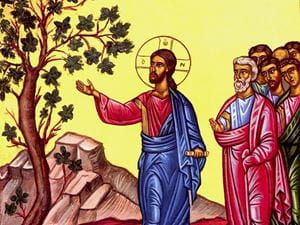
Public Domain
Miracles are wonderful events that are inexplicable from a human perspective, and the Bible is full of them from beginning to end. In many ways, the first miracle is the creation itself (Genesis 1.1). From that point on, according to the Bible, humanity experiences an ongoing engagement with a supernatural reality—the activity of God in the natural world.
The Hebrew scriptures (also known as the Old Testament) describe many supernatural events that change the course of human history. Most people think of a miracle in terms of an unexplainable healing from sickness, but the miracles in the Old Testament are myriad and diverse. One of the best-known miracles in the Old Testament is the parting of the Red Sea, allowing the fleeing Hebrews to walk through it on dry ground (Exodus 14). Many other miracles shaped the experiences of God’s people. Balaam’s donkey spoke to him (Judges 22.21-31); the walls of Jericho fell to a blast by the Israelites’ trumpets (Joshua 6); Elijah called down fire from heaven (1 Kings 18.22-39); the prophet Elisha made iron float (2 Kings 6.1-7); a leper was healed by washing in the Jordan river (2 Kings 5.1-14); Isaiah moved the sun backward (2 Kings 20.9-11); Daniel survived a night in a den with hungry lions (Daniel 6). This is just a small sample of the miraculous stories included in the Old Testament.
In the New Testament, miracles are always associated with Jesus. His birth was miraculous, since he was born to a virgin. During his years of ministry, he became widely known for his healing power and his power over demons (e.g., Mark 1.32). He also multiplied fish and loaves for a crowd of thousands (Matthew 14.15-21), walked on water (John 6.19-21), turned water into wine (John 2.1-11), calmed a storm (Luke 8.22-25), and raised dead people (Matthew 9.18-25; Luke 7.11-15; John 11.1-44). All of these miracles were told as fulfillments of Old Testament prophecies (e.g., Isaiah 29.18-21 and Matthew 11.2-6) or as signs that pointed to the presence of God (Luke 11.20; John 6.26-27). The greatest miracle in the New Testament, and one which serves as the linchpin for everything Christians believe about Jesus, is his resurrection (1 Corinthians 15.12-20).
After the Gospels, there are numerous stories of miracles. The disciples continued Jesus’ healing ministry (e.g., Acts 3.1-10), they encountered angels rescuing them from prison (Acts 12.1-19), they cast out demons (Acts 16.16-18), and they raised people from the dead (Acts 20.7-12). Miracles that took place after Jesus’s death and resurrection were generally used by the apostles to demonstrate the truth and power of God to those who did not yet believe in Christ.
In the modern world, many dismiss Old Testament stories of miracles as myths or, in the case of New Testament miracles, exaggerations designed to enhance Jesus’ role. Believing in a divine being and unseen realities, however, opens the door to an unspeakably vast universe of possibilities, making miracles not only possible but likely. Their purpose is not to entertain or amaze, but to point to the reality of God’s presence in our own experiences.
Read more about Jesus’ miracles here.
3/23/2021 6:32:40 PM
About About Kathleen Mulhern, Ph.D.
Kathleen Mulhern is a writer, editor, historian, speaker, and professor. She teaches courses in world history, European history, and history of Christianity. She has taught at Colorado School of Mines and Regis University, and is currently an adjunct professor at Denver Seminary in the areas of Church History and Spiritual Formation. Kathleen graduated with a B.A. from Wheaton College, earned an M.A. in French Literature from the University of Denver, an M.A. degree in Church History from Denver Seminary, and a Ph.D. in History from the University of Colorado.
More From Patheos About Miracles
Does God Still Perform Miracles? (Some Evidence)
What Was Jesus First Miracle? A Look at the Bible Story
Can a Modern Scientist Believe in God and Miracles?
How Does an Open Theist Explain Miracles?
How Do We Know Jesus Did Miracles?
How the Miracles of the Bible Obscure the Miracle of Jesus
Most Popular

General Christian
When Halloween Unmasks Married Hearts

Evangelical

Evangelical
The REST of Your Life: A Creative Wrestles With Sabbath

#107: Cast of Character(s): This Weeks Episode of The...
Progressive Christian
BONUS SHOW: Autism and RFK Jr.'s Cameo

57th Dove Awards Honor Dolly Parton, Crown New Voices

General Christian
A Biblical Vision of Success in Christian Life and...

General Christian
What a Stop Sign Can Teach Us About God’s Will

Catholic

The Real AI Story Is Adoption Without Trust

The First Eucharistic Controversy: Christ’s Real Presence

General Christian
Archdiocese Hosts Military Marriage Retreat in Germany
Patheos Explore the world's faith through different perspectives on religion and spirituality! Patheos has the views of the prevalent religions and spiritualities of the world.
Ad-Free & Subscriber Log-In Subscription Support
- About Us
- 2026 Calendar
- Videos
- Podcasts
- Library of World Religions
- Faith In Media Tracker
- Advertise With Us
- Write for Us
- Privacy Policy
- Terms of Service
- Do Not Sell My Data
- Contact Us
- Radiant Digital
- Manage Newsletter Subscriptions
- Unsubscribe From Notifications
- Sitemap
Copyright 2008-2026, Patheos. All rights reserved.
Subscription Support Ad-Free & Subscriber Log-In
Follow Patheos