
BuddhistCatholicContemplativeEvangelicalGeneral ChristianHinduJewishLatter-day SaintMuslimNew VisionsProgressive Christian
Beliefs
- Buddhist
- Catholic
- Contemplative
- Evangelical
- General Christian
- Hindu
- Jewish
- Latter-day Saint
- More Voices
- Muslim
- New Visions
- Pagan
- Progressive Christian
Topics
- Religion News
- Food and Religion
- Sports and Religion
- Religious Art
- Religious Music and Entertainment
- Religious Events
- History and Religion
- Style and Religion
- Politics and Religion
- Women in Religion
- Recreation Outdoors and Religion
- Business Finance and Religion
- Careers Workplace and Religion
- Education and Religion
- Family Parenting and Religion
- Health Fitness and Religion
- Home and Religion
- Relationships and Religion
- Technology and Religion
- Travel and Religion
Columnists
- Buddhist Columnists
- Business Finance and Religion Columnists
- Careers Workplace and Religion Columnists
- Catholic Columnists
- Contemplative Columnists
- Education and Religion Columnists
- Evangelists Columnists
- Family Parenting and Religion Columnists
- General Christian Columnists
- Health Fitness and Religion Columnists
- Hindu Columnists
- History and Religion Columnists
- Home and Religion Columnists
- Jewish Columnists
- More Voices Columnists
- Latter Day Columnists
- Muslim Columnists
- New Visions Columnists
- Nonreligious Columnists
- Pagan Columnists
- Politics and Religion Columnists
- Progressive Columnists
- Recreation Outdoors and Religion Columnists
- Relationships and Religion Columnists
- Religion News Columnists
- Religious Art Columnists
- Religious Events Columnists
- Religious Music and Entertainment Columnists
- Sports and Religion Columnists
- Style and Religion Columnists
- Technology and Religion Columnists
- Travel and Religion Columnists
- Women in Religion Columnists
Resource Library
- 2026 Calendar
- Library of World Religions
- The 100 Most Holy Places on Earth
- Patheos Answers
- Podcasts
- Videos
- Faith Leaders Database
- Anglican Episcopalian
- Bahai
- Baptist
- Buddhism
- Christianity
- Confucianism
- Eastern Orthodoxy
- Hinduism
- Holiness and Pentecostal
- ISKCON
- Islam
- Judaism
- Lutheran
- Methodist
- The Church of Jesus Christ of Latter-day Saints
- New Age
- Paganism
- Presbytarian and Reformed
- Protestantism
- Religion Behind the Scenes
- Roman Catholic
- Scientology
- Shia Islam
- Sikhism
- Sufism
- Sunni Islam
- Taoism
- Zen
- See all religions
Research Tools
 Ad-Free & Subscriber Log-In Subscription Support
Ad-Free & Subscriber Log-In Subscription Support
Follow Patheos 

- Trending:
- Forgiveness
- |
- Marriage
- |
- Consciousness
- |
- Death Penalty
- |
- Election
- |
- Halloween
- Home
- Evangelical
- History and Religion
- Answers
- What Does Render Unto Caesar Mean?
Patheos answers the question:
What Does "Render Unto Caesar" Mean?
Adobe Stock
In a first century conversation with a group of Pharisees and Herodians, Jesus was questioned about His allegiance to Tiberius Caesar, the Roman Emperor (who reigned from AD 14 through AD 37). While the conversation might have appeared innocent on its face, the Bible indicates that these religious leaders and political pundits were actually seeking to entrap Jesus through their calculated question. (See Matthew 22:18; Mark 12:15; Luke 20:23)
A Trap Set by Unlikely Allies
The Pharisees saw Jesus as a threat to the religious order of the day, and the Herodians (loyal to Herod Antipas and the larger Herodian dynasty) were concerned about political stability and the continuance of Roman oversight. Both perceived Jesus as challenging the status quo and each wished to end His influence and impact on the people.
Though not natural allies, because they both saw Jesus as a threat, these unlikely bedfellows decided to unite in an effort to “entangle” or “entrap” Him “in His words” (Matt 22:15; Mk 12:13). Thus, they sought to place Jesus in a Catch-22 situation where, no matter what He said (in response to their question), He would be “guilty” of some form of transgression—either of Roman or Jewish law.
So, these religious and political patrons came to Christ and ask Him this one simple question: “Is it lawful to give tribute” or pay taxes “to Caesar?” (Matt 22:17; Mk 12:14; Lk 20:22) If Jesus answered “No,” He would be guilty of challenging the authority of the emperor and encouraging disobedience to Roman law. However, if He had answered “Yes,” then He would be guilty of placing the authority of a man (Tiberius Caesar) and his oppressive reign over God’s law and the religious leaders of the Children of Israel. There seemed to be no way “out” of this paradoxical position Jesus had been placed in.
Jesus’ Masterful Response
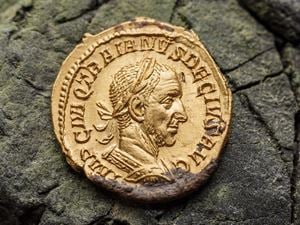
However, “perceiving their wickedness,” “hypocrisy,” and “craftiness” (Matt 22:18; Mk 12:15; Lk 20:23), Jesus said to them, “Shew me a penny” (or denarius—the coin required to pay taxes to the State). They handed him the legal tender of the day; a coin containing the image and name of the Roman emperor. To which Jesus simply asked, “Whose image and superscription is this?” “It is Caesar’s,” they responded. To which Jesus declared, “Then give to Caesar what belongs to Caesar and give to God what belongs to God.” (Matt 22:21; Mk 12:17; Lk 20:25)
While the both the Pharisees and Herodians thought they could entrap Jesus by getting Him to say something that challenged the validity of the “Church or the State,” Christ essentially sidestepped the question, saying each (“Church and State”) have their place in a functioning society, and a subject of the kingdom of Rome and of the kingdom of God has a duty to both.
Jesus essentially said what Paul would articulate decades later: “Let everyone be subject to the governing authorities, for there is no authority except that which God has established. The authorities that exist have been established by God.” (Romans 13:1) Government exists because God allows it to. Thus, obedience to the “laws of the land” is equivalent to obedience to the God who established secular government for the safety, protection, and functionality of the very humans He created.
There is an additional layer to what Jesus was saying in this crafty conversation. While He clearly implied that God is above all, He also acknowledges that political powers (whom He indicated that God had placed in their positions of influence) were legitimate in their own realm and sphere of influence. By acknowledging God as the source of secular government, Jesus was also essentially acknowledging the principle of “”—something foreign to Roman thinking (in the first century), though not necessarily an idea that would have been unpleasant to Roman rulers of the period.
Indeed, the Romans typically believed that their emperors’ authority was divinely sanctioned and often accepted the emperors as “divine representatives” of the gods of the State, with the potential for deification after death. Jesus simply claimed that His Father was the “God of the State,” rather than Jupiter, Juno, or Minerva.
Whose Image Do You Bear?
All that being said, Jesus’ comment that one should “render unto Caesar the things which belong to Caesar, and unto God the things which belong to God” was rooted in His question about “image.”
In other words, Jesus asked whose “image” and “name” the coin bore? Of course, it was Caesar’s. He might just as well have asked, “And whose image and name do you bear?” The correct answer would have been “God’s.” (Genesis 1:26-27; James 3:9). Jesus was essentially teaching that the things which bear the image of the government, or the world, belong to the government and the world, but the things which bear the image of God or bear the name of God should be given to God.
Let Caesar have the coins, the taxes!
However, give yourself, your heart, your life to God, whose image you bear and whose name you’ve taken upon yourself (e.g., “Christians”). This is essentially what Jesus was teaching, not just to His Pharisaical and Political adversaries but to His disciples as well. Let them have their coins but give your life over to God.
Additional Resources:
Render Unto Ceasar... What Did Jesus Teach About Church & State
Render Unto Caesar (Video) by Grace Church
5/31/2025 4:32:03 PM
Most Popular
- Home
- Evangelical
- History and Religion
- Answers
- What Does Render Unto Caesar Mean?
General Christian
A Biblical Vision of Success in Christian Life and...
- Home
- Evangelical
- History and Religion
- Answers
- What Does Render Unto Caesar Mean?
Catholic
- Home
- Evangelical
- History and Religion
- Answers
- What Does Render Unto Caesar Mean?
The Real AI Story Is Adoption Without Trust
- Home
- Evangelical
- History and Religion
- Answers
- What Does Render Unto Caesar Mean?
General Christian
Archdiocese Hosts Military Marriage Retreat in Germany
- Home
- Evangelical
- History and Religion
- Answers
- What Does Render Unto Caesar Mean?
Catholic
Swimfan: Forgotten Aughts Pleasures
- Home
- Evangelical
- History and Religion
- Answers
- What Does Render Unto Caesar Mean?
Catholic
Top Three Anti-Catholic Lies About Catholicism
- Home
- Evangelical
- History and Religion
- Answers
- What Does Render Unto Caesar Mean?
Latter-day Saint
- Home
- Evangelical
- History and Religion
- Answers
- What Does Render Unto Caesar Mean?
Catholic
Pope Leo Celebrates Mass for Nurses & Docs While in...
- Home
- Evangelical
- History and Religion
- Answers
- What Does Render Unto Caesar Mean?
Catholic
The Sermon on the Mount, Part I: Matthew 4:12-5:12
- Home
- Evangelical
- History and Religion
- Answers
- What Does Render Unto Caesar Mean?
Catholic
Janie Learns the Way of the Cross: A Catholic Review
- Home
- Evangelical
- History and Religion
- Answers
- What Does Render Unto Caesar Mean?
Entertainment
- Home
- Evangelical
- History and Religion
- Answers
- What Does Render Unto Caesar Mean?
Evangelical
How the author of the world's best hymn became a Christian
Patheos Explore the world's faith through different perspectives on religion and spirituality! Patheos has the views of the prevalent religions and spiritualities of the world.
Ad-Free & Subscriber Log-In Subscription Support
- About Us
- 2026 Calendar
- Videos
- Podcasts
- Library of World Religions
- Faith In Media Tracker
- Advertise With Us
- Write for Us
- Privacy Policy
- Terms of Service
- Do Not Sell My Data
- Contact Us
- Radiant Digital
- Manage Newsletter Subscriptions
- Unsubscribe From Notifications
- Sitemap
Copyright 2008-2026, Patheos. All rights reserved.
Subscription Support Ad-Free & Subscriber Log-In
Follow Patheos