
BuddhistCatholicContemplativeEvangelicalGeneral ChristianHinduJewishLatter-day SaintMuslimNew VisionsProgressive Christian
Beliefs
- Buddhist
- Catholic
- Contemplative
- Evangelical
- General Christian
- Hindu
- Jewish
- Latter-day Saint
- More Voices
- Muslim
- New Visions
- Pagan
- Progressive Christian
Topics
- Religion News
- Food and Religion
- Sports and Religion
- Religious Art
- Religious Music and Entertainment
- Religious Events
- History and Religion
- Style and Religion
- Politics and Religion
- Women in Religion
- Recreation Outdoors and Religion
- Business Finance and Religion
- Careers Workplace and Religion
- Education and Religion
- Family Parenting and Religion
- Health Fitness and Religion
- Home and Religion
- Relationships and Religion
- Technology and Religion
- Travel and Religion
Columnists
- Buddhist Columnists
- Business Finance and Religion Columnists
- Careers Workplace and Religion Columnists
- Catholic Columnists
- Contemplative Columnists
- Education and Religion Columnists
- Evangelists Columnists
- Family Parenting and Religion Columnists
- General Christian Columnists
- Health Fitness and Religion Columnists
- Hindu Columnists
- History and Religion Columnists
- Home and Religion Columnists
- Jewish Columnists
- More Voices Columnists
- Latter Day Columnists
- Muslim Columnists
- New Visions Columnists
- Nonreligious Columnists
- Pagan Columnists
- Politics and Religion Columnists
- Progressive Columnists
- Recreation Outdoors and Religion Columnists
- Relationships and Religion Columnists
- Religion News Columnists
- Religious Art Columnists
- Religious Events Columnists
- Religious Music and Entertainment Columnists
- Sports and Religion Columnists
- Style and Religion Columnists
- Technology and Religion Columnists
- Travel and Religion Columnists
- Women in Religion Columnists
Resource Library
- 2026 Calendar
- Library of World Religions
- The 100 Most Holy Places on Earth
- Patheos Answers
- Podcasts
- Videos
- Faith Leaders Database
- Anglican Episcopalian
- Bahai
- Baptist
- Buddhism
- Christianity
- Confucianism
- Eastern Orthodoxy
- Hinduism
- Holiness and Pentecostal
- ISKCON
- Islam
- Judaism
- Lutheran
- Methodist
- The Church of Jesus Christ of Latter-day Saints
- New Age
- Paganism
- Presbytarian and Reformed
- Protestantism
- Religion Behind the Scenes
- Roman Catholic
- Scientology
- Shia Islam
- Sikhism
- Sufism
- Sunni Islam
- Taoism
- Zen
- See all religions
Research Tools
 Ad-Free & Subscriber Log-In Subscription Support
Follow Patheos 

- Trending:
- Advent
- |
- Forgiveness
- |
- Thanksgiving
- |
- Election
- |
- Seasonal Holidays
- |
- Marriage
Patheos answers the question:
What Does it Mean to Speak in Tongues?
Shutterstock.com
To speak in tongues is, most commonly, a form of Christian prayer in which the petitioner uses no known language to address God. It is also called glossolalia. Those who practice this believe that their words are a heavenly language given by God.
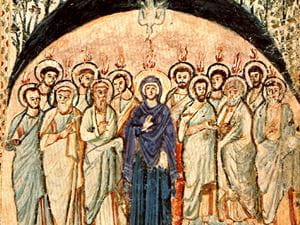
The practice is derived from the experience of the earliest Christians fifty days after Jesus’ resurrection. The occasion was a Jewish holiday called Shavuot, also called the Feast of Weeks or Pentecost, which is celebrated on the sixth day of Sivan, the third month of the Hebrew calendar. The story is told in Acts 2 of the Jews gathered in Jerusalem for this celebration when the Holy Spirit descended with a great wind and tongues of fire that anointed Jesus’ followers. These followers then proceeded to teach and preach in a wide variety of languages native to the many visitors to the city. Since these languages were known rather than heavenly, some consider this a different experience from what is practiced today.
Nevertheless, the apostle Paul addressed the practice, calling it a spiritual gift in 1 Corinthians 14. He diminished its importance, relative to the gift of prophecy, because the one who spoke in tongues was speaking to God and no one could understand the pray-er, “who uttered mysteries.” As the practice grew, so did the role of interpreting the prayers said in tongues. The interpretation of tongues became a spiritual gift as well.
The practice waned, however, in the centuries after the early church. It was revived in the early 20th century by the teachings and experiences of Charles Parham and William Seymour, both pastors and leaders. William Seymour was leading a church in Los Angeles, California, and his preaching and teaching on the Holy Spirit led to a years-long revival, referred to today as the Azusa Street Revival. While revivals have long been a part of the Protestant culture, the Azusa Street Revival was unusual in part because its multi-racial aspect. Both blacks and whites together experienced a spiritual renewal that included speaking in tongues. This ignited the globally known Pentecostal movement, which numbers nearly 300 million today. While Pentecostalism is an umbrella term that includes many different denominations, each with unique traditions and practices, most Pentecostals believe that speaking in tongues is a normal sign of the baptism of the Holy Spirit, which is a necessary post-conversion experience. They base their beliefs on the experiences of the early church as described in Acts, where new believers consistently spoke in tongues (Acts 10.44-46, 19.6).
In the 1960s, some Pentecostal beliefs and practices began to spread through non-Pentecostal denominations. Roman Catholics, Episcopalians, and other mainline churches began exploring the spiritual gifts, particularly speaking in tongues, healing, and prophecies. This wave of spiritual renewal, focused on baptism in the Holy Spirit, is called the charismatic renewal and continues to impact Christianity across the spectrum. Studies estimate that nearly 27 percent of all Christians today are either Pentecostal or charismatic.
3/23/2021 6:32:39 PM
About About Kathleen Mulhern, Ph.D.
Kathleen Mulhern is a writer, editor, historian, speaker, and professor. She teaches courses in world history, European history, and history of Christianity. She has taught at Colorado School of Mines and Regis University, and is currently an adjunct professor at Denver Seminary in the areas of Church History and Spiritual Formation. Kathleen graduated with a B.A. from Wheaton College, earned an M.A. in French Literature from the University of Denver, an M.A. degree in Church History from Denver Seminary, and a Ph.D. in History from the University of Colorado.
More From Patheos About Speaking in Tongues?
What Does Research Say About Speaking in Tongues?
Did Jesus Speak in Tongues When He Was Here?
Different Kinds of Tongues: Biblical & Linguistic Defense
Can You Be a Southern Baptist and Believe in the Miraculous Gifts?
Speaking in Tongues
Evangelical Culture Myths: #1 Speaking in Tongues is From the Devil, Unless Interpreted
Most Popular
Progressive Christian
Catholic
The Trouble with Taking Chesterton Literally
Buddhist
James Ishmael Ford's books on Zen
Progressive Christian
Belief and Disbelief in Christ's Presence in Holy...

General Christian
Evangelical
Blue Christmas: Making Room for Grief at Church
Evangelical
We Can Trust That God Will Use Our Suffering for Great...
Latter-day Saint
More Than a Meal: A Messianic Thanksgiving
Progressive Christian
The Darkening of the Sun, Moon, and Stars
Patheos Explore the world's faith through different perspectives on religion and spirituality! Patheos has the views of the prevalent religions and spiritualities of the world.
Ad-Free & Subscriber Log-In Subscription Support
- About Us
- 2026 Calendar
- Videos
- Podcasts
- Library of World Religions
- Faith In Media Tracker
- Advertise With Us
- Write for Us
- Privacy Policy
- Terms of Service
- Do Not Sell My Data
- Contact Us
- Radiant Digital
- Manage Newsletter Subscriptions
- Unsubscribe From Notifications
- Sitemap
Copyright 2008-2026, Patheos, part of the Radiant Digital network of media brands. All rights reserved.
Subscription Support Ad-Free & Subscriber Log-In
Follow Patheos