
BuddhistCatholicContemplativeEvangelicalGeneral ChristianHinduJewishLatter-day SaintMuslimNew VisionsProgressive Christian
Beliefs
- Buddhist
- Catholic
- Contemplative
- Evangelical
- General Christian
- Hindu
- Jewish
- Latter-day Saint
- More Voices
- Muslim
- New Visions
- Pagan
- Progressive Christian
Topics
- Religion News
- Food and Religion
- Sports and Religion
- Religious Art
- Religious Music and Entertainment
- Religious Events
- History and Religion
- Style and Religion
- Politics and Religion
- Women in Religion
- Recreation Outdoors and Religion
- Business Finance and Religion
- Careers Workplace and Religion
- Education and Religion
- Family Parenting and Religion
- Health Fitness and Religion
- Home and Religion
- Relationships and Religion
- Technology and Religion
- Travel and Religion
Columnists
- Buddhist Columnists
- Business Finance and Religion Columnists
- Careers Workplace and Religion Columnists
- Catholic Columnists
- Contemplative Columnists
- Education and Religion Columnists
- Evangelists Columnists
- Family Parenting and Religion Columnists
- General Christian Columnists
- Health Fitness and Religion Columnists
- Hindu Columnists
- History and Religion Columnists
- Home and Religion Columnists
- Jewish Columnists
- More Voices Columnists
- Latter Day Columnists
- Muslim Columnists
- New Visions Columnists
- Nonreligious Columnists
- Pagan Columnists
- Politics and Religion Columnists
- Progressive Columnists
- Recreation Outdoors and Religion Columnists
- Relationships and Religion Columnists
- Religion News Columnists
- Religious Art Columnists
- Religious Events Columnists
- Religious Music and Entertainment Columnists
- Sports and Religion Columnists
- Style and Religion Columnists
- Technology and Religion Columnists
- Travel and Religion Columnists
- Women in Religion Columnists
Resource Library
- 2026 Calendar
- Library of World Religions
- The 100 Most Holy Places on Earth
- Patheos Answers
- Podcasts
- Videos
- Faith Leaders Database
- Anglican Episcopalian
- Bahai
- Baptist
- Buddhism
- Christianity
- Confucianism
- Eastern Orthodoxy
- Hinduism
- Holiness and Pentecostal
- ISKCON
- Islam
- Judaism
- Lutheran
- Methodist
- The Church of Jesus Christ of Latter-day Saints
- New Age
- Paganism
- Presbytarian and Reformed
- Protestantism
- Religion Behind the Scenes
- Roman Catholic
- Scientology
- Shia Islam
- Sikhism
- Sufism
- Sunni Islam
- Taoism
- Zen
- See all religions
Research Tools
 Ad-Free & Subscriber Log-In Subscription Support
Follow Patheos 

- Trending:
- Advent
- |
- Forgiveness
- |
- Thanksgiving
- |
- Election
- |
- Seasonal Holidays
- |
- Marriage
Patheos answers the question:
What Do Catholics Believe About Purgatory?
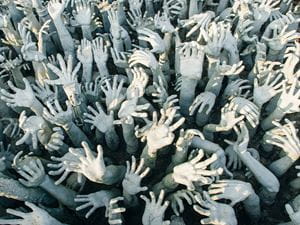
Shutterstock.com
The terms “purgatory,” “hell,” and “limbo” are confused more often than one would expect and, surprisingly, even among practicing Catholics there is occasional confusion. Part of that is because the doctrine behind each is not taught as dogmatically today as it once was. Another reason for the uncertainty stems from the terms themselves. “Purgatory,” for example, sure sounds like a place to have your sins “purged”—and isn’t that what we think of when we imagine an evil person being “punished” in hell? While “limbo” may sound more reminiscent of something you did at a college frat party, even that term is too often associated with a place of “penalty”—specifically a location where children who died unbaptized must spend eternity, completely locked out of God’s presence because their status at death did not qualify them to dwell with Him for eternity.
In Roman Catholicism, purgatory is a place of purification, which the deceased visit (after the time of their death and prior to their entrance into heaven), in which they are purified of any unresolved sins or other obstacles to entering into their heavenly reward, thereby eventually enjoying eternal union with the divine. It is typically understood that the process of theosis or divinization—which was started with the mortal experience—is completed through purgatory, where any last venal sins and lingering imperfections are removed through sanctification, thereby making the believer holy and prepared for union with God.
Purgatory is sometimes misunderstood in two significant ways. First, some erroneously assume that the process of purging the elect of any imperfections (in purgatory), thereby purifying them, is essentially not distinct from the process of punishing or purging the damned in hell. This is a totally inaccurate and mistaken connection. Purgatory serves as a place wherein the finalization of one’s salvation is accomplished; it is the placing the proverbial “bow” on the gift of God to all the faithful—namely, the gift of dwelling with God for eternity in heaven. Hell, on the other hand, is a place wherein the unrighteous are not “rewarded” for their lives or their love of the Lord. Rather, it is the location of the eternally damned; and the purging which takes place there does not lead to a post-penance reward, but exists as a consequence of the person’s unwillingness to embrace God and the gifts He freely offered. Second, it is also sometimes erroneously assumed that purgatory is a place where those who have not accepted Christ will have the opportunity to do so; a sort of pseudo-post-mortal mission or confessional where the holy proselytize and instruct the unconverted so that they can accept Christ, repent, and thereby be redeemed. However, in official Catholic teachings, purgatory is not a place where one who has rejected God (in mortality) can change his or her decision, and suddenly “convert” to Christ or the Church. Rather, it is the locale that those who have already accepted God can finalize their process of sanctification in anticipation of entering into the beatific vision.
Beyond the “purging” that takes place in both purgatory and hell, one of the reasons those two very different places are so often confused has to do with the iconography associated with both. Depictions of purgatory, like images of hell, often include fire and images of individuals who seem to be in a state of pain or suffering. Thus, many struggle to discern the difference between an iconographic representation of hell and one of purgatory. Those seemingly similar depictions only add to the confusion so prevalent among the theologically unsavvy.
While the concept of a post-mortal dwelling place that the mortally deceased enter prior to receiving their heavenly reward—a place where the good go to be made better before entering God’s presence—actually exists in several traditions (e.g., Catholicism, Eastern Orthodoxy, The Church of Jesus Christ of Latter-day Saints, etc.). However, not all traditions call it “purgatory”—and low-church Protestants generally deny its existence altogether.
Purgatory is not simply a place but a sign, a sign of God’s grace, love, and extreme forgiveness. As a soteriological doctrine, it testifies that God is so good and so forgiving that even those who fall short of the perfection requisite to dwell eternally with God (Revelation 21:27) can—through the blessing of purgatory—achieve the beatific vision which He has created out of His love for His creations.
Read more about Roman Catholic beliefs about the afterlife and salvation here.
3/9/2023 10:04:36 PM
About ALONZO L. GASKILL, PH.D.
Alonzo L. Gaskill is an author, editor, theologian, lecturer, and professor of World Religions. He holds degrees in philosophy, theology/comparative religion, and biblical studies. He has authored more than two-dozen books and numerous articles on various aspects of religion; with topics ranging from world religions and interfaith dialogue, to scriptural commentaries, texts on symbolism, sacred space, and ritual, and even devotional literature.
More From Patheos About Purgatory
Why Purgatory Makes Sense
25 Bible Passages Indicating or Suggesting Purgatory
How to Explain Purgatory to Everyone
Most Popular

Progressive Christian
Smart people saying smart things (11.24.26)
The Contingency of Our Technology

Progressive Christian
Progressive Christian
Reasons for Restraint: Ricardo Gonzalez, Florida and Dec 1
General Christian
Psalm 5: David Pleads His Case
Progressive Christian
It All Counts: A Conversation With Natalia Terfa
General Christian
Reflections of a Recovered Evangelical: Honoring the...

Latter-day Saint
Progressive Christian
'Statements of Faith' never get shorter
Evangelical
Michele's Reviews - Future Grace by John Piper

Evangelical
Bama Gramma's Blackout Christmas: the Power of Light...
Patheos Explore the world's faith through different perspectives on religion and spirituality! Patheos has the views of the prevalent religions and spiritualities of the world.
Ad-Free & Subscriber Log-In Subscription Support
- About Us
- 2026 Calendar
- Videos
- Podcasts
- Library of World Religions
- Faith In Media Tracker
- Advertise With Us
- Write for Us
- Privacy Policy
- Terms of Service
- Do Not Sell My Data
- Contact Us
- Radiant Digital
- Manage Newsletter Subscriptions
- Unsubscribe From Notifications
- Sitemap
Copyright 2008-2026, Patheos, part of the Radiant Digital network of media brands. All rights reserved.
Subscription Support Ad-Free & Subscriber Log-In
Follow Patheos