
BuddhistCatholicContemplativeEvangelicalGeneral ChristianHinduJewishLatter-day SaintMuslimNew VisionsProgressive Christian
Beliefs
- Buddhist
- Catholic
- Contemplative
- Evangelical
- General Christian
- Hindu
- Jewish
- Latter-day Saint
- More Voices
- Muslim
- New Visions
- Pagan
- Progressive Christian
Topics
- Religion News
- Food and Religion
- Sports and Religion
- Religious Art
- Religious Music and Entertainment
- Religious Events
- History and Religion
- Style and Religion
- Politics and Religion
- Women in Religion
- Recreation Outdoors and Religion
- Business Finance and Religion
- Careers Workplace and Religion
- Education and Religion
- Family Parenting and Religion
- Health Fitness and Religion
- Home and Religion
- Relationships and Religion
- Technology and Religion
- Travel and Religion
Columnists
- Buddhist Columnists
- Business Finance and Religion Columnists
- Careers Workplace and Religion Columnists
- Catholic Columnists
- Contemplative Columnists
- Education and Religion Columnists
- Evangelists Columnists
- Family Parenting and Religion Columnists
- General Christian Columnists
- Health Fitness and Religion Columnists
- Hindu Columnists
- History and Religion Columnists
- Home and Religion Columnists
- Jewish Columnists
- More Voices Columnists
- Latter Day Columnists
- Muslim Columnists
- New Visions Columnists
- Nonreligious Columnists
- Pagan Columnists
- Politics and Religion Columnists
- Progressive Columnists
- Recreation Outdoors and Religion Columnists
- Relationships and Religion Columnists
- Religion News Columnists
- Religious Art Columnists
- Religious Events Columnists
- Religious Music and Entertainment Columnists
- Sports and Religion Columnists
- Style and Religion Columnists
- Technology and Religion Columnists
- Travel and Religion Columnists
- Women in Religion Columnists
Resource Library
- 2026 Calendar
- Library of World Religions
- The 100 Most Holy Places on Earth
- Patheos Answers
- Podcasts
- Videos
- Faith Leaders Database
- Anglican Episcopalian
- Bahai
- Baptist
- Buddhism
- Christianity
- Confucianism
- Eastern Orthodoxy
- Hinduism
- Holiness and Pentecostal
- ISKCON
- Islam
- Judaism
- Lutheran
- Methodist
- The Church of Jesus Christ of Latter-day Saints
- New Age
- Paganism
- Presbytarian and Reformed
- Protestantism
- Religion Behind the Scenes
- Roman Catholic
- Scientology
- Shia Islam
- Sikhism
- Sufism
- Sunni Islam
- Taoism
- Zen
- See all religions
Research Tools
 Ad-Free & Subscriber Log-In Subscription Support
Ad-Free & Subscriber Log-In Subscription Support
Follow Patheos 

- Trending:
- Forgiveness
- |
- Marriage
- |
- Consciousness
- |
- Death Penalty
- |
- Election
- |
- Halloween
Patheos answers the question:
What Do Catholics Believe About Death and the Afterlife?
by Alonzo L. Gaskill, PH.D.
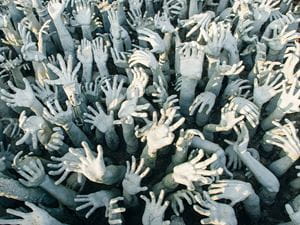
Shutterstock.com
Most scholars acknowledge that the “afterlife” is described in a variety of ways in scripture—and what we can learn from the Hebrew Bible about heaven is significantly different from what the New Testament tells us, or from what contemporary Roman Catholic theology states about the various stages associated with the afterlife.
In Catholic teaching, mortal death is understood to be a direct result of the choices of Adam and Eve (in Eden) and the resulting doctrine of original sin. In the understanding of most Roman Catholics, had Adam and Even not partaken of the so-called “forbidden fruit,” death would not have entered the world and all of God’s creations would have dwelt eternally in the paradisical Edenic state.
Post-Vatican II thinking about death and the stages of post-mortal progression is less dogmatic than in previous eras, producing various views and less uniformity on what happens when one dies. While Catholic theology surrounding the afterlife has traditionally included discussions of hell, purgatory, limbo, resurrection, and heaven, not all Catholics believe the same things about these stages and what happens in each—though it is generally understood that each stage is distinct and each serves an entirely different purpose for the deceased.
Hell
While depictions of hell (in Catholic iconography) are often filled with images of flames and suffering, sometimes depictions of purgatory are erroneously assumed to be representations of hell instead. And, while the idea of a hell filled with flames and the severe punishment of the sinful, that image is not really consistent with what the Church teaches about hell today.
St. John Paul II, when pope, counseled members of the Church to think of hell and/or purgatory, less as a “place after a manner known and familiar to us,” and instead as a “state” of mind—or a state of the “soul.” Hell is not “inflicted upon us” by God. No! God is merciful, and He could never will or desire anything other than our eternal life together with Him. Rather, hell—in contemporary Catholic theology—is most often seen as a personal choice which John Paul II said is a “self-inflicted punishment” because we have chosen to love sin more than we love God. We have chosen to intentionally and fully refuse God’s grace and reject God’s person—thereby producing for ourselves the pain of a self-created “hell.” Thus, the then pontiff explained that God has simply never revealed “whether or which human beings” have gone or will go to hell, or even if such a place actually exists. Indeed, of the existence of hell, the Encyclopedia of Catholicism states: “While the Church has canonized many saints, affirming that there are human beings in heaven, it has never affirmed that there is, in fact, a single human being in hell.” Thus, Johnathan Edward’s Puritan vision of hell as a place where “there is the dreadful pit of the glowing flames of the wrath of God,” “ready to receive” and punish sinners—is not how official Catholic theology perceives the place.
Purgatory
For Catholics, purgatory is a place of purification, which the deceased visit (after the time of death and prior to entrance into heaven), in which they are purified of any unresolved sins or obstacles to entering into their heavenly reward, thereby enjoying eternal union with the divine.
It is typically held that the process of theosis or divinization—which was started with the mortal experience—is completed through purgatory, where any last venal sins and lingering imperfections are removed through sanctification, thereby making the believer holy and prepared for union with God.
Purgatory is sometimes misunderstood to be a place where those who have not accepted Christ will have the opportunity to do so. However, in official teachings, purgatory is not a place where one who has rejected God (in mortality) can change his or her decision, and suddenly “convert” to Christ or the Church. Rather, it is the locale that those who have already accepted God can finalize their process of sanctification in anticipation of entering into the beatific vision.
Limbo
Limbo is the most misunderstood of the Catholic stages of post-mortal existence. Is it a doctrine of the Church? Has it every officially been a dogmatic teaching, finding support in the councils and resulting teachings of the Church?
Some will remember that, during the pontificate of Benedict XIV, the phrase went around that “Limbo is in limbo.” Indeed, in 2007, a statement was issued (by the International Theological Commission) clarifying that limbo is not an official dogma of the Church. In support of that claim, the HarperCollins Encyclopedia of Catholicism says of limbo that “Medieval theologians, wishing to mitigate the harshness of Augustine’s position” on what happens to infants who die unbaptized, “postulated the existence of limbo.” However, today the Church “questions the theological premises upon which limbo is based” and “this theological postulate plays no role in contemporary Catholic theology.” Thus, while many may still believe in limbo, the Church today officially sees it as unofficial—and as a theological premise which calls into question God’s grace and nature as a perfectly loving being.
Heaven
Heaven is technically the fulfillment of the very purpose for which we were created. God’s goal, God’s intent—from the very beginning—was the salvation of all His creations. Thus, achievement of the heavenly reward is fulfillment of the goal of God. Heaven is, in Catholic thinking, a permanent and perfected relationship between God, the Creator, and us, His creations.
According to contemporary Catholics teachings, the idea of heaven as a place—with streets paved with “pure gold” (Revelation 21:21), walls made of “jasper” (Revelation 21:18), where everyone lives in their personal “mansion” (John 14:2), where “gates” or doorways are made of “pearls” (Revelation 21:21), where the residents sit on “thrones” (Revelation 20:4), and where there are no lights and no sun, because God’s glory “lightens” it (Revelation 21:23)—is officially seen as a symbolic metaphor, and not the reality of what heaven will be like. That doesn’t mean that there aren’t Roman Catholics who expect a heaven exactly as described; only that the Church does not hold these images to be literal.
In 1999, Pope John Paul II declared that heaven is the “fullness of communion with God” which has always been “the goal of human life.” The idea that heaven is “the dwelling-place of God” is “metaphorical.” “‘Heaven’ is simply one of God’s names”—it is “an image of life in God.” The pope added that “we know that the ‘heaven’…is neither an abstraction nor a physical place in the clouds, but a living, personal relationship with the Holy Trinity. It is our meeting with the Father which takes place in the risen Christ through the communion of the Holy Spirit.”
Though it is true that most Catholics believe in an afterlife, and many perceive heaven as a place where God “will wipe every tear from their eyes. Death will be no more; mourning and crying and pain will be no more, for the first things have passed away” (Revelation 21:4). Nonetheless, in recent years, the Church has moved away of speaking of heaven as a location, and more as an eternal state of being, where the saved are one with God, and where the saved—like God—may exist everywhere, rather than in a mythical location with mansions and golden streets.
Resurrection
Many of the creeds of Christendom (e.g., the Apostles’ Creed, the Nicene and Athanasian creeds, the creed of the 11th Council of Toledo, etc.) make it clear, not simply that Jesus was resurrected, but that the sinful and the righteous alike will experience a resurrection from the dead—wherein the deceased will rise from the grave, return to life, and receive again a physical body (presumably) in the image of the one they bore in mortality.
There are major differences between mortal and resurrected bodies. According to Roman Catholic teachings, resurrected bodies of those who will receive the heavenly reward are endowed with four transcendent characteristics which mortal bodies and the unrighteous resurrected do not have. First, impassibility, meaning being beyond the reach of pain, suffering, discomfort, disease, death, or decay. (While the unrighteous, who are resurrected, will be incorruptible, they will still be subject to pain and suffering.) Second, glory, or the attribute of brightness—a radiating light which will accompany the resurrected bodies of all the righteous once resurrected. Third, agility, or the attribute that righteous beings will have once resurrected, where they will move without limitations—in where they go or the speed with which they move. Finally, all of the righteous (once resurrected) will have subtility, meaning the body will take on more of the soul’s perfections and spiritual attributes, shedding all mortal imperfections—being more “like a spirit,” in that they will not be limited by physical obstacles, time, or other earthly factors.
A less-known component of the resurrection is found in this statement from catholic.com: “All the bodies of the saints shall be equally impassible, but they shall be endowed with different degrees of glory. According to St. Paul: ‘One is the glory of the sun, another the glory of the moon, another the glory of the stars. For star differeth from star in glory’ (I Cor., xv, 41-42).” Thus, while all will be resurrected, the “glory” of the resurrected will vary, presumably contingent upon the lives they lived and the love of God they manifest through their obedience to sacraments and commands.
For Catholics, Jesus’s resurrection is an archetype. He put off mortality and took upon Himself immortality. Disease and death were no more, nor was the power of His enemies over Him. As Jesus was raised up, Catholics hold that Christ will raise all of God’s creations. And, contingent upon one’s commitment to Christ, all will come forth—"those who have done good, to the resurrection of life, and those who have done evil, to the resurrection of condemnation” (John 5:29).
Read more about Catholic beliefs and rituals here.
3/9/2023 10:02:56 PM
About About Alonzo L. Gaskill, PH.D.
Alonzo L. Gaskill is an author, editor, theologian, lecturer, and professor of World Religions. He holds degrees in philosophy, theology/comparative religion, and biblical studies. He has authored more than two-dozen books and numerous articles on various aspects of religion; with topics ranging from world religions and interfaith dialogue, to scriptural commentaries, texts on symbolism, sacred space, ritual, and even devotional literature.
More From Patheos About Death and the Afterlife
Can Christians Be Cremated?
Do You Have to Be Baptized to Go to Heaven?
What Does the Bible Say About Heaven?
What Does the Bible Say About Hell?
Most Popular

Evangelical
The REST of Your Life: A Creative Wrestles With Sabbath

#107: Cast of Character(s): This Weeks Episode of The...
Progressive Christian
BONUS SHOW: Autism and RFK Jr.'s Cameo

57th Dove Awards Honor Dolly Parton, Crown New Voices

General Christian
A Biblical Vision of Success in Christian Life and...

General Christian
What a Stop Sign Can Teach Us About God’s Will

Catholic

The Real AI Story Is Adoption Without Trust

The First Eucharistic Controversy: Christ’s Real Presence

General Christian
Archdiocese Hosts Military Marriage Retreat in Germany

Catholic
Swimfan: Forgotten Aughts Pleasures

Catholic
Top Three Anti-Catholic Lies About Catholicism
Patheos Explore the world's faith through different perspectives on religion and spirituality! Patheos has the views of the prevalent religions and spiritualities of the world.
Ad-Free & Subscriber Log-In Subscription Support
- About Us
- 2026 Calendar
- Videos
- Podcasts
- Library of World Religions
- Faith In Media Tracker
- Advertise With Us
- Write for Us
- Privacy Policy
- Terms of Service
- Do Not Sell My Data
- Contact Us
- Radiant Digital
- Manage Newsletter Subscriptions
- Unsubscribe From Notifications
- Sitemap
Copyright 2008-2026, Patheos. All rights reserved.
Subscription Support Ad-Free & Subscriber Log-In
Follow Patheos