
BuddhistCatholicContemplativeEvangelicalGeneral ChristianHinduJewishLatter-day SaintMuslimNew VisionsProgressive Christian
Beliefs
- Buddhist
- Catholic
- Contemplative
- Evangelical
- General Christian
- Hindu
- Jewish
- Latter-day Saint
- More Voices
- Muslim
- New Visions
- Pagan
- Progressive Christian
Topics
- Religion News
- Food and Religion
- Sports and Religion
- Religious Art
- Religious Music and Entertainment
- Religious Events
- History and Religion
- Style and Religion
- Politics and Religion
- Women in Religion
- Recreation Outdoors and Religion
- Business Finance and Religion
- Careers Workplace and Religion
- Education and Religion
- Family Parenting and Religion
- Health Fitness and Religion
- Home and Religion
- Relationships and Religion
- Technology and Religion
- Travel and Religion
Columnists
- Buddhist Columnists
- Business Finance and Religion Columnists
- Careers Workplace and Religion Columnists
- Catholic Columnists
- Contemplative Columnists
- Education and Religion Columnists
- Evangelists Columnists
- Family Parenting and Religion Columnists
- General Christian Columnists
- Health Fitness and Religion Columnists
- Hindu Columnists
- History and Religion Columnists
- Home and Religion Columnists
- Jewish Columnists
- More Voices Columnists
- Latter Day Columnists
- Muslim Columnists
- New Visions Columnists
- Nonreligious Columnists
- Pagan Columnists
- Politics and Religion Columnists
- Progressive Columnists
- Recreation Outdoors and Religion Columnists
- Relationships and Religion Columnists
- Religion News Columnists
- Religious Art Columnists
- Religious Events Columnists
- Religious Music and Entertainment Columnists
- Sports and Religion Columnists
- Style and Religion Columnists
- Technology and Religion Columnists
- Travel and Religion Columnists
- Women in Religion Columnists
Resource Library
- 2026 Calendar
- Library of World Religions
- The 100 Most Holy Places on Earth
- Patheos Answers
- Podcasts
- Videos
- Faith Leaders Database
- Anglican Episcopalian
- Bahai
- Baptist
- Buddhism
- Christianity
- Confucianism
- Eastern Orthodoxy
- Hinduism
- Holiness and Pentecostal
- ISKCON
- Islam
- Judaism
- Lutheran
- Methodist
- The Church of Jesus Christ of Latter-day Saints
- New Age
- Paganism
- Presbytarian and Reformed
- Protestantism
- Religion Behind the Scenes
- Roman Catholic
- Scientology
- Shia Islam
- Sikhism
- Sufism
- Sunni Islam
- Taoism
- Zen
- See all religions
Research Tools
 Ad-Free & Subscriber Log-In Subscription Support
Ad-Free & Subscriber Log-In Subscription Support
Follow Patheos 

- Trending:
- Forgiveness
- |
- Marriage
- |
- Consciousness
- |
- Death Penalty
- |
- Election
- |
- Halloween
- Home
- Muslim
- Food and Religion
- Answers
- What Can Muslims Not Eat
Patheos answers the question:
What Can Muslims Not Eat?
shutterstock.com
There are different practices all over the world regarding what Muslims can and cannot eat, and often a lot of diversity within a Muslim community as well. Different Muslims themselves will also follow different practices around what they can and cannot eat. In general, however, there are some accepted foods and drinks in Islam that are widely considered forbidden.
Let's delve into a more comprehensive list of foods that are regarded as 'haram' or forbidden, alongside their respective references in the Quran:
- Pork and its by-products: This includes lard, bacon, and pig-based gelatin, as mentioned in Surah 2:173, 16:115.
- Dead meat: Meat from animals that have died due to causes other than proper slaughter, as referred to in Surah 2:173, 6:145.
- Blood: Any form of blood is considered forbidden according to Surah 2:173, 6:145.
- Alcohol and intoxicants: All forms of intoxicating substances are prohibited, as outlined in Surah 5:90.
- Animals slaughtered for other deities: Any animal sacrificed in the name of a being other than Allah is forbidden, as highlighted in Surah 2:173, 6:145.
- Carnivorous animals and birds of prey: Predatory animals and birds are generally prohibited based on Islamic scholars' consensus.
- Animals that died by non-natural causes: Animals that have been strangled, beaten, killed by a fall, or by goring are considered haram according to Surah 5:3.
- Food over which Allah's name has not been mentioned: If Allah's name is not pronounced at the time of slaughtering, such food is forbidden as stated in Surah 6:121.
- Domestic Donkeys: The meat of domestic donkeys is prohibited based on Hadith narrations.
These foods and substances are typically absent from the diet of observant Muslims around the world, in different communities and Muslim denominations.
In the Quran, the forbidden foods include the meat from animals which died of causes other than slaughter, all blood, the meat and by-products of pigs, and any food ritually dedicated to a god other than Allah. Wine and alcohol are also considered forbidden in Islam, and many Muslims will avoid these drinks.
Many Muslims will not consume food that has been cooked with alcohol, even if it will not make them intoxicated. When it comes to the consumption of animals, many Muslims will only consider animals that have been ritually slaughtered to be considered ‘halal’. This includes being slaughtered by a trained religious individual, with a knife sufficiently sharp and large to meet religious specifications, and in a single fluid motion.
Permitted animals generally include animals that graze, such as: Sheep, goats, cows, chicken, deer, geese, turkey, duck, qual, buffalo, camels, and other animals which eat grass and work in the fields. Animals which are not permitted to eat include predatory animals and birds, as well as a number of insects and rodents which are considered unclean.
The animals which Muslims cannot eat include: Lions, tigers, wolves, bears, monkeys, elephants, foxes, cats, dogs, squirrels, and other animals which are known to eat other animals. This concern includes birds of prey as well. As such, birds whose consumption is considered forbidden in Islam include: eagles, bats, hawks, falcons, jays, ravens, and other birds who behave in a predatory manner. Rodents and reptiles are also considered unclean, and thus most Muslim scholars consider them to be forbidden foods for Muslims. These include: Mice, rats, frogs, lizards, snakes, flies, snails, worms, and other such creatures.
What do Muslims eat?
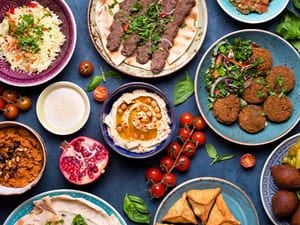
While a focus is often placed on what foods are forbidden within the Islamic faith, it's essential not to overlook the broad array of culinary delights that are encouraged and savored within Muslim communities. Islam underscores the intake of 'tayyib' - wholesome, pure, and beneficial food. This array of food is as diverse as the global Muslim community itself.
- Halal Meat: This includes an array of permissible land animals such as cows, goats, sheep, and chicken, which have been slaughtered with respect to Islamic rites. With reference to the Quran, this manner of slaughter is described in Surah 6:118-119.
- Fish and Seafood: In general, all aquatic creatures are deemed halal, although there are certain Muslim scholars and communities that may uphold specific restrictions. This is alluded to in Surah 5:96.
- Fruits and Vegetables: Without exception, fruits and vegetables are halal and form an integral part of Muslim culinary tradition. These fresh produce items are central to countless traditional dishes across different Muslim cultures.
- Grains: Staple foods such as wheat, rice, oats, and barley are universally consumed and revered across the vast landscape of Muslim gastronomy.
- Dairy Products: Milk, cheese, yogurt, and other dairy products are enjoyed on a wide scale, granted they are void of non-halal additives.
- Honey: Honey holds particular significance within Islamic tradition, being mentioned in the Quran as a food of benefit in Surah 16:69.
At the heart of it all, Muslim culinary tradition encompasses a rich diversity of foods, from succulent meats to vibrant fruits and vegetables, all within the guiding principles of halal dietary laws. It is a reflection of the faith's respect for nourishment, health, and the celebration of God's bounties.
In conclusion, while the interpretations may vary, the underlying principle guiding Islamic dietary laws remains the pursuit of a lifestyle that upholds ethical and spiritual values.
To learn more about Islam, click here.
6/22/2023 6:06:47 PM
More From Patheos
Why I Eat Halal Food (Part 1)
Dubai: A Halal Foodie's Paradise
Irfan's Top 20 Halal Spots (Bay Area) for 2020!
Most Popular

- Home
- Muslim
- Food and Religion
- Answers
- What Can Muslims Not Eat
General Christian
When Halloween Unmasks Married Hearts

- Home
- Muslim
- Food and Religion
- Answers
- What Can Muslims Not Eat
Evangelical

- Home
- Muslim
- Food and Religion
- Answers
- What Can Muslims Not Eat
Evangelical
The REST of Your Life: A Creative Wrestles With Sabbath

- Home
- Muslim
- Food and Religion
- Answers
- What Can Muslims Not Eat
#107: Cast of Character(s): This Weeks Episode of The...
- Home
- Muslim
- Food and Religion
- Answers
- What Can Muslims Not Eat
Progressive Christian
BONUS SHOW: Autism and RFK Jr.'s Cameo

- Home
- Muslim
- Food and Religion
- Answers
- What Can Muslims Not Eat
57th Dove Awards Honor Dolly Parton, Crown New Voices

- Home
- Muslim
- Food and Religion
- Answers
- What Can Muslims Not Eat
General Christian
A Biblical Vision of Success in Christian Life and...

- Home
- Muslim
- Food and Religion
- Answers
- What Can Muslims Not Eat
General Christian
What a Stop Sign Can Teach Us About God’s Will

- Home
- Muslim
- Food and Religion
- Answers
- What Can Muslims Not Eat
Catholic

- Home
- Muslim
- Food and Religion
- Answers
- What Can Muslims Not Eat
The Real AI Story Is Adoption Without Trust

- Home
- Muslim
- Food and Religion
- Answers
- What Can Muslims Not Eat
The First Eucharistic Controversy: Christ’s Real Presence

- Home
- Muslim
- Food and Religion
- Answers
- What Can Muslims Not Eat
General Christian
Archdiocese Hosts Military Marriage Retreat in Germany
Patheos Explore the world's faith through different perspectives on religion and spirituality! Patheos has the views of the prevalent religions and spiritualities of the world.
Ad-Free & Subscriber Log-In Subscription Support
- About Us
- 2026 Calendar
- Videos
- Podcasts
- Library of World Religions
- Faith In Media Tracker
- Advertise With Us
- Write for Us
- Privacy Policy
- Terms of Service
- Do Not Sell My Data
- Contact Us
- Radiant Digital
- Manage Newsletter Subscriptions
- Unsubscribe From Notifications
- Sitemap
Copyright 2008-2026, Patheos. All rights reserved.
Subscription Support Ad-Free & Subscriber Log-In
Follow Patheos