
BuddhistCatholicContemplativeEvangelicalGeneral ChristianHinduJewishLatter-day SaintMuslimNew VisionsProgressive Christian
Beliefs
- Buddhist
- Catholic
- Contemplative
- Evangelical
- General Christian
- Hindu
- Jewish
- Latter-day Saint
- More Voices
- Muslim
- New Visions
- Pagan
- Progressive Christian
Topics
- Religion News
- Food and Religion
- Sports and Religion
- Religious Art
- Religious Music and Entertainment
- Religious Events
- History and Religion
- Style and Religion
- Politics and Religion
- Women in Religion
- Recreation Outdoors and Religion
- Business Finance and Religion
- Careers Workplace and Religion
- Education and Religion
- Family Parenting and Religion
- Health Fitness and Religion
- Home and Religion
- Relationships and Religion
- Technology and Religion
- Travel and Religion
Columnists
- Buddhist Columnists
- Business Finance and Religion Columnists
- Careers Workplace and Religion Columnists
- Catholic Columnists
- Contemplative Columnists
- Education and Religion Columnists
- Evangelists Columnists
- Family Parenting and Religion Columnists
- General Christian Columnists
- Health Fitness and Religion Columnists
- Hindu Columnists
- History and Religion Columnists
- Home and Religion Columnists
- Jewish Columnists
- More Voices Columnists
- Latter Day Columnists
- Muslim Columnists
- New Visions Columnists
- Nonreligious Columnists
- Pagan Columnists
- Politics and Religion Columnists
- Progressive Columnists
- Recreation Outdoors and Religion Columnists
- Relationships and Religion Columnists
- Religion News Columnists
- Religious Art Columnists
- Religious Events Columnists
- Religious Music and Entertainment Columnists
- Sports and Religion Columnists
- Style and Religion Columnists
- Technology and Religion Columnists
- Travel and Religion Columnists
- Women in Religion Columnists
Resource Library
- 2026 Calendar
- Library of World Religions
- The 100 Most Holy Places on Earth
- Patheos Answers
- Podcasts
- Videos
- Faith Leaders Database
- Anglican Episcopalian
- Bahai
- Baptist
- Buddhism
- Christianity
- Confucianism
- Eastern Orthodoxy
- Hinduism
- Holiness and Pentecostal
- ISKCON
- Islam
- Judaism
- Lutheran
- Methodist
- The Church of Jesus Christ of Latter-day Saints
- New Age
- Paganism
- Presbytarian and Reformed
- Protestantism
- Religion Behind the Scenes
- Roman Catholic
- Scientology
- Shia Islam
- Sikhism
- Sufism
- Sunni Islam
- Taoism
- Zen
- See all religions
Research Tools
 Ad-Free & Subscriber Log-In Subscription Support
Ad-Free & Subscriber Log-In Subscription Support
Follow Patheos 

- Trending:
- Forgiveness
- |
- Marriage
- |
- Consciousness
- |
- Death Penalty
- |
- Election
- |
- Halloween
Patheos answers the question:
What Are the Rules of Islam?
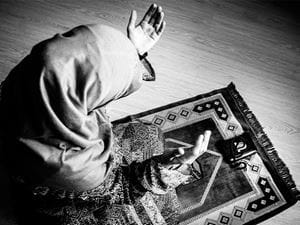
shutterstock.com
Islam is a diverse religious tradition with many different interpretations and practices. Nonetheless, there are some foundational beliefs that unite Muslim communities around the world. The most fundamental practices of Islam are expressed in what are known as the five pillars of Islam. These five pillars encompass: Declaration of faith, prayer, charity, fasting, and pilgrimage. Each of these pillars carries specific meaning and particular details of fulfillment for Muslims. While some Muslim denominations might emphasize different practices or have slightly different interpretations of Islamic law, all organize their religious life around the five pillars.
These five pillars of Islam are the rules which guide the daily lives of most practicing Muslims throughout the world. Practicing Muslims also typically follow a number of other regulations. Most Muslims consider drinking alcohol and eating pork, for example, to not be permissible under Islamic law, and many will only eat meat that has been slaughtered according to the halal method. Many Muslim women choose to cover their hair, and there is a broad spectrum of practices and styles for this sort of dress and coverage, though many Muslim women also choose to not adopt this practice. For many Muslims, religion is an entire way of life, and every action or decision can be guided by one’s faith and belief.
Islam is also a religion with many varied traditions, some of which have very different practices and religious norms. This is not unlike the ways in which the religious practices of Christians might include the practices of Catholics, Lutherans, Coptic Orthodoxy, or any number of denominations which identify as Christian but worship and practice in very different ways.
Nonetheless, almost all Muslim communities see the five pillars of Islam as the foundational practices of the faith. These include:
The Declaration of Faith (shahada) is the core of Islam’s theological foundation, and refers to the statement “there is no god but God, and Muhammed is his messenger.” This phrase, in its original Arabic, is a ubiquitous inscription commonly found decorating Islamic architecture, inscribed on ritual objects, written into religious books, and elsewhere in Muslim spaces. This is believed to summarize in one line the essentials of the Muslim faith. An individual who converts to Islam does so by reciting the shahada three times with conviction and faith.
Prayer (salat) includes the call to pray five times a day, using a particular liturgy and at pre-fixed times, facing the direction of the city of Mecca. These five times occur throughout the day at dawn, noon, mid-afternoon, sunset, and in the evening. The prayers vary in length, and some are very brief. Many Muslims use a prayer mat for their prayers, and there are specific rituals of bowing, kneeling, and prostrating that accompany the prayers. In Islam, the five daily prayers can be said almost anywhere, and do not require community. Both men and women are obligated in daily prayer, and are expected to wash their face, hands, arm, and feet in ritual preparation before they pray.
Charity (zakat) is the expectation that every Muslim will donate a particular portion of their income to the community and those in need. There have been different interpretations over the years regarding the exact amount and percentages, but the expectation of charity is supposed to be commensurate with the financial resources of the individual and is considered central to the devout practice of Islam.
Fasting (sawm) refers to the fasting done during the Islamic month of Ramadan, where Muslims abstain from eating or drinking during daylight hours. This is considered an especially holy and sacred time during the year, and one which calls on Muslims to reflect on their own spiritual lives and their sense of gratitude for everything that God has given them. Children are not expected to fast, nor anyone considered too ill or weak. Ramadan is also a time to be charitable to others, and connect to one’s community. The meals before and after the daily fasts are typically festive and communal. Participating in the annual monthly fast of Ramadan is one of the central rituals organizing the annual religious calendar.
Pilgrimage (hajj) is the enjoinment to make the journey to visit Mecca, which is considered the holiest city for Muslims, at least once in a lifetime. The city of Mecca is where the ka’ba, the black cube building believed to be the house for God built by Abraham, is located. The ka’ba is the focus of pilgrimage activities, and it is customary to circle the structure seven times, among other rituals. Pilgrims in Mecca wear a simple white garment known as Ihram, though Ihram also refers more broadly to the purified state of a prepared pilgrim. The total ritual prepation of a pilgrim includes bathing, ritual washing of the face, hands, feet, and arms, trimming one’s nails, and formally declaring the intention to perform the hajj.
To learn more about Islam, click here.
3/23/2021 6:32:40 PM
More From Patheos
What Does it Mean to be 'Moderate' - Muslim or Otherwise?
What Does It Mean to be a Muslim?
Giving For the Sake of Giving, Not for Heavenly Rewards | Quranalyze It
Most Popular

Progressive Christian
Why Christians Have a Sacred Duty to Vote: Biblical...
General Christian
Seventy and Five Years Old: God Still Starts New Chapters

Evangelical
Letters on Living the Faith by C.S. Lewis

General Christian
When Halloween Unmasks Married Hearts

Evangelical

Evangelical
The REST of Your Life: A Creative Wrestles With Sabbath

#107: Cast of Character(s): This Weeks Episode of The...
Progressive Christian
BONUS SHOW: Autism and RFK Jr.'s Cameo

57th Dove Awards Honor Dolly Parton, Crown New Voices

General Christian
A Biblical Vision of Success in Christian Life and...

General Christian
What a Stop Sign Can Teach Us About God’s Will

Catholic
What If You Are God’s Currency?
Patheos Explore the world's faith through different perspectives on religion and spirituality! Patheos has the views of the prevalent religions and spiritualities of the world.
Ad-Free & Subscriber Log-In Subscription Support
- About Us
- 2026 Calendar
- Videos
- Podcasts
- Library of World Religions
- Faith In Media Tracker
- Advertise With Us
- Write for Us
- Privacy Policy
- Terms of Service
- Do Not Sell My Data
- Contact Us
- Radiant Digital
- Manage Newsletter Subscriptions
- Unsubscribe From Notifications
- Sitemap
Copyright 2008-2026, Patheos. All rights reserved.
Subscription Support Ad-Free & Subscriber Log-In
Follow Patheos