
BuddhistCatholicContemplativeEvangelicalGeneral ChristianHinduJewishLatter-day SaintMuslimNew VisionsProgressive Christian
Beliefs
- Buddhist
- Catholic
- Contemplative
- Evangelical
- General Christian
- Hindu
- Jewish
- Latter-day Saint
- More Voices
- Muslim
- New Visions
- Pagan
- Progressive Christian
Topics
- Religion News
- Food and Religion
- Sports and Religion
- Religious Art
- Religious Music and Entertainment
- Religious Events
- History and Religion
- Style and Religion
- Politics and Religion
- Women in Religion
- Recreation Outdoors and Religion
- Business Finance and Religion
- Careers Workplace and Religion
- Education and Religion
- Family Parenting and Religion
- Health Fitness and Religion
- Home and Religion
- Relationships and Religion
- Technology and Religion
- Travel and Religion
Columnists
- Buddhist Columnists
- Business Finance and Religion Columnists
- Careers Workplace and Religion Columnists
- Catholic Columnists
- Contemplative Columnists
- Education and Religion Columnists
- Evangelists Columnists
- Family Parenting and Religion Columnists
- General Christian Columnists
- Health Fitness and Religion Columnists
- Hindu Columnists
- History and Religion Columnists
- Home and Religion Columnists
- Jewish Columnists
- More Voices Columnists
- Latter Day Columnists
- Muslim Columnists
- New Visions Columnists
- Nonreligious Columnists
- Pagan Columnists
- Politics and Religion Columnists
- Progressive Columnists
- Recreation Outdoors and Religion Columnists
- Relationships and Religion Columnists
- Religion News Columnists
- Religious Art Columnists
- Religious Events Columnists
- Religious Music and Entertainment Columnists
- Sports and Religion Columnists
- Style and Religion Columnists
- Technology and Religion Columnists
- Travel and Religion Columnists
- Women in Religion Columnists
Resource Library
- 2026 Calendar
- Library of World Religions
- The 100 Most Holy Places on Earth
- Patheos Answers
- Podcasts
- Videos
- Faith Leaders Database
- Anglican Episcopalian
- Bahai
- Baptist
- Buddhism
- Christianity
- Confucianism
- Eastern Orthodoxy
- Hinduism
- Holiness and Pentecostal
- ISKCON
- Islam
- Judaism
- Lutheran
- Methodist
- The Church of Jesus Christ of Latter-day Saints
- New Age
- Paganism
- Presbytarian and Reformed
- Protestantism
- Religion Behind the Scenes
- Roman Catholic
- Scientology
- Shia Islam
- Sikhism
- Sufism
- Sunni Islam
- Taoism
- Zen
- See all religions
Research Tools
 Ad-Free & Subscriber Log-In Subscription Support
Ad-Free & Subscriber Log-In Subscription Support
Follow Patheos 

- Trending:
- Forgiveness
- |
- Marriage
- |
- Consciousness
- |
- Death Penalty
- |
- Election
- |
- Halloween
- Home
- Jewish
- History and Religion
- Answers
- What Are the Origins of Judaism?
Patheos answers the question:
What Are the Origins of Judaism?
by Alonzo L. Gaskill, PH.D.
Shutterstock.com
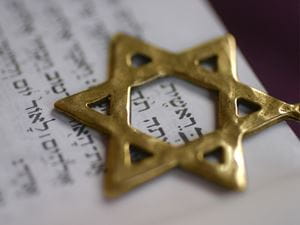
In the minds of many non-Jews, the religion of Judaism has its origins with Moses—and the law he received on Sinai, when God appeared to him (Exodus 19-20). Indeed, it has been pointed out that “the start of the Jewish people as a nation is often credited to the time following the biblical Exodus from Egypt.” However, according to Jewish teachings, Judaism began more than a thousand years prior to the Exodus and Moses’ theophany. Indeed, it started with the patriarch, Abraham. The Patheos Library explains:
“Judaism is a religious tradition with origins dating back nearly four thousand years, rooted in the ancient near eastern region of Canaan (which is now Israel and Palestinian territories). Originating as the beliefs and practices of the people known as ‘Israel,’ classical, or rabbinic, Judaism did not emerge until the 1st century C.E. Judaism traces its heritage to the covenant God made with Abraham and his lineage—that God would make them a sacred people and give them a holy land. The primary figures of Israelite culture include the patriarchs Abraham, Isaac, Jacob, and the prophet Moses.”
So, why is Abraham (or Abram, as he was called at the time) the founder of the faith? Well, according to the biblical account, after the Fall of Adam and Eve, God inspired, “walked with,” and even “spoke to” various individuals (e.g., Cain in Genesis 4:6 Enoch in Genesis 5:24; Noah in Genesis 6:9 & 13). However, Abram is the first person that God is said to have actually appeared to post-Fall (Genesis 17:1). Thus, he is set apart in the biblical account as somehow different than his predecessors and, thus, he is chosen by God.
Why did God “choose” to appear to Abraham instead of one of his predecessors, like Noah? Well, truthfully, “God only knows.” However, one source points out that “Abraham is considered to be an especially beloved figure by God, not only because he was the first to proclaim his faith, but also because he passed several extreme tests of this faith.” Thus, Abraham may have been selected to be the first Jew and “founder of the faith” because he had repeatedly shown that God could trust him, no matter what God asked of him.
As evidence of Abraham’s chosenness, and as part of the process of creating the first “revealed religion,” Judaism teaches that God made a covenant with Abram, in which He promised numerous blessings which would be fulfilled through Abram and (more particularly) through his posterity.
“Now the Lord said to Abram, ‘Go from your country and your kindred and your father’s house to the land that I will show you. And I will make of you a great nation, and I will bless you and make your name great, so that you will be a blessing. I will bless those who bless you, and him who dishonors you I will curse, and in you all the families of the earth shall be blessed.’” (Genesis 12:1-3)
God made numerous promises to Abram in this pledge, famously called the “Abrahamic Covenant.” Among other things, Abram is told that—through keeping this covenant—he would become a “great nation” (i.e., he would have a massive posterity), he would be blessed and his name would become “great” among the peoples of the world, that he and his posterity would be a “blessing” to the world (i.e., through Abram and his posterity, “all the families of the earth” would “be blessed”). As part of this covenant, God changed Abram’s name to Abraham (meaning “father of multitudes”).
This covenant is seen as the “beginning” of Judaism and, thus, God renewed this covenant with Abraham’s son, Isaac, and his grandson, Jacob or Israel. (See Genesis 26:3–4 & 28:13–14 for examples of these promises made to Abraham being renewed with Isaac and Jacob.). In Genesis 17, God revealed to Abraham that circumcision would be the “sign” or “token” of the Abrahamic Covenant and the new-found faith.
“I will establish my covenant as an everlasting covenant between me and you and your descendants after you for the generations to come, to be your God and the God of your descendants after you. The whole land of Canaan… I will give as an everlasting possession to you and your descendants after you; and I will be their God. Then God said to Abraham, ‘As for you, you must keep my covenant, you and your descendants after you for the generations to come. This is my covenant with you and your descendants after you, the covenant you are to keep: Every male among you shall be circumcised. You are to undergo circumcision, and it will be the sign of the covenant between me and you. For the generations to come every male among you who is eight days old must be circumcised, including those born in your household or…those who are not your offspring. Whether born in your household or bought with your money, they must be circumcised. My covenant in your flesh is to be an everlasting covenant. Any uncircumcised male, who has not been circumcised in the flesh, will be cut off from his people; he has broken my covenant.” (Genesis 17:7-14)
Jews typically hold that the covenant God made with Abraham is renewed with each of the patriarch’s descendants—specifically the Jewish people—upon a boy’s circumcision. As one source explains: “This ceremony, of great antiquity, confirms the transition of the infant from being a child of Adam, as it were, to a member of the Jewish people. Thus the boy enters the ‘covenant of Abraham’” when he is circumcised. As a consequence, every male Jew (who is born into an observant family) is circumcised on the eighth day after he is born—entering him into this same covenant, which is the foundation of Judaism, and offering him the same promises God made to Abram and renews with all who strive to faithfully live this religion.
While Moses is considered by Jews to be the most important of all of God’s holy prophets, and the oracle through which God revealed His law by which His people would live, Jews hold that God first parted the heavens and established His covenant, not with Moses, but with Abram. Thus, it is the patriarch Abraham who is held up as the “founder of the faith.”
3/7/2023 10:39:51 PM
About ALONZO L. GASKILL, PH.D.
Alonzo L. Gaskill is an author, editor, theologian, lecturer, and professor of World Religions. He holds degrees in philosophy, theology/comparative religion, and biblical studies. He has authored more than two-dozen books and numerous articles on various aspects of religion; with topics ranging from world religions and interfaith dialogue, to scriptural commentaries, texts on symbolism, sacred space, and ritual, and even devotional literature.
More from Patheos About Judaism...
What is the Jewish Holiday of Simchat Torah?
Can Jews Be Cremated?
Do Jews Believe in Jesus?
How is Judaism Linked to the State of Israel?
Most Popular

- Home
- Jewish
- History and Religion
- Answers
- What Are the Origins of Judaism?
General Christian
How to Save Yourself From Spiritual Narcissists

- Home
- Jewish
- History and Religion
- Answers
- What Are the Origins of Judaism?
'Super Scam Me' Exposes AI Jon Bon Jovi Romance Scam

- Home
- Jewish
- History and Religion
- Answers
- What Are the Origins of Judaism?
The Brazilian Remake of Kendricks' 'Flywheel' Opens in...

- Home
- Jewish
- History and Religion
- Answers
- What Are the Origins of Judaism?
Catholic
The Dangers of Gradual Accommodation (Winking at Sin)

- Home
- Jewish
- History and Religion
- Answers
- What Are the Origins of Judaism?
Jewish
Building a Little Ark in a Frightening World

- Home
- Jewish
- History and Religion
- Answers
- What Are the Origins of Judaism?
Dolly Parton’s Last Song Wins Dove Award with Grascals

- Home
- Jewish
- History and Religion
- Answers
- What Are the Origins of Judaism?
Latter-day Saint
The Iron Gates and the Lion of the Lord

- Home
- Jewish
- History and Religion
- Answers
- What Are the Origins of Judaism?
Evangelical
- Home
- Jewish
- History and Religion
- Answers
- What Are the Origins of Judaism?
Progressive Christian
The Image: On the Horror of Capitalism and Matthew...

- Home
- Jewish
- History and Religion
- Answers
- What Are the Origins of Judaism?
Progressive Christian
Why Christians Have a Sacred Duty to Vote: Biblical...

- Home
- Jewish
- History and Religion
- Answers
- What Are the Origins of Judaism?
General Christian
Seventy and Five Years Old: God Still Starts New Chapters

- Home
- Jewish
- History and Religion
- Answers
- What Are the Origins of Judaism?
Evangelical
Letters on Living the Faith by C.S. Lewis
Patheos Explore the world's faith through different perspectives on religion and spirituality! Patheos has the views of the prevalent religions and spiritualities of the world.
Ad-Free & Subscriber Log-In Subscription Support
- About Us
- 2026 Calendar
- Videos
- Podcasts
- Library of World Religions
- Faith In Media Tracker
- Advertise With Us
- Write for Us
- Privacy Policy
- Terms of Service
- Do Not Sell My Data
- Contact Us
- Radiant Digital
- Manage Newsletter Subscriptions
- Unsubscribe From Notifications
- Sitemap
Copyright 2008-2026, Patheos. All rights reserved.
Subscription Support Ad-Free & Subscriber Log-In
Follow Patheos