
BuddhistCatholicContemplativeEvangelicalGeneral ChristianHinduJewishLatter-day SaintMuslimNew VisionsProgressive Christian
Beliefs
- Buddhist
- Catholic
- Contemplative
- Evangelical
- General Christian
- Hindu
- Jewish
- Latter-day Saint
- More Voices
- Muslim
- New Visions
- Pagan
- Progressive Christian
Topics
- Religion News
- Food and Religion
- Sports and Religion
- Religious Art
- Religious Music and Entertainment
- Religious Events
- History and Religion
- Style and Religion
- Politics and Religion
- Women in Religion
- Recreation Outdoors and Religion
- Business Finance and Religion
- Careers Workplace and Religion
- Education and Religion
- Family Parenting and Religion
- Health Fitness and Religion
- Home and Religion
- Relationships and Religion
- Technology and Religion
- Travel and Religion
Columnists
- Buddhist Columnists
- Business Finance and Religion Columnists
- Careers Workplace and Religion Columnists
- Catholic Columnists
- Contemplative Columnists
- Education and Religion Columnists
- Evangelists Columnists
- Family Parenting and Religion Columnists
- General Christian Columnists
- Health Fitness and Religion Columnists
- Hindu Columnists
- History and Religion Columnists
- Home and Religion Columnists
- Jewish Columnists
- More Voices Columnists
- Latter Day Columnists
- Muslim Columnists
- New Visions Columnists
- Nonreligious Columnists
- Pagan Columnists
- Politics and Religion Columnists
- Progressive Columnists
- Recreation Outdoors and Religion Columnists
- Relationships and Religion Columnists
- Religion News Columnists
- Religious Art Columnists
- Religious Events Columnists
- Religious Music and Entertainment Columnists
- Sports and Religion Columnists
- Style and Religion Columnists
- Technology and Religion Columnists
- Travel and Religion Columnists
- Women in Religion Columnists
Resource Library
- 2026 Calendar
- Library of World Religions
- The 100 Most Holy Places on Earth
- Patheos Answers
- Podcasts
- Videos
- Faith Leaders Database
- Anglican Episcopalian
- Bahai
- Baptist
- Buddhism
- Christianity
- Confucianism
- Eastern Orthodoxy
- Hinduism
- Holiness and Pentecostal
- ISKCON
- Islam
- Judaism
- Lutheran
- Methodist
- The Church of Jesus Christ of Latter-day Saints
- New Age
- Paganism
- Presbytarian and Reformed
- Protestantism
- Religion Behind the Scenes
- Roman Catholic
- Scientology
- Shia Islam
- Sikhism
- Sufism
- Sunni Islam
- Taoism
- Zen
- See all religions
Research Tools
 Ad-Free & Subscriber Log-In Subscription Support
Follow Patheos 

- Trending:
- Advent
- |
- Forgiveness
- |
- Thanksgiving
- |
- Election
- |
- Seasonal Holidays
- |
- Marriage
Patheos answers the question:
What Are the Four Main Beliefs of Hinduism?
by Kathleen Mulhern, PH.D.
Shutterstock.com
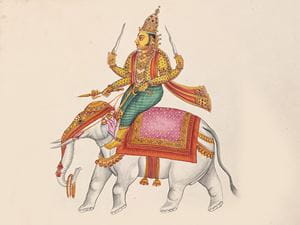
Hinduism is a religion that embraces a great variety of beliefs and traditions, but all of these share some common elements and beliefs. Some Hindus believe that there is one supreme divine force, Brahman, and that other gods and goddesses are representations of that cosmic divinity. Some believe that the world is controlled by a trinity of gods (Brahma, Vishnu, and Shiva) or a god-goddess pair. Still others believe that there are many gods, millions of them, who each control different aspects of life. As such, it can be difficult to define the “main” beliefs of Hinduism. Despite the many differences between different Hindu traditions, however, there are a few beliefs that underpin all of the traditions.
The first is the Sanatana Dharma, the timeless, eternal truth of the cosmic order. To live in harmony with the dharma is to conduct life according to the virtues and ethics of one’s proper place in the social order. The concept of dharma combines right behavior, law, morality, and justice in an eternal order and balance. The dharma for one person, however, may not be the dharma for another. Gender, age, caste, social position, and tradition can all define the proper dharma for any individual. The only absolute imperative is to act dharmically, that is, in accordance with one’s proper dharma.
The second belief shared across tradition is that of karma. Karma is the Sanskrit word for “action” or “doing” and is an integral part of living dharmically. Those who live in accordance with their proper dharma accrue good karma, that is they live in such a way that positive consequences will ensue. Karma in Hinduism is the law of cause and effect; it teaches that behaviors, actions, and habits all trigger a like response. Evil actions will accrue negative karma. Good actions will accrue positive karma. This accumulation of positive and negative karma can echo through multiple lifetimes. Someone who has lived a good life may be reborn into a better life with fewer hardships and more opportunities. Someone who has lived an evil life may be reincarnated into troublesome circumstances with a lifetime of suffering.
This leads to a third shared belief, the idea of samsara. Samsara is the endless cycle of birth, death, and reincarnation that inevitably includes suffering. To escape samsara, to attain salvation, is to achieve moksha, i.e., liberation, but this can only be accomplished by ridding oneself of all karma, good or bad. Herein lies a tension within Hindu thought. Some focus on accruing good karma, both to serve the well-being of others and to reinsure a better reincarnation. Others focus on their own spiritual progress, working toward the eradication of all karma and the attainment moksha. For those who choose to work toward moksha, there is no single path. Each tradition in Hinduism has a different idea of how to achieve that final liberation, and there are many different paths to moksha to be found in each tradition.
Reincarnation is the reality of samsara. It is the destiny of all who continue to accrue karma. Each person has a soul, a true “self” called the atman that is immortal and is eternally reborn into new bodies, each time learning new spiritual realities and coming closer to perfection. This cycle continues forever, until all karmic entanglements are resolved and moksha is achieved. At that point, the soul, the atman, dissolves into the divine.
Another shared theme in all Hindu traditions is that of ahimsa, the law of non-violence. Non-violence generates good karma, but beyond that there is the recognition that all life is interconnected, and that thus the death of any creature—human, animal, or insect—affects all other beings. Some Hindus practice this law in the most rigorous and ascetic manner possible, making any death, like stepping on an ant, karmically effective, even when unintended.
Read more about human nature and the purpose of existence from a Hindu perspective here.
3/7/2023 2:57:30 AM
About About Kathleen Mulhern, PH.D.
Kathleen Mulhern is a writer, editor, historian, speaker, and professor. She teaches courses in world history, European history, and history of Christianity. She has taught at Colorado School of Mines and Regis University, and is currently an adjunct professor at Denver Seminary in the areas of Church History and Spiritual Formation. Kathleen graduated with a B.A. from Wheaton College, earned an M.A. in French Literature from the University of Denver, an M.A. degree in Church History from Denver Seminary, and a Ph.D. in History from the University of Colorado.
More from Patheos about Hinduism
What is Hinduism? Facts and Beliefs of Hinduism
Hinduism's Influence on Indian Poetry
A List of Indian Hindu Festivals
Most Popular

Progressive Christian
Smart people saying smart things (11.24.26)

The Contingency of Our Technology

Progressive Christian

Progressive Christian
Reasons for Restraint: Ricardo Gonzalez, Florida and Dec 1

General Christian
Psalm 5: David Pleads His Case
Progressive Christian
It All Counts: A Conversation With Natalia Terfa
General Christian
Reflections of a Recovered Evangelical: Honoring the...

Latter-day Saint

Progressive Christian
'Statements of Faith' never get shorter

Evangelical
Michele's Reviews - Future Grace by John Piper

Evangelical
Bama Gramma's Blackout Christmas: the Power of Light...
Patheos Explore the world's faith through different perspectives on religion and spirituality! Patheos has the views of the prevalent religions and spiritualities of the world.
Ad-Free & Subscriber Log-In Subscription Support
- About Us
- 2026 Calendar
- Videos
- Podcasts
- Library of World Religions
- Faith In Media Tracker
- Advertise With Us
- Write for Us
- Privacy Policy
- Terms of Service
- Do Not Sell My Data
- Contact Us
- Radiant Digital
- Manage Newsletter Subscriptions
- Unsubscribe From Notifications
- Sitemap
Copyright 2008-2026, Patheos, part of the Radiant Digital network of media brands. All rights reserved.
Subscription Support Ad-Free & Subscriber Log-In
Follow Patheos