
BuddhistCatholicContemplativeEvangelicalGeneral ChristianHinduJewishLatter-day SaintMuslimNew VisionsProgressive Christian
Beliefs
- Buddhist
- Catholic
- Contemplative
- Evangelical
- General Christian
- Hindu
- Jewish
- Latter-day Saint
- More Voices
- Muslim
- New Visions
- Pagan
- Progressive Christian
Topics
- Religion News
- Food and Religion
- Sports and Religion
- Religious Art
- Religious Music and Entertainment
- Religious Events
- History and Religion
- Style and Religion
- Politics and Religion
- Women in Religion
- Recreation Outdoors and Religion
- Business Finance and Religion
- Careers Workplace and Religion
- Education and Religion
- Family Parenting and Religion
- Health Fitness and Religion
- Home and Religion
- Relationships and Religion
- Technology and Religion
- Travel and Religion
Columnists
- Buddhist Columnists
- Business Finance and Religion Columnists
- Careers Workplace and Religion Columnists
- Catholic Columnists
- Contemplative Columnists
- Education and Religion Columnists
- Evangelists Columnists
- Family Parenting and Religion Columnists
- General Christian Columnists
- Health Fitness and Religion Columnists
- Hindu Columnists
- History and Religion Columnists
- Home and Religion Columnists
- Jewish Columnists
- More Voices Columnists
- Latter Day Columnists
- Muslim Columnists
- New Visions Columnists
- Nonreligious Columnists
- Pagan Columnists
- Politics and Religion Columnists
- Progressive Columnists
- Recreation Outdoors and Religion Columnists
- Relationships and Religion Columnists
- Religion News Columnists
- Religious Art Columnists
- Religious Events Columnists
- Religious Music and Entertainment Columnists
- Sports and Religion Columnists
- Style and Religion Columnists
- Technology and Religion Columnists
- Travel and Religion Columnists
- Women in Religion Columnists
Resource Library
- 2026 Calendar
- Library of World Religions
- The 100 Most Holy Places on Earth
- Patheos Answers
- Podcasts
- Videos
- Faith Leaders Database
- Anglican Episcopalian
- Bahai
- Baptist
- Buddhism
- Christianity
- Confucianism
- Eastern Orthodoxy
- Hinduism
- Holiness and Pentecostal
- ISKCON
- Islam
- Judaism
- Lutheran
- Methodist
- The Church of Jesus Christ of Latter-day Saints
- New Age
- Paganism
- Presbytarian and Reformed
- Protestantism
- Religion Behind the Scenes
- Roman Catholic
- Scientology
- Shia Islam
- Sikhism
- Sufism
- Sunni Islam
- Taoism
- Zen
- See all religions
Research Tools
 Ad-Free & Subscriber Log-In Subscription Support
Ad-Free & Subscriber Log-In Subscription Support
Follow Patheos 

- Trending:
- Forgiveness
- |
- Marriage
- |
- Consciousness
- |
- Death Penalty
- |
- Election
- |
- Halloween
Pagan
Patheos answers the question:
What Are Druids?
by Kathleen Mulhern, PH.D.
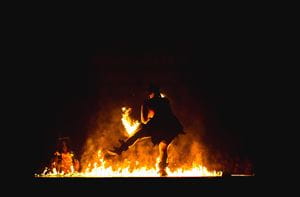
Pixabay.com
Today, Druids are an order of Pagans who seek to recover ancient Celtic traditions and practices of historical Druids. Anciently, Druids were priests and wisdom counselors in the British Isles in the centuries prior to the Common Era. They conducted religious rituals, foretold the future through soothsaying, used herbs and plants for healings, and were itinerant storytellers and historians. In many mythologies, Merlin was said to be a Druid or Celtic priest. Druids were oppressed by the Romans during their nearly 400 years of occupation (A.D. 43-410), and this persecution, combined with the introduction of Christianity, led to the decline of the Druid religion.
Druidism today is a neo-Pagan religious movement that seeks to reconstruct the practices and spirit of ancient Druidry in contemporary settings. Druid spirituality is fluid and non-dogmatic, and there are a wide variety of practices and beliefs associated with it, but its central ethos is one of harmony with nature (which it believes to be, in some manner, divine).
Some Druids believe that there is essentially one divinity that permeates all things or that all things in themselves are divine. They may be considered pantheistic or animistic. Other Druids are polytheistic, recognizing many gods and goddesses that dwell locally or cosmically. Still others might be called bitheists, believing that there are two essential, complementary, deities—male and female, the God and the Goddess. These various Druidic beliefs find compatibility and freedom in their diversity.
Druids may observe the “Wheel of the Year,” widely embraced among many Pagans. This series of eight festivals present opportunities for Druids and other Pagans to recognize the essential unity between the spiritual and the physical, between the earth with its seasonal transitions and the supernatural. Sabbat holidays are measured from sunset to sunset (in Druidism), and most of the rituals and magic are conducted at night.
The eight festivals include four that are derived from ancient Celtic or western European traditions and four from transitional times in the seasons of the year. These alternate between one festival dedicated to solar-based events and one festival dedicated to earth-centered events, creating a cycle of holidays usually referred to as the Wheel of the Year. Each of these is an opportunity to worship gods and goddesses, welcome the changes of nature, draw on spiritual powers, and practice healing magic.
The four seasonal festivals include the two Equinoxes (Spring and Fall) and two solstices (Summer and Winter). Among other things, these festivals recognize the shift in time and light. The two equinoxes are points of stability, of equality between darkness and light; the two solstices are times of transition, of shifts from light to growing darkness or darkness to growing light. The Wheel of the Year begins on 1 November, so the first holiday of the year is the Winter Solstice, or Yule (on or around December 21st).
Druidry is considered by some to be a shamanic religious movement, which means that Druids see themselves as mediators between the spirit world and the physical world. They may be members of several large organizations that facilitate the Druid life and spirituality, including the Ancient Order of Druids (founded in 1781), the Order of Bards, Ovates and Druids (founded in 1964), or Ár nDraíocht Féin (founded in 1983). Such groups provide opportunities for gatherings, conferences, instruction, and fellowship.
Paganism is wildly diverse and creative in its theology. Read more about it here.
5/14/2024 9:01:17 PM
About About Kathleen Mulhern, PH.D.
Kathleen Mulhern is a writer, editor, historian, speaker, and professor. She teaches courses in world history, European history, and history of Christianity. She has taught at Colorado School of Mines and Regis University, and is currently an adjunct professor at Denver Seminary in the areas of Church History and Spiritual Formation. Kathleen graduated with a B.A. from Wheaton College, earned an M.A. in French Literature from the University of Denver, an M.A. degree in Church History from Denver Seminary, and a Ph.D. in History from the University of Colorado.
More from Patheos about Pagan Beliefs
Creating Pagan Culture
Changing the Narrative
The Special Nature of Humanity: How Atheist Paganism and Polytheism Can Both Be True at Once
Seekers and Guides: Knowledge, Wisdom and Gnosis
Most Popular

INNER CIRCLE: Profound Mystery (Of Christ In All Of Us)

General Christian
What Does Gêvâh Mean For Kimberley Guifoyle & Pete...

General Christian

Evangelical
Do Not Rejoice When Your Enemy Falls: The Cheers for Death

Progressive Christian
The purpose-driven labor priest
The Golden Rule Demands More than We Think

‘Conceivable’ Opens Friday: Faith, Family & a Surprise at...

Catholic
'The Chosen' S6 Trailer: The Passion Gets Very Real

Evangelical
What Will We Be Able to do on the New Earth?

Catholic
On Protestant Explanations of Catholic Conversion
Catholic
Pope Leo has Lung Cancer. We Need Him in this Dangerous...
WATCH: New 'The Chosen' Trailer Depicts Final Hours of...
Patheos Explore the world's faith through different perspectives on religion and spirituality! Patheos has the views of the prevalent religions and spiritualities of the world.
Ad-Free & Subscriber Log-In Subscription Support
- About Us
- 2026 Calendar
- Videos
- Podcasts
- Library of World Religions
- Faith In Media Tracker
- Advertise With Us
- Write for Us
- Privacy Policy
- Terms of Service
- Do Not Sell My Data
- Contact Us
- Radiant Digital
- Manage Newsletter Subscriptions
- Unsubscribe From Notifications
- Sitemap
Copyright 2008-2026, Patheos. All rights reserved.
Subscription Support Ad-Free & Subscriber Log-In
Follow Patheos