
BuddhistCatholicContemplativeEvangelicalGeneral ChristianHinduJewishLatter-day SaintMuslimNew VisionsProgressive Christian
Beliefs
- Buddhist
- Catholic
- Contemplative
- Evangelical
- General Christian
- Hindu
- Jewish
- Latter-day Saint
- More Voices
- Muslim
- New Visions
- Pagan
- Progressive Christian
Topics
- Religion News
- Food and Religion
- Sports and Religion
- Religious Art
- Religious Music and Entertainment
- Religious Events
- History and Religion
- Style and Religion
- Politics and Religion
- Women in Religion
- Recreation Outdoors and Religion
- Business Finance and Religion
- Careers Workplace and Religion
- Education and Religion
- Family Parenting and Religion
- Health Fitness and Religion
- Home and Religion
- Relationships and Religion
- Technology and Religion
- Travel and Religion
Columnists
- Buddhist Columnists
- Business Finance and Religion Columnists
- Careers Workplace and Religion Columnists
- Catholic Columnists
- Contemplative Columnists
- Education and Religion Columnists
- Evangelists Columnists
- Family Parenting and Religion Columnists
- General Christian Columnists
- Health Fitness and Religion Columnists
- Hindu Columnists
- History and Religion Columnists
- Home and Religion Columnists
- Jewish Columnists
- More Voices Columnists
- Latter Day Columnists
- Muslim Columnists
- New Visions Columnists
- Nonreligious Columnists
- Pagan Columnists
- Politics and Religion Columnists
- Progressive Columnists
- Recreation Outdoors and Religion Columnists
- Relationships and Religion Columnists
- Religion News Columnists
- Religious Art Columnists
- Religious Events Columnists
- Religious Music and Entertainment Columnists
- Sports and Religion Columnists
- Style and Religion Columnists
- Technology and Religion Columnists
- Travel and Religion Columnists
- Women in Religion Columnists
Resource Library
- 2026 Calendar
- Library of World Religions
- The 100 Most Holy Places on Earth
- Patheos Answers
- Podcasts
- Videos
- Faith Leaders Database
- Anglican Episcopalian
- Bahai
- Baptist
- Buddhism
- Christianity
- Confucianism
- Eastern Orthodoxy
- Hinduism
- Holiness and Pentecostal
- ISKCON
- Islam
- Judaism
- Lutheran
- Methodist
- The Church of Jesus Christ of Latter-day Saints
- New Age
- Paganism
- Presbytarian and Reformed
- Protestantism
- Religion Behind the Scenes
- Roman Catholic
- Scientology
- Shia Islam
- Sikhism
- Sufism
- Sunni Islam
- Taoism
- Zen
- See all religions
Research Tools
 Ad-Free & Subscriber Log-In Subscription Support
Ad-Free & Subscriber Log-In Subscription Support
Follow Patheos 

- Trending:
- Forgiveness
- |
- Marriage
- |
- Consciousness
- |
- Death Penalty
- |
- Election
- |
- Halloween
Patheos answers the question:
Should Christians Celebrate Halloween?
by Kathleen Mulhern, Ph.D.
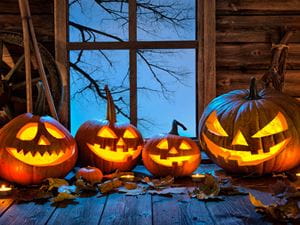
Shutterstock.com
Every October, Christians begin debating whether or not they should take part in the Halloween celebrations and traditions that come crawling out of the woodwork as soon as the calendar flips over to October. Many Christians happily set up haunted houses, take their children trick-or-treating, and host a house full of teenagers who cluster around the TV to watch scary movies. Other Christians, however, claim that Halloween is demonic, Satanic, and a way of opening the door to all sorts of hellish horrors. The history of “Halloween,” however, has Christian roots.
Halloween is a popularized version of “All Hallows’ Eve” or “All Saints’ Eve” and refers to the night before the Christian Feast of All Saints. This feast began centuries ago and was meant to recognize and celebrate all the Christian martyrs and saints who had already died. This feast day is always 1 November, which makes “All Hallows’ Eve” on 31 October—Halloween. All Saints’ Day overlaps with the Mexican holiday of Día de los Muertos, or Day of the Dead, a two-day festival meant to remember loved ones who have passed, but the two events have different purposes and traditions.
All Saints’ Eve and Day overlap with another holiday as well, the ancient pagan holiday of Samhain. This, however, was likely a deliberate choice by early Christians who often overlaid a Christian holiday on a pagan one in order to supplant it with Christian worship. Contemporary pagans of various traditions still celebrate Samhain, beginning on 31 October and continuing through 1 November.
While the pagan associations of Halloween are the focus of modern Christian concerns, All Saints’ Day was originally discouraged by early Protestants who loathed its association with Catholic saints and the Catholic calendar. In fact, many people during the Reformation period were completely unaware there was any pagan significance to a celebration taking place in late October. They were more interested in outlawing Catholic practices.
No one knows exactly when or why Halloween was associated with the demonic or re-associated with paganism. Most of what Christians associate with Halloween are long-standing practices that have nothing to do with either paganism or demons. Dressing up in costumes dates to early All Saints’ Day traditions, and early Americans celebrated by putting on “play parties,” dancing, and singing.
Superstition has always been associated with Halloween, but there is a long history of Christians being encouraged to celebrate Halloween in a Christian fashion. Rather than leaving out food to appease angry spirits, Christians were encouraged to give food to hungry neighbors. In fact, trick-or-treating is believed to have been born out of the practice of “soul cakes” and “going a-souling.” On All Hallows’ Eve, poor citizens would go door to door begging for food, and families would give them special pastries called “soul cakes” in return for the person’s promise to pray for dead loved ones.
Modern Halloween celebrations often focus on vampires, witches, and other supernatural creatures. There is, however, no reason that Christians cannot have their own Halloween parties that instead emphasize All Saints’ Day and feature stories about why one should never make deals with the Devil.
You can read more about the Catholic sacred calendar and All Saints’ Day here.
3/23/2021 6:32:40 PM
About About Kathleen Mulhern, Ph.D.
Kathleen Mulhern is a writer, editor, historian, speaker, and professor. She teaches courses in world history, European history, and history of Christianity. She has taught at Colorado School of Mines and Regis University, and is currently an adjunct professor at Denver Seminary in the areas of Church History and Spiritual Formation. Kathleen graduated with a B.A. from Wheaton College, earned an M.A. in French Literature from the University of Denver, an M.A. degree in Church History from Denver Seminary, and a Ph.D. in History from the University of Colorado.
More From Patheos About Christians and Halloween
The Forgotten Truth About Halloween & the Bible
Christians Shouldn't Just Celebrate Halloween, They Should Be the Life of the Party
From Halloween to Hallelujah
Unmask Halloween and Humanity
What percentage of Christians observe Halloween?
Most Popular

General Christian
When Halloween Unmasks Married Hearts

Evangelical

Evangelical
The REST of Your Life: A Creative Wrestles With Sabbath
#107: Cast of Character(s): This Weeks Episode of The...
Progressive Christian
BONUS SHOW: Autism and RFK Jr.'s Cameo

57th Dove Awards Honor Dolly Parton, Crown New Voices

General Christian
A Biblical Vision of Success in Christian Life and...

General Christian
What a Stop Sign Can Teach Us About God’s Will

Catholic

The Real AI Story Is Adoption Without Trust

The First Eucharistic Controversy: Christ’s Real Presence

General Christian
Archdiocese Hosts Military Marriage Retreat in Germany
Patheos Explore the world's faith through different perspectives on religion and spirituality! Patheos has the views of the prevalent religions and spiritualities of the world.
Ad-Free & Subscriber Log-In Subscription Support
- About Us
- 2026 Calendar
- Videos
- Podcasts
- Library of World Religions
- Faith In Media Tracker
- Advertise With Us
- Write for Us
- Privacy Policy
- Terms of Service
- Do Not Sell My Data
- Contact Us
- Radiant Digital
- Manage Newsletter Subscriptions
- Unsubscribe From Notifications
- Sitemap
Copyright 2008-2026, Patheos. All rights reserved.
Subscription Support Ad-Free & Subscriber Log-In
Follow Patheos