
BuddhistCatholicContemplativeEvangelicalGeneral ChristianHinduJewishLatter-day SaintMuslimNew VisionsProgressive Christian
Beliefs
- Buddhist
- Catholic
- Contemplative
- Evangelical
- General Christian
- Hindu
- Jewish
- Latter-day Saint
- More Voices
- Muslim
- New Visions
- Pagan
- Progressive Christian
Topics
- Religion News
- Food and Religion
- Sports and Religion
- Religious Art
- Religious Music and Entertainment
- Religious Events
- History and Religion
- Style and Religion
- Politics and Religion
- Women in Religion
- Recreation Outdoors and Religion
- Business Finance and Religion
- Careers Workplace and Religion
- Education and Religion
- Family Parenting and Religion
- Health Fitness and Religion
- Home and Religion
- Relationships and Religion
- Technology and Religion
- Travel and Religion
Columnists
- Buddhist Columnists
- Business Finance and Religion Columnists
- Careers Workplace and Religion Columnists
- Catholic Columnists
- Contemplative Columnists
- Education and Religion Columnists
- Evangelists Columnists
- Family Parenting and Religion Columnists
- General Christian Columnists
- Health Fitness and Religion Columnists
- Hindu Columnists
- History and Religion Columnists
- Home and Religion Columnists
- Jewish Columnists
- More Voices Columnists
- Latter Day Columnists
- Muslim Columnists
- New Visions Columnists
- Nonreligious Columnists
- Pagan Columnists
- Politics and Religion Columnists
- Progressive Columnists
- Recreation Outdoors and Religion Columnists
- Relationships and Religion Columnists
- Religion News Columnists
- Religious Art Columnists
- Religious Events Columnists
- Religious Music and Entertainment Columnists
- Sports and Religion Columnists
- Style and Religion Columnists
- Technology and Religion Columnists
- Travel and Religion Columnists
- Women in Religion Columnists
Resource Library
- 2026 Calendar
- Library of World Religions
- The 100 Most Holy Places on Earth
- Patheos Answers
- Podcasts
- Videos
- Faith Leaders Database
- Anglican Episcopalian
- Bahai
- Baptist
- Buddhism
- Christianity
- Confucianism
- Eastern Orthodoxy
- Hinduism
- Holiness and Pentecostal
- ISKCON
- Islam
- Judaism
- Lutheran
- Methodist
- The Church of Jesus Christ of Latter-day Saints
- New Age
- Paganism
- Presbytarian and Reformed
- Protestantism
- Religion Behind the Scenes
- Roman Catholic
- Scientology
- Shia Islam
- Sikhism
- Sufism
- Sunni Islam
- Taoism
- Zen
- See all religions
Research Tools
 Ad-Free & Subscriber Log-In Subscription Support
Follow Patheos 

- Trending:
- Advent
- |
- Forgiveness
- |
- Thanksgiving
- |
- Election
- |
- Seasonal Holidays
- |
- Marriage
- Home
- More Voices
- Answers
- Is Confucianism Monotheistic or Polytheistic
More Voices
Patheos answers the question:
Is Confucianism Monotheistic or Polytheistic?
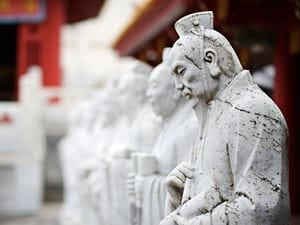
In order to grasp where Confucianism stands on God, it is important to understand a couple of alternate “theologies” with similar (yet distinct) beliefs about the divine. For example, atheism and agnosticism both place some doubt on the existence of God and the reality of an afterlife.
However, these two systems of belief are distinct from each other, in that atheists tend to be emphatic that God does not exist, whereas agnostics are more prone to say that they simply don’t “know” if there is a God or a life after this one.
In addition to atheism and agnosticism, there is another seemingly non-committal belief system that takes a unique position on the existence of the divine. This is often referred to as a “non-theistic” view of God. Non-theistic religions typically have founders, religious leaders (and/or practitioners of aestheticism), sacred space and often sacred texts, and even rites or rituals. However, non-theists have no construct of God at the center of their faith.
For them, God is a “non-issue,” as it were. Some of the most famous non-theistic traditions include Theravada Buddhism, Jainism, Reconstructionist Judaism, Philosophical Taoism, and (you guessed it) Confucianism.
Many scholars of Confucianism believe that Confucius (sometimes referred to as “Master Kong,” “Kong Qiu,” or “K’ung Fu-tzu”) was himself a believer in God. However, Confucianism (like its sister religion, Taoism) is more concerned with the here and now, with a person’s ethics and morality, than it is with the existence of God or the afterlife.
Thus, God (whether in polytheistic or monotheistic form) is simply not a subject of Confucian teachings. Confucious once rhetorically asked, “Till you have learned to serve men, how can you serve ghosts” or gods? In other words, how can you serve a deity that you can’t see when you do such a poor job at serving humans that you can see? So, rather than teaching that there is one God or a bunch of gods, Confucious instead focused on the moral development of his people, with the understanding that—for the person who became a “Confucian gentleman” (or commandingly ethical person)—the afterlife would take care of itself.
He certainly believed that heaven (or “Tian”) was the source of any human potential or realization. And yet, Confucious apparently taught that “heaven rarely, if ever, communicates with humans”—implying that he didn’t think that God (in whatever form the divine took) was a being that we could expect revelation from or interaction with.
Of course, some point out that there are Confucianists who emphatically believe in a God or multiple gods. While that is true, there is context to their beliefs. Confucianism typically mixes with other religions and traditions in the countries in which it is found. Thus, in places like Korea or China, it is often very challenging to separate Confucianism from other religions in the region—like Buddhism or Taoism.
Indeed, most who consider themselves Confucian also consider themselves Buddhist, Taoist, Shinto, or perhaps even Christian. Confucianism rarely exists on its own. As a result, most practitioners of Confucianism, if they believe in a God or gods, draw that belief not from Confucianism but from whatever other religion they practice. If that other religion is Christianity, then they are most likely monotheistic. If that other religion is Shinto or Religious Taoism, they are probably polytheistic.
Regardless, Confucianism itself is formally neither monotheistic, polytheistic, atheistic, or agnostic. It is almost certainly best labeled as a “non-theistic” tradition that virtually always mingles with some theistic tradition, making it appear like it has a God (or gods) but, in reality, it doesn’t.
5/10/2024 4:23:12 PM

Who is the Founder of Scientology?
The Church of Scientology was founded in the 1950s by L....

Do Scientologists Believe in God?
For Scientologists, God is typically understood less as a...
How Did Confucianism Impact China?
Although only a very small percentage of Chinese...
Where Did Confucianism Originate?
It was born in China but, more importantly, originated in...

Does the Baháʼí Believe in God?
While emphatically believing in the existence of God,...

Does the Baháʼí Believe in Reincarnation?
The Baháʼí religion is sometimes compared to universalism,...

About Alonzo L. Gaskill, PhD
Alonzo L. Gaskill is a Professor of Church history and doctrine. He holds a bachelor's degree in philosophy, a masters in theology, and a PhD in biblical studies.
Most Popular

- Home
- More Voices
- Answers
- Is Confucianism Monotheistic or Polytheistic
General Christian
Psalm 5: David Pleads His Case
- Home
- More Voices
- Answers
- Is Confucianism Monotheistic or Polytheistic
Progressive Christian
It All Counts: A Conversation With Natalia Terfa
- Home
- More Voices
- Answers
- Is Confucianism Monotheistic or Polytheistic
General Christian
Reflections of a Recovered Evangelical: Honoring the...

- Home
- More Voices
- Answers
- Is Confucianism Monotheistic or Polytheistic
- Home
- More Voices
- Answers
- Is Confucianism Monotheistic or Polytheistic
Progressive Christian
'Statements of Faith' never get shorter

- Home
- More Voices
- Answers
- Is Confucianism Monotheistic or Polytheistic
Evangelical
Michele's Reviews - Future Grace by John Piper

- Home
- More Voices
- Answers
- Is Confucianism Monotheistic or Polytheistic
Evangelical
Bama Gramma's Blackout Christmas: the Power of Light...

- Home
- More Voices
- Answers
- Is Confucianism Monotheistic or Polytheistic
Catholic
Thanksgiving as a Way of Life: A Christian Perspective

- Home
- More Voices
- Answers
- Is Confucianism Monotheistic or Polytheistic
Two Women Doctors Who Went Against the Current
- Home
- More Voices
- Answers
- Is Confucianism Monotheistic or Polytheistic
Catholic
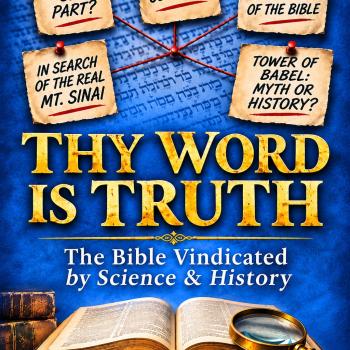
Thy Word is Truth: The Bible Vindicated by Science &...

- Home
- More Voices
- Answers
- Is Confucianism Monotheistic or Polytheistic
Pagan

- Home
- More Voices
- Answers
- Is Confucianism Monotheistic or Polytheistic
General Christian
How Thoughts Shape Our Lives - Even Lies
Patheos Explore the world's faith through different perspectives on religion and spirituality! Patheos has the views of the prevalent religions and spiritualities of the world.
Ad-Free & Subscriber Log-In Subscription Support
- About Us
- 2026 Calendar
- Videos
- Podcasts
- Library of World Religions
- Faith In Media Tracker
- Advertise With Us
- Write for Us
- Privacy Policy
- Terms of Service
- Do Not Sell My Data
- Contact Us
- Radiant Digital
- Manage Newsletter Subscriptions
- Unsubscribe From Notifications
- Sitemap
Copyright 2008-2026, Patheos, part of the Radiant Digital network of media brands. All rights reserved.
Subscription Support Ad-Free & Subscriber Log-In
Follow Patheos