
BuddhistCatholicContemplativeEvangelicalGeneral ChristianHinduJewishLatter-day SaintMuslimNew VisionsProgressive Christian
Beliefs
- Buddhist
- Catholic
- Contemplative
- Evangelical
- General Christian
- Hindu
- Jewish
- Latter-day Saint
- More Voices
- Muslim
- New Visions
- Pagan
- Progressive Christian
Topics
- Religion News
- Food and Religion
- Sports and Religion
- Religious Art
- Religious Music and Entertainment
- Religious Events
- History and Religion
- Style and Religion
- Politics and Religion
- Women in Religion
- Recreation Outdoors and Religion
- Business Finance and Religion
- Careers Workplace and Religion
- Education and Religion
- Family Parenting and Religion
- Health Fitness and Religion
- Home and Religion
- Relationships and Religion
- Technology and Religion
- Travel and Religion
Columnists
- Buddhist Columnists
- Business Finance and Religion Columnists
- Careers Workplace and Religion Columnists
- Catholic Columnists
- Contemplative Columnists
- Education and Religion Columnists
- Evangelists Columnists
- Family Parenting and Religion Columnists
- General Christian Columnists
- Health Fitness and Religion Columnists
- Hindu Columnists
- History and Religion Columnists
- Home and Religion Columnists
- Jewish Columnists
- More Voices Columnists
- Latter Day Columnists
- Muslim Columnists
- New Visions Columnists
- Nonreligious Columnists
- Pagan Columnists
- Politics and Religion Columnists
- Progressive Columnists
- Recreation Outdoors and Religion Columnists
- Relationships and Religion Columnists
- Religion News Columnists
- Religious Art Columnists
- Religious Events Columnists
- Religious Music and Entertainment Columnists
- Sports and Religion Columnists
- Style and Religion Columnists
- Technology and Religion Columnists
- Travel and Religion Columnists
- Women in Religion Columnists
Resource Library
- 2026 Calendar
- Library of World Religions
- The 100 Most Holy Places on Earth
- Patheos Answers
- Podcasts
- Videos
- Faith Leaders Database
- Anglican Episcopalian
- Bahai
- Baptist
- Buddhism
- Christianity
- Confucianism
- Eastern Orthodoxy
- Hinduism
- Holiness and Pentecostal
- ISKCON
- Islam
- Judaism
- Lutheran
- Methodist
- The Church of Jesus Christ of Latter-day Saints
- New Age
- Paganism
- Presbytarian and Reformed
- Protestantism
- Religion Behind the Scenes
- Roman Catholic
- Scientology
- Shia Islam
- Sikhism
- Sufism
- Sunni Islam
- Taoism
- Zen
- See all religions
Research Tools
 Ad-Free & Subscriber Log-In Subscription Support
Ad-Free & Subscriber Log-In Subscription Support
Follow Patheos 

- Trending:
- Forgiveness
- |
- Marriage
- |
- Consciousness
- |
- Death Penalty
- |
- Election
- |
- Halloween
- Home
- Muslim
- Education and Religion
- Answers
- How Do Muslims Practice Their Faith?
Muslim
Patheos answers the question:
How Do Muslims Practice Their Faith?
by Alonzo L. Gaskill, PH.D.
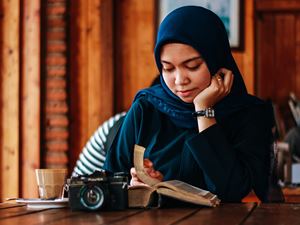
Islam is a large and complex religion. Indeed, it is the second-largest religion on the planet, with approximately 1.9 billion practitioners. While it is common for outsiders to lump all Muslims into either the Sunni or Shi’a traditions, it is important to understand that—while most Muslims are members of one of those two traditions—there are actually other denominations of Islam as well (e.g., Ibadi, Ahmadiyya, and Sufism). In addition, the various Islamic denominations have subsets or sub-denominations within (e.g., Hanafi, Hanbali, Maliki, Shafi’i, Hanbali, Ismails, Twelvers, Zaydis, etc.). It has even been said that there are “non-denominational Muslims” who do not identify with any of the traditional Muslim sects. Dr. James Toronto—a professor of Arabic Language and Islam—suggested that “There are nearly as many ‘denominations’ and points of view in Islam as there are in Christianity.” The point is, with nearly two billion practitioners, and with so many denominations and approaches to Islam, it is impossible to explain how all Muslims practice their personal faith.
Five Pillars of Islam
In addition to their “Six Articles of Belief” (belief in one God, angels, the Qur’an, prophets/messengers, the last judgement & resurrection, and divine decree), perhaps the most universal standard for ascertaining if one is a “faithful” or “practicing” Muslim would be the “Five Pillars of Islam” (or Arkān al-Islām, in Arabic). These five “pillars” are “five duties incumbent on every Muslim.” They are the standard litmus test for faithfulness—and are considered normative for all observant Muslims. These foundational principles consist of Shahada (the witness or declaration of one’s faith), Salah (prayer), Zakat (the giving of alms), Sawm (fasting), and Hajj (pilgrimage to Mecca).
Shahada
Shahada is the pronouncement: “I witness that there is no God but Allah, and I witness that Mohammed is the Messenger of Allah.” This is the mandatory declaration of every convert to Islam. To convert, you engage in a full-body wash (preferably before, but even after the recitation), recite this line in front of two or more witnesses, and commit to live the five pillars of Islam. Because intention is important in Islam, it is not enough to simply say this line. Rather, one must say it with intent, with faith, with actual belief in the words being spoken. Of this pillar, one source explains:
“A single honest recitation of the Shahadah in Arabic is all that is required for a person to become a Muslim. This declaration, or statement of faith, …is the most important of the Five Pillars of Islam for Muslims. Non-Muslims wishing to convert to Islam do so by a public recitation of the creed. Technically the Shi'a do not consider the Shahadah to be a separate pillar, but connect it to the Aqidah [or creed]. The complete shahadah cannot be found in the Quran, but comes from hadiths.”
Salah
The vast majority of Muslims (about 87%) are Sunni, and they are expected to pray five times each day. Shias, on the other hand, acknowledge the five daily prayers (at morning, noon, afternoon, sunset and nighttime), but are permitted to lump a couple of them together—namely the 2nd & 3rd prayers and the 4th & 5th prayers. Thus, practitioners of Shia Islam usually pray three times per day.
Prayer is considered a spiritual ascent into the presence of God. Thus, one removes one’s shoes, and goes through a ritual washing prior to engaging in one’s prayers. Also, one prays facing the direction of Mecca when one engages in Salah.
While Muslims can certainly pray from their hearts, Salat—the formal prayers commanded at certain times each day—consist primarily of going through a series of ritual gestures, including placing one’s forehead to the ground (as a symbol of submission), and reciting (in Arabic) verses from the Holy Qur’an.
During Friday prayers, men and women offer their Salat separate from each other, minimizing distractions. (Men pray at the mosque. Women sometimes pray at the mosque, but in a separate portion of that building, or will say their Salat at home or in the home of another female Muslim.)
Zakat
The Qur’an commands Muslims to engage in almsgiving in order to provide for the poor. It states: “Believe in Allah and His Messenger [Muhammad] and spend out of that in which He has made you successors. For those who have believed among you and spent, there will be a great reward.” (Sūrah 57:7) Giving alms fosters empathy and compassion—and service to one’s fellow man is seen as inseparable from service to God, who created us all. Among other things, the Prophet Muhammad is said to have taught: “None of you [truly] believes until he wishes for his brother what he wishes for himself.” And the Sunnah declares: “Charity extinguishes sin as water extinguishes fire.”
If you are an adult and own wealth equivalent to the value of three ounces of gold (or more), you are expected to engage in zakat, or almsgiving. The expectation is that you will give 2.5% of your net worth annually to charity. Of course, like tithing (10%) in Christianity or Judaism, not everyone faithfully pays the required or expected amount, but it is an ideal to strive for, and many Muslims fully engage in this aspect of their tradition, donating to the mosque or charities in order to bless others and so as to relieve suffering.
Sawm
The Qur’an commands Muslims to fast, among other reasons, so that they might learn “self-restraint” (Sūrah 2:183-188). In addition, fasting is seen as a gift we can give to God—as it shows our humility and submission to God’s will, in addition to evidencing our willingness to sacrifice something we greatly desire (i.e., food and comfort). Thus, the Prophet Muhammed is said to have taught: “The smell of the mouth” or breath “of a fasting person is better in Allah’s sight than the smell of musk.” (Hadith 3:128)
Islam teaches that fasting should be accompanied by almsgiving, as that too fosters compassion and care for others. Through fasting, one sacrifices one’s physical comforts (by not eating, drinking, smoking, chewing gum, or having intimate relations) while also sacrificing one’s monetary comforts (by donating money or food to those less fortunate).
During Ramadan, one fasts during the daylight hours each day, for the entire 30-days. Before sunrise, one is permitted to eat, and after sunset as well—but no eating or drinking during daylight hours. Additionally, many pious Muslims will fast (during the daylight hours) on the 13th, 14th, and 15th days of each month. Fasts are traditionally begun and ended with prayer.
Hajj
The Holy Qur’an declares that “it is the duty of mankind toward Allah to make pilgrimage to the House [i.e., the Ka‛bah]—for those who can afford the journey to it—and should anyone renege [on his obligation], Allah is indeed without need of the creatures.” (Sūrah 3:97). In other words, every observant Muslim—if physically and financially able—must make at least one pilgrimage (hajj) to Mecca during his or her lifetime. This is the highest act of devotion that a Muslim can engage in.
This annual event begins on the 7th day of the last month of the Islamic year (Dhū al-Ḥijjah) and ends on the 12th day of that same month. More than two million people participate in the hajj each year. One encyclopedia describes the event as follows:
“The pattern of pilgrimage rites was established by the Prophet Muhammad, but variations have arisen in it, and the stringent formal itinerary is not strictly adhered to by the mass of pilgrims, who frequently visit the various Meccan sites out of their proper order.
When the pilgrim is about 6 miles (10 km) from Mecca, he or she enters the state of holiness and purity known as ihram and dons the ihram garments; for men they consist of two white seamless sheets that are wrapped around the body, while women may wear sewn clothes. The pilgrims cut neither their hair nor their nails until the pilgrimage rite is over. They enter Mecca and walk seven times around the sacred shrine called the Kaaba, in the Great Mosque, kiss or touch the Black Stone (al-Ḥajar al-Aswad) in the Kaaba, pray twice in the direction of the Maqām Ibrāhīm and the Kaaba, and run seven times between the minor prominences of Mount Ṣafā and Mount Marwah. On the 7th day of Dhū al-Ḥijjah the pilgrims are reminded of their duties. At the second stage of the ritual, which takes place between the 8th and the 12th days of the month, the pilgrim visits the holy places outside Mecca—Jabal al-Raḥmah, Muzdalifah, and Minā—and sacrifices an animal in commemoration of Abraham’s sacrifice. Male pilgrims’ heads are then usually shaved, and female pilgrims remove a lock of hair. After the rajm ritual at Minā, in which pilgrims throw seven stones at three walls (formerly pillars, symbolizing the Devil) on three successive days, the pilgrim returns to Mecca to perform the farewell ṭawāf, or circumambulation, of the Kaaba before leaving the city.”
At the end of the annual hajj, there is an Islamic holiday called Eid ul Adha, or the “Festival of the Sacrifice,” which Muslims throughout the world celebrate—whether they were officially part of the hajj or not.
The hajj is seen as a time of repentance and submission. If the pilgrimage and its various rites have been performed properly, it is believed that the pilgrim receives a remission of his or her past sins. It is common for those who have completed the hajj to add the prefix ḥajjī (for a male) or ḥājjah (for a female) to their name—as an honorific title, and as a commemoration of this sacred often once-in-a-lifetime event.
Like every religion, Islam has its inactive members who do not engage in the daily requirements of the faith. Nonetheless, Muslims tend to be among some of the most faithful practitioners of any major world religion, and these five “pillars” are foundational to how they practice their faith. As can been seen from these five elements, Islam is a practical faith and, as a consequence, it is rapidly growing—and it is significantly influential is the day-to-day lives of its members.
5/14/2024 8:43:53 PM
About ALONZO L. GASKILL, PH.D.
Alonzo L. Gaskill is an author, editor, theologian, lecturer, and professor of World Religions. He holds degrees in philosophy, theology/comparative religion, and biblical studies. He has authored more than two-dozen books and numerous articles on various aspects of religion; with topics ranging from world religions and interfaith dialogue, to scriptural commentaries, texts on symbolism, sacred space, and ritual, and even devotional literature.
More from Patheos About the Muslim Faith...
Do Muslims Believe in Jesus Christ?
Do Muslims Celebrate Christmas?
What Can Muslims Not Eat?
What Are the Three Major Sins in Islam?
Most Popular

- Home
- Muslim
- Education and Religion
- Answers
- How Do Muslims Practice Their Faith?
Evangelical
The REST of Your Life: A Creative Wrestles With Sabbath

- Home
- Muslim
- Education and Religion
- Answers
- How Do Muslims Practice Their Faith?
#107: Cast of Character(s): This Weeks Episode of The...
- Home
- Muslim
- Education and Religion
- Answers
- How Do Muslims Practice Their Faith?
Progressive Christian
BONUS SHOW: Autism and RFK Jr.'s Cameo

- Home
- Muslim
- Education and Religion
- Answers
- How Do Muslims Practice Their Faith?
57th Dove Awards Honor Dolly Parton, Crown New Voices

- Home
- Muslim
- Education and Religion
- Answers
- How Do Muslims Practice Their Faith?
General Christian
A Biblical Vision of Success in Christian Life and...

- Home
- Muslim
- Education and Religion
- Answers
- How Do Muslims Practice Their Faith?
General Christian
What a Stop Sign Can Teach Us About God’s Will

- Home
- Muslim
- Education and Religion
- Answers
- How Do Muslims Practice Their Faith?
Catholic

- Home
- Muslim
- Education and Religion
- Answers
- How Do Muslims Practice Their Faith?
The Real AI Story Is Adoption Without Trust

- Home
- Muslim
- Education and Religion
- Answers
- How Do Muslims Practice Their Faith?
The First Eucharistic Controversy: Christ’s Real Presence

- Home
- Muslim
- Education and Religion
- Answers
- How Do Muslims Practice Their Faith?
General Christian
Archdiocese Hosts Military Marriage Retreat in Germany

- Home
- Muslim
- Education and Religion
- Answers
- How Do Muslims Practice Their Faith?
Catholic
Swimfan: Forgotten Aughts Pleasures

- Home
- Muslim
- Education and Religion
- Answers
- How Do Muslims Practice Their Faith?
Catholic
Top Three Anti-Catholic Lies About Catholicism
Patheos Explore the world's faith through different perspectives on religion and spirituality! Patheos has the views of the prevalent religions and spiritualities of the world.
Ad-Free & Subscriber Log-In Subscription Support
- About Us
- 2026 Calendar
- Videos
- Podcasts
- Library of World Religions
- Faith In Media Tracker
- Advertise With Us
- Write for Us
- Privacy Policy
- Terms of Service
- Do Not Sell My Data
- Contact Us
- Radiant Digital
- Manage Newsletter Subscriptions
- Unsubscribe From Notifications
- Sitemap
Copyright 2008-2026, Patheos. All rights reserved.
Subscription Support Ad-Free & Subscriber Log-In
Follow Patheos