
BuddhistCatholicContemplativeEvangelicalGeneral ChristianHinduJewishLatter-day SaintMuslimNew VisionsProgressive Christian
Beliefs
- Buddhist
- Catholic
- Contemplative
- Evangelical
- General Christian
- Hindu
- Jewish
- Latter-day Saint
- More Voices
- Muslim
- New Visions
- Pagan
- Progressive Christian
Topics
- Religion News
- Food and Religion
- Sports and Religion
- Religious Art
- Religious Music and Entertainment
- Religious Events
- History and Religion
- Style and Religion
- Politics and Religion
- Women in Religion
- Recreation Outdoors and Religion
- Business Finance and Religion
- Careers Workplace and Religion
- Education and Religion
- Family Parenting and Religion
- Health Fitness and Religion
- Home and Religion
- Relationships and Religion
- Technology and Religion
- Travel and Religion
Columnists
- Buddhist Columnists
- Business Finance and Religion Columnists
- Careers Workplace and Religion Columnists
- Catholic Columnists
- Contemplative Columnists
- Education and Religion Columnists
- Evangelists Columnists
- Family Parenting and Religion Columnists
- General Christian Columnists
- Health Fitness and Religion Columnists
- Hindu Columnists
- History and Religion Columnists
- Home and Religion Columnists
- Jewish Columnists
- More Voices Columnists
- Latter Day Columnists
- Muslim Columnists
- New Visions Columnists
- Nonreligious Columnists
- Pagan Columnists
- Politics and Religion Columnists
- Progressive Columnists
- Recreation Outdoors and Religion Columnists
- Relationships and Religion Columnists
- Religion News Columnists
- Religious Art Columnists
- Religious Events Columnists
- Religious Music and Entertainment Columnists
- Sports and Religion Columnists
- Style and Religion Columnists
- Technology and Religion Columnists
- Travel and Religion Columnists
- Women in Religion Columnists
Resource Library
- 2026 Calendar
- Library of World Religions
- The 100 Most Holy Places on Earth
- Patheos Answers
- Podcasts
- Videos
- Faith Leaders Database
- Anglican Episcopalian
- Bahai
- Baptist
- Buddhism
- Christianity
- Confucianism
- Eastern Orthodoxy
- Hinduism
- Holiness and Pentecostal
- ISKCON
- Islam
- Judaism
- Lutheran
- Methodist
- The Church of Jesus Christ of Latter-day Saints
- New Age
- Paganism
- Presbytarian and Reformed
- Protestantism
- Religion Behind the Scenes
- Roman Catholic
- Scientology
- Shia Islam
- Sikhism
- Sufism
- Sunni Islam
- Taoism
- Zen
- See all religions
Research Tools
 Ad-Free & Subscriber Log-In Subscription Support
Ad-Free & Subscriber Log-In Subscription Support
Follow Patheos 

- Trending:
- Forgiveness
- |
- Marriage
- |
- Consciousness
- |
- Death Penalty
- |
- Election
- |
- Halloween
- Home
- More Voices
- Answers
- How Did Confucianism Impact China
More Voices
Patheos answers the question:
How Did Confucianism Impact China?
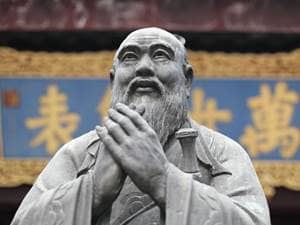
While Confucianism is not technically China’s largest religion, it is actually a component of that county’s most popular faith tradition. Often referred to as “Chinese Popular Religion,” China’s most popular belief system is an amalgamation of Religious Taoism and Confucianism, mixed with other lesser known “folk religions” that have existed in China for millennia. Other self-standing religions, like Buddhism, Christianity, and Islam exist alongside of “Chinese Popular Religion, as do Confucianism and Taoism (that have their own forms aside from the part they play in the “Popular Religion” of China).
While Confucious (i.e., “K’ung Fu-tzu” or “Master Kong,” as he is often referred to) did not formally start a religion, the philosophy, ethics, and even educational stance of the great sage morphed into the equivalent of a religious tradition in the years after Kong’s death. It is often suggested that he died feeling somewhat of a failure, unsure that his teachings would have any significant impact after his death. (It wasn’t until the 3rd century CE Han Dynasty that his teachings were formalized into an organized system with “official texts.”) And yet, Confucianism’s influence on China cannot be underestimated, even if it did take around 700 years to begin to flourish.
After K’ung Fu-tzu’s death, his disciples took the things he had taught them, and those were diffused throughout China, slowly permeating, and greatly influencing various already existing social structures (such as the government, family life, business dealings, and even other religions).
From China, his philosophy eventually made its way to Vietnam, Korea, and Japan, where it became heavily influential as well. Part of what facilitated Confucianism’s diffusion into these other parts of the world was the spread of Chinese governmental practices, along with China’s familial, philosophical, linguistic, and artistic structures.
Because Confucianism so heavily impacted each of these elements of Chinese culture, when that country’s influence spread, so did Confucianism—into and throughout most of East Asian society. Thus, today, Confucianism is largely inseparable from (and even synonymous) with East Asian culture.
Although only a very small percentage of Chinese exclusively practice Confucianism (independent of any other religious tradition), it remains one of the most impactful cultural forces in China. For example, other religions in China have many Confucian elements. This is true of Buddhism and Taoism, but also of China’s most populous faith tradition—“Chinese Popular Religion.”
In addition, family and work relationships are rooted in the five “social relationships” of Confucianism (i.e., father to son, elder brother to younger brother, husband to wife, older friend to younger friend, and ruler to subject). At least until 1905, one’s upward “social mobility” in China was very much tied to one’s embrace of and living of Confucian principles. Thus, whether in one’s familial, social, political, or work life, one cannot get away from the impact of Confucian thought in and on China.
Though the current government is communist, and though Mao’s “revolution” caused the virtual abandonment of Confucian rituals, the CCP still has the fingerprints of Confucious on its various parts—albeit, in subtle ways. Starting at least as early as the twelfth century, Chinese rulers tended to define socio-political “orthodoxy” through the lenses of Confucian teachings. And, for some two millennia, if one wished to become a government official or civil servant, one was required to pass an exam tied to a knowledge of the Confucian Classics.
Throughout the imperial dynasties (1046 BCE—1644 CE), Confucian rituals were officially part of the state religion. And, to this day, Confucian temples (in China) are preserved by the government because they are viewed as national “cultural monuments” (in addition to being important tourist sites).
It may be no exaggeration to say that Confucianism has been one of the most important and influential sources of enculturation in China, in addition to being one of the most civilizing influences. While its influences have, in many ways, gone “underground” (since Chairman Mao’s “Cultural Revolution”), if one examines any aspect of Chinese culture, religion, or family life, one will find evidence of the lingering influence of that sixth century BCE sage, Confucious.
5/10/2024 4:56:00 PM

Who is the Founder of Scientology?
The Church of Scientology was founded in the 1950s by L....

Do Scientologists Believe in God?
For Scientologists, God is typically understood less as a...

Where Did Confucianism Originate?
It was born in China but, more importantly, originated in...

Is Confucianism Monotheistic or Polytheistic?
Many scholars of Confucianism erroneously believe that...

Does the Baháʼí Believe in God?
While emphatically believing in the existence of God,...

Does the Baháʼí Believe in Reincarnation?
The Baháʼí religion is sometimes compared to universalism,...

About Alonzo L. Gaskill, PhD
Alonzo L. Gaskill is a Professor of Church history and doctrine. He holds a bachelor's degree in philosophy, a masters in theology, and a PhD in biblical studies.
Most Popular
- Home
- More Voices
- Answers
- How Did Confucianism Impact China
Evangelical
How the author of the world's best hymn became a Christian
- Home
- More Voices
- Answers
- How Did Confucianism Impact China
INNER CIRCLE: Profound Mystery (Of Christ In All Of Us)
- Home
- More Voices
- Answers
- How Did Confucianism Impact China
General Christian
What Does Gêvâh Mean For Kimberley Guifoyle & Pete...

- Home
- More Voices
- Answers
- How Did Confucianism Impact China
General Christian
- Home
- More Voices
- Answers
- How Did Confucianism Impact China
Evangelical
Do Not Rejoice When Your Enemy Falls: The Cheers for Death
- Home
- More Voices
- Answers
- How Did Confucianism Impact China
Progressive Christian
The purpose-driven labor priest
- Home
- More Voices
- Answers
- How Did Confucianism Impact China
The Golden Rule Demands More than We Think
- Home
- More Voices
- Answers
- How Did Confucianism Impact China
‘Conceivable’ Opens Friday: Faith, Family & a Surprise at...
- Home
- More Voices
- Answers
- How Did Confucianism Impact China
Catholic
'The Chosen' S6 Trailer: The Passion Gets Very Real
- Home
- More Voices
- Answers
- How Did Confucianism Impact China
Evangelical
What Will We Be Able to do on the New Earth?
- Home
- More Voices
- Answers
- How Did Confucianism Impact China
Catholic
On Protestant Explanations of Catholic Conversion
- Home
- More Voices
- Answers
- How Did Confucianism Impact China
Catholic
Pope Leo has Lung Cancer. We Need Him in this Dangerous...
Patheos Explore the world's faith through different perspectives on religion and spirituality! Patheos has the views of the prevalent religions and spiritualities of the world.
Ad-Free & Subscriber Log-In Subscription Support
- About Us
- 2026 Calendar
- Videos
- Podcasts
- Library of World Religions
- Faith In Media Tracker
- Advertise With Us
- Write for Us
- Privacy Policy
- Terms of Service
- Do Not Sell My Data
- Contact Us
- Radiant Digital
- Manage Newsletter Subscriptions
- Unsubscribe From Notifications
- Sitemap
Copyright 2008-2026, Patheos. All rights reserved.
Subscription Support Ad-Free & Subscriber Log-In
Follow Patheos