
BuddhistCatholicContemplativeEvangelicalGeneral ChristianHinduJewishLatter-day SaintMuslimNew VisionsProgressive Christian
Beliefs
- Buddhist
- Catholic
- Contemplative
- Evangelical
- General Christian
- Hindu
- Jewish
- Latter-day Saint
- More Voices
- Muslim
- New Visions
- Pagan
- Progressive Christian
Topics
- Religion News
- Food and Religion
- Sports and Religion
- Religious Art
- Religious Music and Entertainment
- Religious Events
- History and Religion
- Style and Religion
- Politics and Religion
- Women in Religion
- Recreation Outdoors and Religion
- Business Finance and Religion
- Careers Workplace and Religion
- Education and Religion
- Family Parenting and Religion
- Health Fitness and Religion
- Home and Religion
- Relationships and Religion
- Technology and Religion
- Travel and Religion
Columnists
- Buddhist Columnists
- Business Finance and Religion Columnists
- Careers Workplace and Religion Columnists
- Catholic Columnists
- Contemplative Columnists
- Education and Religion Columnists
- Evangelists Columnists
- Family Parenting and Religion Columnists
- General Christian Columnists
- Health Fitness and Religion Columnists
- Hindu Columnists
- History and Religion Columnists
- Home and Religion Columnists
- Jewish Columnists
- More Voices Columnists
- Latter Day Columnists
- Muslim Columnists
- New Visions Columnists
- Nonreligious Columnists
- Pagan Columnists
- Politics and Religion Columnists
- Progressive Columnists
- Recreation Outdoors and Religion Columnists
- Relationships and Religion Columnists
- Religion News Columnists
- Religious Art Columnists
- Religious Events Columnists
- Religious Music and Entertainment Columnists
- Sports and Religion Columnists
- Style and Religion Columnists
- Technology and Religion Columnists
- Travel and Religion Columnists
- Women in Religion Columnists
Resource Library
- 2026 Calendar
- Library of World Religions
- The 100 Most Holy Places on Earth
- Patheos Answers
- Podcasts
- Videos
- Faith Leaders Database
- Anglican Episcopalian
- Bahai
- Baptist
- Buddhism
- Christianity
- Confucianism
- Eastern Orthodoxy
- Hinduism
- Holiness and Pentecostal
- ISKCON
- Islam
- Judaism
- Lutheran
- Methodist
- The Church of Jesus Christ of Latter-day Saints
- New Age
- Paganism
- Presbytarian and Reformed
- Protestantism
- Religion Behind the Scenes
- Roman Catholic
- Scientology
- Shia Islam
- Sikhism
- Sufism
- Sunni Islam
- Taoism
- Zen
- See all religions
Research Tools
 Ad-Free & Subscriber Log-In Subscription Support
Ad-Free & Subscriber Log-In Subscription Support
Follow Patheos 

- Trending:
- Forgiveness
- |
- Marriage
- |
- Consciousness
- |
- Death Penalty
- |
- Election
- |
- Halloween
- Home
- More Voices
- Answers
- Do Scientologists Believe in God
More Voices
Patheos answers the question:
Do Scientologists Believe in God?
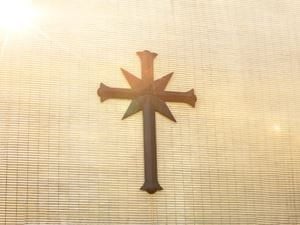
One might assume that the definition of “religion” presupposes the existence of a God. However, there are a number of religious traditions which actually do not believe in God, or do not discuss God’s existence or nature. Jainism, for example, has no deity—though it emerged (in the 6th century BCE) from Hinduism, a tradition that is often credited with having multiple gods and goddesses. Theravada Buddhism, the oldest of all extant Buddhist traditions, is largely non-theistic, discouraging its practitioners from petitioning or relying upon a deity. Confucianism has no specific teachings about the existence of a God or gods. And even Taoism has a nebulous view of what constitutes the divine. Thus, there are many religions which do not include the existence of or worship of a divine being as part of their theology.
Some have assumed that Scientology would fit into this same category—particularly because of its emphasis on “science” and the development of the “person” or “individual.” For some, Scientology seems very similar to Secular Humanism, with an emphasis on human development rather than on the worship of an external and independent deity. However, when posed with the question, “Does Scientology have a concept of God?”, their official response is an emphatic “Most definitely.” L. Ron Hubbard, the founder of the Church of Scientology, explained:
“No culture in the history of the world, save the thoroughly depraved and expiring ones, has failed to affirm the existence of a Supreme Being. It is an empirical observation that men without a strong and lasting faith in a Supreme Being are less capable, less ethical and less valuable to themselves and society… A man without an abiding faith is, by observation alone, more of a thing than [he is] a man.”
Thus, Scientology does emphasize “the existence of a Supreme Being.” However, the Scientologist understanding of God is different from what one would find in most Christian traditions. The Church of Scientology teaches that there is a “basic command” to “Survive!” And that commandment is divided into “eight compartments” or “dynamics.” The “seventh dynamic” and “eighth dynamic” teach the following:
“The Seventh Dynamic is the SPIRITUAL DYNAMIC. This is the urge to survive as spiritual beings or the urge for life itself to survive… It includes one’s beingness, the ability to create, the ability to cause survival or to survive, the ability to destroy or pretend to be destroyed… The Seventh Dynamic is life source. This is separate from the physical universe and is the source of life itself. Thus, there is an effort for the survival of life source.”
“The Eighth Dynamic is the urge toward existence as INFINITY. The Eighth Dynamic also is commonly called God, the Supreme Being or Creator, but it is correctly defined as infinity. It actually embraces the allness of all. That is why, according to L. Ron Hubbard, ‘when the Seventh Dynamic is reached in its entirety, one will only then discover the true Eighth Dynamic.’”
So, for Scientologists, God is typically understood less as a divine being and, instead, as “the urge toward existence as infinity.” That, for a Scientologist, is the “Supreme Being” or God. Their belief in God “rests at the very apex of universal survival.” Or, as Dr. Geoffrey Parrinder (Professor Emeritus of Comparative Religions at the University of London) explained:
“The place of God in the beliefs of Scientology does not appear to be dominant, as it is in Christianity, Judaism and Islam, but it is clearly present. …The book The Scientology Religion…defines [the Church of Scientology’s] mission as ‘to help the individual become aware of himself as an immortal being and to help himself achieve and attain the basic truths with regard to himself…’ It is stated that ‘we want to erase his sin so that he can be good enough to recognise [sic] God,’ and ‘Man’s best evidence of God is the God that he finds within himself.’ It is recognised [sic] that [the Church of Scientology’s] teaching about God within, and reincarnation, link Scientology to Eastern and Indian forms of religious thought. So it states the goal of ‘individual salvation in harmony with other life forms, the physical universe, and, ultimately, the Supreme Being. It is in this Eastern tradition that we find the background of Scientology.’”
Therefore, the emphasis of Scientology is on deification, or the divinity of the human—rather than focusing on the existence, nature, or perfection of a singular and external divine being. In this regard, the Church of Scientology is more like Eastern religions than it is akin to the Judeo-Christian tradition—at least as it relates to the nature of God and humans.
Whereas most religions—including the Abrahamic religions of Judaism, Christianity, and Islam—have very detailed doctrines about God’s nature, Scientology is more like Confucianism, in that the Church of Scientology has no formal teachings concerning God that practitioners are expected (or required) to embrace or subscribe to. Rather, Scientology teaches that as one reaches the “Seventh Dynamic”—the “urge to survive as spiritual beings”—then, and only then, can one experience the “Eighth Dynamic”—which is “infinity” or the “allness of all” things and all beings. At this point, the Scientologist experiences God because he or she realizes that all things are one and all things are divine. When one comes to a “full understanding” of this “Eighth Dynamic” (i.e., “Infinity” or the “God Dynamic”), one will then truly understand what “God” is and what one’s relationship to the divine actually is.
6/3/2024 3:16:41 AM
Who is the Founder of Scientology?
The Church of Scientology was founded in the 1950s by L....
How Did Confucianism Impact China?
Although only a very small percentage of Chinese...
Where Did Confucianism Originate?
It was born in China but, more importantly, originated in...

Is Confucianism Monotheistic or Polytheistic?
Many scholars of Confucianism erroneously believe that...

Does the Baháʼí Believe in God?
While emphatically believing in the existence of God,...

Does the Baháʼí Believe in Reincarnation?
The Baháʼí religion is sometimes compared to universalism,...

About Alonzo L. Gaskill, PhD
Alonzo L. Gaskill is a Professor of Church history and doctrine. He holds a bachelor's degree in philosophy, a masters in theology, and a PhD in biblical studies.
Most Popular

- Home
- More Voices
- Answers
- Do Scientologists Believe in God
Evangelical
How the author of the world's best hymn became a Christian

- Home
- More Voices
- Answers
- Do Scientologists Believe in God
INNER CIRCLE: Profound Mystery (Of Christ In All Of Us)

- Home
- More Voices
- Answers
- Do Scientologists Believe in God
General Christian
What Does Gêvâh Mean For Kimberley Guifoyle & Pete...

- Home
- More Voices
- Answers
- Do Scientologists Believe in God
General Christian

- Home
- More Voices
- Answers
- Do Scientologists Believe in God
Evangelical
Do Not Rejoice When Your Enemy Falls: The Cheers for Death

- Home
- More Voices
- Answers
- Do Scientologists Believe in God
Progressive Christian
The purpose-driven labor priest
- Home
- More Voices
- Answers
- Do Scientologists Believe in God
The Golden Rule Demands More than We Think

- Home
- More Voices
- Answers
- Do Scientologists Believe in God
‘Conceivable’ Opens Friday: Faith, Family & a Surprise at...

- Home
- More Voices
- Answers
- Do Scientologists Believe in God
Catholic
'The Chosen' S6 Trailer: The Passion Gets Very Real

- Home
- More Voices
- Answers
- Do Scientologists Believe in God
Evangelical
What Will We Be Able to do on the New Earth?
- Home
- More Voices
- Answers
- Do Scientologists Believe in God
Catholic
Pope Leo has Lung Cancer. We Need Him in this Dangerous...
- Home
- More Voices
- Answers
- Do Scientologists Believe in God
WATCH: New 'The Chosen' Trailer Depicts Final Hours of...
Patheos Explore the world's faith through different perspectives on religion and spirituality! Patheos has the views of the prevalent religions and spiritualities of the world.
Ad-Free & Subscriber Log-In Subscription Support
- About Us
- 2026 Calendar
- Videos
- Podcasts
- Library of World Religions
- Faith In Media Tracker
- Advertise With Us
- Write for Us
- Privacy Policy
- Terms of Service
- Do Not Sell My Data
- Contact Us
- Radiant Digital
- Manage Newsletter Subscriptions
- Unsubscribe From Notifications
- Sitemap
Copyright 2008-2026, Patheos. All rights reserved.
Subscription Support Ad-Free & Subscriber Log-In
Follow Patheos