
BuddhistCatholicContemplativeEvangelicalGeneral ChristianHinduJewishLatter-day SaintMuslimNew VisionsProgressive Christian
Beliefs
- Buddhist
- Catholic
- Contemplative
- Evangelical
- General Christian
- Hindu
- Jewish
- Latter-day Saint
- More Voices
- Muslim
- New Visions
- Pagan
- Progressive Christian
Topics
- Religion News
- Food and Religion
- Sports and Religion
- Religious Art
- Religious Music and Entertainment
- Religious Events
- History and Religion
- Style and Religion
- Politics and Religion
- Women in Religion
- Recreation Outdoors and Religion
- Business Finance and Religion
- Careers Workplace and Religion
- Education and Religion
- Family Parenting and Religion
- Health Fitness and Religion
- Home and Religion
- Relationships and Religion
- Technology and Religion
- Travel and Religion
Columnists
- Buddhist Columnists
- Business Finance and Religion Columnists
- Careers Workplace and Religion Columnists
- Catholic Columnists
- Contemplative Columnists
- Education and Religion Columnists
- Evangelists Columnists
- Family Parenting and Religion Columnists
- General Christian Columnists
- Health Fitness and Religion Columnists
- Hindu Columnists
- History and Religion Columnists
- Home and Religion Columnists
- Jewish Columnists
- More Voices Columnists
- Latter Day Columnists
- Muslim Columnists
- New Visions Columnists
- Nonreligious Columnists
- Pagan Columnists
- Politics and Religion Columnists
- Progressive Columnists
- Recreation Outdoors and Religion Columnists
- Relationships and Religion Columnists
- Religion News Columnists
- Religious Art Columnists
- Religious Events Columnists
- Religious Music and Entertainment Columnists
- Sports and Religion Columnists
- Style and Religion Columnists
- Technology and Religion Columnists
- Travel and Religion Columnists
- Women in Religion Columnists
Resource Library
- 2026 Calendar
- Library of World Religions
- The 100 Most Holy Places on Earth
- Patheos Answers
- Podcasts
- Videos
- Faith Leaders Database
- Anglican Episcopalian
- Bahai
- Baptist
- Buddhism
- Christianity
- Confucianism
- Eastern Orthodoxy
- Hinduism
- Holiness and Pentecostal
- ISKCON
- Islam
- Judaism
- Lutheran
- Methodist
- The Church of Jesus Christ of Latter-day Saints
- New Age
- Paganism
- Presbytarian and Reformed
- Protestantism
- Religion Behind the Scenes
- Roman Catholic
- Scientology
- Shia Islam
- Sikhism
- Sufism
- Sunni Islam
- Taoism
- Zen
- See all religions
Research Tools
 Ad-Free & Subscriber Log-In Subscription Support
Follow Patheos 

- Trending:
- Advent
- |
- Forgiveness
- |
- Thanksgiving
- |
- Election
- |
- Seasonal Holidays
- |
- Marriage
- Home
- Hindu
- History and Religion
- Answers
- Do Hindus Worship Idols
Hindu
Patheos answers the question:
Do Hindus Worship Idols?
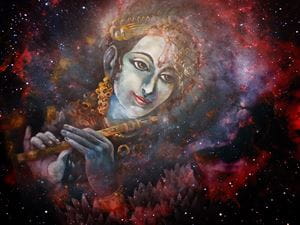
Shutterstock.com
Non-Hindus use the word "idol" in a different sense than do Hindus. For non-Hindus, idols and idolatry connote the worship of false gods. Many raised in a Judeo-Christian context understand the word within the context of the Bible's warnings about worshipping idols. For them, this is a betrayal of true worship to the one true God.
Hindus, on the other hand, talk about murtis, images of the gods that they worship as reminders and manifestations of the gods. Murtis are a major part of Hindu worship and practice. Murtis are the recipients of devotees' veneration, a ritual called Aradhana or puja, during which food, clothing, incense, prayers, and adoration are offered. The word puja simply means "honor."
The murtis are not, however, considered the specific deities themselves but the visible representations of those deities. A statue of Lord Ganesha, the elephant-headed son of Shiva, may receive Hindu's worship, but the statue is a conduit of the prayers and praise to Ganesha himself. Lord Ganesha is not confined to the statue. Idols, then, are instrumental in Hindu rituals. They facilitate spiritual focus for humans who are bound to the normal physical senses. The goal of worshipping murtis is to experience God's presence. When properly offered, the devotion to an image can result in an experience called sannidhya, a sensation of divine energy that emanates from the murti.
Many Hindu temples are dedicated to a single murti. Puja may involve honoring the idol as a beloved guest, washing and dressing the deity, singing and praising him. Such gestures should lead to darshan, the moment in worship when the worshipper sees the God and the God sees the worshipper. This exchange of vision is spiritual, and it connects the worshipper to divine reality.
These acts may also occur in the home at a personal shrine. Most Hindu worship takes place in domestic settings and within the family. This is relevant because puja implies a relationship of affection and commitment between the deity and the worshipper. The worshipper approaches the murti with love and devotion and believes that the God returns the love.
A family may have one or more murtis in some dedicated part of their home. Personal devotion to one in particular is called an ishtadevata, which means "chosen god." These murtis receive devotions in the mornings, before major life events, and as a part of special efforts in their career or community. Certain rituals are designed around the hope of positively influencing certain activities, and certain gods and goddesses are particularly associated with certain stages or activities in life. For instance, devotion to Lord Ganesha is especially encouraged before a wedding. The goddess Lakshmi is known as the goddess of luck and good fortune. She is often worshipped by those in need of healing or protection or a special blessing. The goddess Saraswati, the consort of Brahma, is renowned as the goddess of music, poetry, knowledge, and the arts. She is especially beloved to those engaged in culture-making.
Certain Hindu festivals group deities together as a way of focusing celebrations on popular stories and events in Hindu mythology. For example, Navaratri is a nine-day autumn festival that centers on three of the most popular goddesses: Durga, Saraswati, and Lakshmi. Communities will gather at temples and in private homes, and often little girls are selected to receive the worship of the devotees. They become living representations of the goddesses.
Each of the deities, according to the mythologies around them and the symbolism that has defined them, have objects that are particularly associated with them. The murtis show these objects, and they are also offered to them as acts of worship. For example, since Saraswati is a goddess of music and the arts, she is often depicted in art with a book, holding an instrument, and dressed in white, representing the purity of true enlightenment. A worshipper might offer her murti books, white cloth or white flowers, and pens or pencils. Those who worship Krishna might offer puja by reading aloud a section of the Bhagavad Gita, the sacred text that tells the story of Krishna strengthening and encouraging Arjuna before a great battle.
Despite the myriad presentations of murtis, most Hindus are actually monists. That is, they believe in one Deity, Brahman, the abstract divine reality. Brahman permeates all things, so in this sense, every material object is worthy of worship. All the different Hindu gods and goddesses, perhaps as many as 300 million of them, are manifestations of Brahman. Brahman alone is the single divine principle, and the individual gods are each full manifestations of Brahman. When a Hindu offers worship to an individual deity, he or she is offering worship to that deity and, through him or her, worshipping the ultimate divinity, Brahman.
In Hindu narratives, Brahman precedes all. Out of Brahman, Vishnu is born, then Brahma, then Shiva. From Brahma, the world was created. Each of these three gods, however, has multiple manifestations. Vishnu may be perceived as a heavenly deity enthroned with his queen consort, Lakshmi. Or he may be perceived as an avatara, a physical manifestation such as Krishna or Rama. When Hindus offer worship to a murti, this may be a particular "version" of Vishnu, yet all are Vishnu, and all are ultimately manifestations of Brahman, the ultimate deity.
Read about the beginnings of the world from the Hindu perspective here.
5/14/2024 8:35:44 PM

About Kathleen Mulhern
Kathleen Mulhern is an author, editor, historian, and adjunct professor of Church History and Christian Formation at Denver Seminary. She holds degrees in literature, church history, and European intellectual history.
More from Hindu Patheos
A Few Famous Saints & Yogis in Kashi
Most Popular

- Home
- Hindu
- History and Religion
- Answers
- Do Hindus Worship Idols
Progressive Christian
Smart people saying smart things (11.24.26)

- Home
- Hindu
- History and Religion
- Answers
- Do Hindus Worship Idols
The Contingency of Our Technology

- Home
- Hindu
- History and Religion
- Answers
- Do Hindus Worship Idols
Progressive Christian

- Home
- Hindu
- History and Religion
- Answers
- Do Hindus Worship Idols
Progressive Christian
Reasons for Restraint: Ricardo Gonzalez, Florida and Dec 1

- Home
- Hindu
- History and Religion
- Answers
- Do Hindus Worship Idols
General Christian
Psalm 5: David Pleads His Case
- Home
- Hindu
- History and Religion
- Answers
- Do Hindus Worship Idols
Progressive Christian
It All Counts: A Conversation With Natalia Terfa
- Home
- Hindu
- History and Religion
- Answers
- Do Hindus Worship Idols
General Christian
Reflections of a Recovered Evangelical: Honoring the...

- Home
- Hindu
- History and Religion
- Answers
- Do Hindus Worship Idols
Latter-day Saint
- Home
- Hindu
- History and Religion
- Answers
- Do Hindus Worship Idols

- Home
- Hindu
- History and Religion
- Answers
- Do Hindus Worship Idols
Progressive Christian
'Statements of Faith' never get shorter

- Home
- Hindu
- History and Religion
- Answers
- Do Hindus Worship Idols
Evangelical
Michele's Reviews - Future Grace by John Piper

- Home
- Hindu
- History and Religion
- Answers
- Do Hindus Worship Idols
Evangelical
Bama Gramma's Blackout Christmas: the Power of Light...
Patheos Explore the world's faith through different perspectives on religion and spirituality! Patheos has the views of the prevalent religions and spiritualities of the world.
Ad-Free & Subscriber Log-In Subscription Support
- About Us
- 2026 Calendar
- Videos
- Podcasts
- Library of World Religions
- Faith In Media Tracker
- Advertise With Us
- Write for Us
- Privacy Policy
- Terms of Service
- Do Not Sell My Data
- Contact Us
- Radiant Digital
- Manage Newsletter Subscriptions
- Unsubscribe From Notifications
- Sitemap
Copyright 2008-2026, Patheos, part of the Radiant Digital network of media brands. All rights reserved.
Subscription Support Ad-Free & Subscriber Log-In
Follow Patheos