
BuddhistCatholicContemplativeEvangelicalGeneral ChristianHinduJewishLatter-day SaintMuslimNew VisionsProgressive Christian
Beliefs
- Buddhist
- Catholic
- Contemplative
- Evangelical
- General Christian
- Hindu
- Jewish
- Latter-day Saint
- More Voices
- Muslim
- New Visions
- Pagan
- Progressive Christian
Topics
- Religion News
- Food and Religion
- Sports and Religion
- Religious Art
- Religious Music and Entertainment
- Religious Events
- History and Religion
- Style and Religion
- Politics and Religion
- Women in Religion
- Recreation Outdoors and Religion
- Business Finance and Religion
- Careers Workplace and Religion
- Education and Religion
- Family Parenting and Religion
- Health Fitness and Religion
- Home and Religion
- Relationships and Religion
- Technology and Religion
- Travel and Religion
Columnists
- Buddhist Columnists
- Business Finance and Religion Columnists
- Careers Workplace and Religion Columnists
- Catholic Columnists
- Contemplative Columnists
- Education and Religion Columnists
- Evangelists Columnists
- Family Parenting and Religion Columnists
- General Christian Columnists
- Health Fitness and Religion Columnists
- Hindu Columnists
- History and Religion Columnists
- Home and Religion Columnists
- Jewish Columnists
- More Voices Columnists
- Latter Day Columnists
- Muslim Columnists
- New Visions Columnists
- Nonreligious Columnists
- Pagan Columnists
- Politics and Religion Columnists
- Progressive Columnists
- Recreation Outdoors and Religion Columnists
- Relationships and Religion Columnists
- Religion News Columnists
- Religious Art Columnists
- Religious Events Columnists
- Religious Music and Entertainment Columnists
- Sports and Religion Columnists
- Style and Religion Columnists
- Technology and Religion Columnists
- Travel and Religion Columnists
- Women in Religion Columnists
Resource Library
- 2026 Calendar
- Library of World Religions
- The 100 Most Holy Places on Earth
- Patheos Answers
- Podcasts
- Videos
- Faith Leaders Database
- Anglican Episcopalian
- Bahai
- Baptist
- Buddhism
- Christianity
- Confucianism
- Eastern Orthodoxy
- Hinduism
- Holiness and Pentecostal
- ISKCON
- Islam
- Judaism
- Lutheran
- Methodist
- The Church of Jesus Christ of Latter-day Saints
- New Age
- Paganism
- Presbytarian and Reformed
- Protestantism
- Religion Behind the Scenes
- Roman Catholic
- Scientology
- Shia Islam
- Sikhism
- Sufism
- Sunni Islam
- Taoism
- Zen
- See all religions
Research Tools
 Ad-Free & Subscriber Log-In Subscription Support
Ad-Free & Subscriber Log-In Subscription Support
Follow Patheos 

- Trending:
- Forgiveness
- |
- Marriage
- |
- Consciousness
- |
- Death Penalty
- |
- Election
- |
- Halloween
- Home
- Hindu
- Food and Religion
- Answers
- Do Hindus Eat Meat
Patheos answers the question:
Do Hindus Eat Meat?
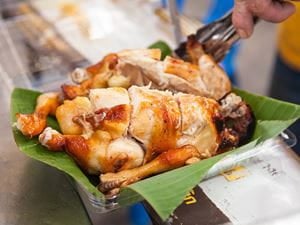
shutterstock.com
Reverence for Life in Hinduism
Like many Asian religious traditions, Hinduism emphasizes the importance of manifesting a strong reverence for life. This principle is known as ahimsa—meaning “without injury” (in Sanskrit). Buddhism, Jainism, Sikhism, and other traditions (including Christianity) have customarily taught that their practitioners should reverence all life—not just human life. Living harmoniously with all created forms of life is an ethic that is common in most religious traditions and is heavily emphasized among Hindus.
Diversity Within Hindu Beliefs and Practices
Of course, in understanding Hinduism, one must keep in mind that it is an incredibly diverse religion, with numerous beliefs, gods, practices, and approaches. Not all Hindus believe the same thing, nor practice their religion in the same way. Thus, one can never safely say “Hindus always believe this…” or “Hindus always do this…” So, we must speak in generalities about what Hinduism “officially” teaches, but dogmatism is never appropriate when discussing the Hindu religion.
Misconceptions About Hindu Vegetarianism
While vegetarianism has been fairly common among Hindus (since about the 6th century BCE), it is a frequently held misunderstanding that all Hindus are vegetarians. In their Concise Introduction to World Religions, Willard Oxtoby and Alan Segal noted: “Contrary to a common Western stereotype, most Hindus are not vegetarians. Nor does vegetarianism for Hindus mean abstaining from dairy products. Generally speaking, vegetarianism is a matter of community and caste. The strictest Hindu vegetarians are the Vaishnavas, devotees of Vishnu in northern India. In addition, most brahmins [i.e., those of the priestly caste] are vegetarian—except in Bengal and Kashmir.” So, vegetarianism simply isn’t a “commandment” in Hinduism, and a significant portion of Hindus do eat certain meats. For those Indians—whether Hindu, Buddhist, Jain, Sikh, or of some other religious tradition—who do abstain from meat, this is usually mostly for cultural reasons, and less for religious reasons.
Hindu Dietary Practices
Hinduism does not require a vegetarian diet, but many Hindus choose not to eat meat. Hindus who do choose to be strict vegetarians will not eat any kind of meat, including fish, or animal-based foods, such as eggs. Most Hindus, however, will consume milk-based products like butter, cheese, or yogurt.
Ahimsa and Nonviolence
The reason some Hindus do not eat meat is because a central teaching of Hinduism is ahimsa, or respect for all living things and the importance of not committing violence against others. This means having compassion towards animals and all living things in nature. Many sacred texts in the Hindu tradition emphasize the importance of nonviolence, and these texts are often interpreted by Hindus as supporting a vegetarian diet.
Spiritual Reasons for Vegetarianism
There are also many religious teachings in the long tradition of Hinduism that strongly advise against eating meat for spiritual reasons. Many Hindus believe that in the act of eating meat, people consume the emotional pain and fear of the animal who was slaughtered, and this energy can have negative spiritual consequences. This is why Hindu religious leaders, priests, yogis, and others striving to achieve a higher plane of personal spirituality tend to practice strict vegetarianism. In Hinduism, the types of food a person eats are considered to play an important role in the success of their spiritual pursuits. As a result, there exists a variety of diets specific to Hindus who are focusing on their spiritual development, such as the sattvic diet. These diets are all vegetarian.
Prohibition on Beef Consumption
While Hindus are generally allowed to eat a variety of meats, this remarkably ancient tradition does teach that its practitioners should not kill cows nor consume beef. The reasoning behind this is found in several popular Hindu beliefs, including the idea that the cow is sometimes associated with the “mother-goddess Aditi” and is evidence of the “divine bounty of the earth.” Thus, the cow is a symbol of God’s benevolence. Similarly, because Krishna (one of the most popular Hindu Gods, who is the 8th avatar of Vishnu) was a “cow herder,” some Hindus associate the cow with Him as well. Krishna is one of the most benevolent and loving manifestations of God (in Hindu belief). Cattle has kept India alive for centuries. They do work, provide dairy products, their dung is used to fuel fires, and (in some cases) their skin is used when a cow dies of natural causes. The cow has become “a comprehensive symbol of Indian Hindu nationalism.” It is reverenced, protected, and perceived as a symbol of the sacred. In twenty-four out of twenty-nine states in India, there are restrictions on killing cows or eating beef. In parts of India, it is illegal to kill or eat cattle. In other locations on the subcontinent (where there are high concentrations of non-Hindus), it is only legal to kill and consume beef at certain times of the year. (In the permissible locations, one must typically have a permit to slay and eat cattle, and one would be fined for doing so without authorization from local authorities.)
Other Dietary Restrictions
While beef is strictly prohibited throughout most of India, one will find fish and chicken among the meat products sold in restaurants and stores—and commonly consumed in various parts of the subcontinent. However, in addition to prohibitions on the consumption of beef, most Hindus will also not kill (or eat) peacocks because that specific bird is believed by some practitioners to represent achieving victory over poisonous tendencies—one of the major goals of life (in Hinduism). Peacocks also represent protection and Maa Saraswati, the goddess of wisdom, music, poetry, and speech. Thus, they are reverenced by some for what they symbolize.
Acceptable Meat Preparation
Some Hindus who do eat meat will only do so if the animal has been slaughtered by jhatka, a slaughtering technique in which the animal is killed with a single blow to the back of the neck. This method is considered in Hinduism to be the least painful for the animal and thus cause the least trauma and stress. Some Hindu religious texts advise that animals killed through jhatka are thus permissible for Hindus to eat, though most Hindus will still say that it is not the ideal food for a person trying to follow a specifically specialized spiritual path.
Cultural Influences on Diet
Today, whether or not a Hindu will eat meat is also partly a question of location and culture. Many Hindus who grow up in communities where it is very common for people to be vegetarian, such as the south of India, will not eat meat. For Hindus who do not eat meat, their meals will usually consist of grains, such as rice, and a variety of vegetables, stews, and spices. For Hindus who grow up in the U.S., Europe, or even northern India, where meat-eating is more common, the consumption of meat likewise is more common.
Zoolatry in Hinduism
Hinduism is probably the only major world religion today that is zoolatrous, in that the cows (and a number of other animals) are treated like gods. Of course, cattle are not worshiped in Hinduism in the same way Christians would worship their God. Nonetheless, the connection of cows with the divine, with Hinduism itself, and with Hindu nationalism, has made any killing or consumption of them extremely taboo. Nonetheless, that strongly held belief has not resulted in theological or governmental prohibitions against the consumption of animal flesh in general—and those who choose to avoid eating all meat are often either practicing Brahmin priests, strongly influenced by the doctrine of ahimsa, or are just culturally inclined because of the widespread discomfort one finds with eating beef in most of India.
5/22/2024 4:26:59 PM

What Other Religions Have a Leader Like the Pope?
A look at religious leaders who resemble the Catholic...

What does the Bible say About Israel and the End Times?
What seems universally clear is that “Israel”—as a land,...

Why Does It Seem Israel Is Always at War With Its...
Why does it seem Israel is always at war with its...

How Does Faith Inform Views on Money and Taxes?
This article explores how major world religions view...

What Do World Religions Say About Environmental...
Explore how sacred texts from major world religions—from...

What Do Holy Texts Say About Guns, Violence, and...
This interfaith article explores what various sacred...

About Alonzo L. Gaskill, PhD
Alonzo L. Gaskill is a Professor of Church history and doctrine. He holds a bachelor's degree in philosophy, a masters in theology, and a PhD in biblical studies.
More from Patheos about Hindu practices
Why Do Hindus Not Eat Beef [Google Questions Answered]
Hinduism 101: What do Hindus Believe?
12 Amazing Facts About India
Religious Diversity Journeys: How a Visit to a Temple Can Reveal that Hindus don't Worship Idols.
Most Popular

- Home
- Hindu
- Food and Religion
- Answers
- Do Hindus Eat Meat
Catholic
The Sermon on the Mount, Part I: Matthew 4:12-5:12

- Home
- Hindu
- Food and Religion
- Answers
- Do Hindus Eat Meat
Catholic
Janie Learns the Way of the Cross: A Catholic Review

- Home
- Hindu
- Food and Religion
- Answers
- Do Hindus Eat Meat
Entertainment

- Home
- Hindu
- Food and Religion
- Answers
- Do Hindus Eat Meat
Evangelical
How the author of the world's best hymn became a Christian

- Home
- Hindu
- Food and Religion
- Answers
- Do Hindus Eat Meat
Catholic
Looking For Good Catholic Writing - October 2026

- Home
- Hindu
- Food and Religion
- Answers
- Do Hindus Eat Meat

- Home
- Hindu
- Food and Religion
- Answers
- Do Hindus Eat Meat
INNER CIRCLE: Profound Mystery (Of Christ In All Of Us)

- Home
- Hindu
- Food and Religion
- Answers
- Do Hindus Eat Meat
General Christian
What Does Gêvâh Mean For Kimberley Guifoyle & Pete...

- Home
- Hindu
- Food and Religion
- Answers
- Do Hindus Eat Meat
General Christian

- Home
- Hindu
- Food and Religion
- Answers
- Do Hindus Eat Meat
Evangelical
Do Not Rejoice When Your Enemy Falls: The Cheers for Death

- Home
- Hindu
- Food and Religion
- Answers
- Do Hindus Eat Meat
Progressive Christian
The purpose-driven labor priest
- Home
- Hindu
- Food and Religion
- Answers
- Do Hindus Eat Meat
The Golden Rule Demands More than We Think
Patheos Explore the world's faith through different perspectives on religion and spirituality! Patheos has the views of the prevalent religions and spiritualities of the world.
Ad-Free & Subscriber Log-In Subscription Support
- About Us
- 2026 Calendar
- Videos
- Podcasts
- Library of World Religions
- Faith In Media Tracker
- Advertise With Us
- Write for Us
- Privacy Policy
- Terms of Service
- Do Not Sell My Data
- Contact Us
- Radiant Digital
- Manage Newsletter Subscriptions
- Unsubscribe From Notifications
- Sitemap
Copyright 2008-2026, Patheos. All rights reserved.
Subscription Support Ad-Free & Subscriber Log-In
Follow Patheos