
BuddhistCatholicContemplativeEvangelicalGeneral ChristianHinduJewishLatter-day SaintMuslimNew VisionsProgressive Christian
Beliefs
- Buddhist
- Catholic
- Contemplative
- Evangelical
- General Christian
- Hindu
- Jewish
- Latter-day Saint
- More Voices
- Muslim
- New Visions
- Pagan
- Progressive Christian
Topics
- Religion News
- Food and Religion
- Sports and Religion
- Religious Art
- Religious Music and Entertainment
- Religious Events
- History and Religion
- Style and Religion
- Politics and Religion
- Women in Religion
- Recreation Outdoors and Religion
- Business Finance and Religion
- Careers Workplace and Religion
- Education and Religion
- Family Parenting and Religion
- Health Fitness and Religion
- Home and Religion
- Relationships and Religion
- Technology and Religion
- Travel and Religion
Columnists
- Buddhist Columnists
- Business Finance and Religion Columnists
- Careers Workplace and Religion Columnists
- Catholic Columnists
- Contemplative Columnists
- Education and Religion Columnists
- Evangelists Columnists
- Family Parenting and Religion Columnists
- General Christian Columnists
- Health Fitness and Religion Columnists
- Hindu Columnists
- History and Religion Columnists
- Home and Religion Columnists
- Jewish Columnists
- More Voices Columnists
- Latter Day Columnists
- Muslim Columnists
- New Visions Columnists
- Nonreligious Columnists
- Pagan Columnists
- Politics and Religion Columnists
- Progressive Columnists
- Recreation Outdoors and Religion Columnists
- Relationships and Religion Columnists
- Religion News Columnists
- Religious Art Columnists
- Religious Events Columnists
- Religious Music and Entertainment Columnists
- Sports and Religion Columnists
- Style and Religion Columnists
- Technology and Religion Columnists
- Travel and Religion Columnists
- Women in Religion Columnists
Resource Library
- 2026 Calendar
- Library of World Religions
- The 100 Most Holy Places on Earth
- Patheos Answers
- Podcasts
- Videos
- Faith Leaders Database
- Anglican Episcopalian
- Bahai
- Baptist
- Buddhism
- Christianity
- Confucianism
- Eastern Orthodoxy
- Hinduism
- Holiness and Pentecostal
- ISKCON
- Islam
- Judaism
- Lutheran
- Methodist
- The Church of Jesus Christ of Latter-day Saints
- New Age
- Paganism
- Presbytarian and Reformed
- Protestantism
- Religion Behind the Scenes
- Roman Catholic
- Scientology
- Shia Islam
- Sikhism
- Sufism
- Sunni Islam
- Taoism
- Zen
- See all religions
Research Tools
 Ad-Free & Subscriber Log-In Subscription Support
Follow Patheos 

- Trending:
- Advent
- |
- Forgiveness
- |
- Thanksgiving
- |
- Election
- |
- Seasonal Holidays
- |
- Marriage
- Home
- Catholic
- Food and Religion
- Answers
- Can Catholics Drink
Catholic
Patheos answers the question:
Can Catholics Drink?
by Kathleen Mulhern, PH.D.
Shutterstock
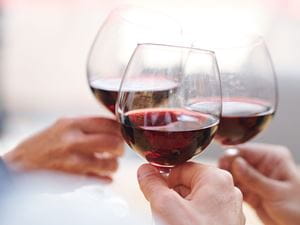
According to the Roman Catholic Church, alcohol and drinking is both an intrinsically good thing and a source of potential danger. According to Roman Catholic teachings, drinking alcohol has always been part of the Christian experience. Jesus’s first recorded miracle, after all, was to turn water into wine (John 2.1-11), and wine was a central part of the Last Supper (Luke 22.17-18). Between such stories and the necessity of alcohol before safe drinking water, all Christians in the early centuries of the church saw drinking alcohol as perfectly acceptable. St. Arnulf of Metz (580-640) echoed happy ideas about alcohol by saying, “From man’s sweat and God’s love, beer came into the world.”
This does not mean that Catholics feel they are free to drink until they are falling off their seat and cannot remember their own name. The Catechism of the Catholic Church reminds Catholics that the Christian virtue of temperance calls for the avoidance of every kind of excess, whether of food, alcohol, medications, or other substances. Such excess can lead to endangerment of body and health and to a breakdown of the spiritual life. The universal call to self-denial and asceticism (discipline) reminds Christians that their ultimate goal in life is not pleasure but the joy of union with Christ.
G. K. Chesterton summed up Catholic ideas about alcohol when he wrote, “We should thank God for beer and burgundy by not drinking too much of them.” Indeed, Catholics are well aware that drunkenness is forbidden in the Bible (Ephesians 5.18), and modern Catholics know the statistics about alcohol-related illnesses and deaths today. That said, Catholics see the positive sides of drinking as well. Having a glass of wine or drink with someone is an easy way to find fellowship and simple human conversation in a world that increasingly interacts via a screen. Furthermore, many Bible studies and serious religious discussions have been held over a beer or a scotch. Catholics see nothing wrong with drinking in moderation, so long as they are thankful for God’s generosity in creating such things and avoid getting behind the wheel when the fellowship is over.
Many, if not most, Protestants agree with this position, particularly in contemporary times. Martin Luther enjoyed beer and wine and most Reformers only warned against intemperance, or drunkenness. Alcohol became an increasingly troublesome matter, however, for Protestant Christians in the 18th and 19th centuries. The societal cost of alcoholism pushed many religious leaders to call for temperance, by which they meant abstention from all alcohol. Abstentionism is the position that holds that alcohol consumption is not inherently sinful, but it is not a wise or prudent choice. Abstentionists, or “teetotalers,” hold that alcohol may have been more acceptable in ancient times due to polluted drinking water, but that modern Christians have no such excuse and that drinking for pleasure contains inherent danger. This position is most associated with American Protestants who led the push for Prohibition and the passing of the 18th Amendment to the U.S. Constitution. Since its repeal in 1933, many Protestant Christians have gradually embraced the moderate use of alcohol.
Read more about Roman Catholic positions in social life here.
3/6/2023 10:08:16 PM
About About Kathleen Mulhern, PH.D.
Kathleen Mulhern is a writer, editor, historian, speaker, and professor. She teaches courses in world history, European history, and history of Christianity. She has taught at Colorado School of Mines and Regis University, and is currently an adjunct professor at Denver Seminary in the areas of Church History and Spiritual Formation. Kathleen graduated with a B.A. from Wheaton College, earned an M.A. in French Literature from the University of Denver, an M.A. degree in Church History from Denver Seminary, and a Ph.D. in History from the University of Colorado.
More from Patheos about a Catholic lifestyle
Predominant Sin: Kill it.
Forgiveness: Humility Required (And a Little LOTR Knowledge)
How to Act Like a Christian
Why Millennials Want to Change the World
Most Popular

- Home
- Catholic
- Food and Religion
- Answers
- Can Catholics Drink
Latter-day Saint

- Home
- Catholic
- Food and Religion
- Answers
- Can Catholics Drink
Latter-day Saint
- Home
- Catholic
- Food and Religion
- Answers
- Can Catholics Drink
Progressive Christian
Personal Devotion After Deconstruction

- Home
- Catholic
- Food and Religion
- Answers
- Can Catholics Drink
General Christian
"Why Do Churches Talk So Much About Money?"

- Home
- Catholic
- Food and Religion
- Answers
- Can Catholics Drink
Progressive Christian
Watch and Pray: On Mark 13:33-37
- Home
- Catholic
- Food and Religion
- Answers
- Can Catholics Drink
Catholic
Debate on Purgatory & Biblical Evidences for It

- Home
- Catholic
- Food and Religion
- Answers
- Can Catholics Drink
Catholic
Set the table for the coming King

- Home
- Catholic
- Food and Religion
- Answers
- Can Catholics Drink
A Modest Proposal for President Trump
- Home
- Catholic
- Food and Religion
- Answers
- Can Catholics Drink
Catholic
Praise and Thanks As Natural as Breathing
- Home
- Catholic
- Food and Religion
- Answers
- Can Catholics Drink
Buddhist
If I Stop Becoming, Will I Disappear?
- Home
- Catholic
- Food and Religion
- Answers
- Can Catholics Drink
Progressive Christian
BONUS SHOW: Happy Thanksgiving
- Home
- Catholic
- Food and Religion
- Answers
- Can Catholics Drink
INNER CIRCLE: John's Quantum Gospel
Patheos Explore the world's faith through different perspectives on religion and spirituality! Patheos has the views of the prevalent religions and spiritualities of the world.
Ad-Free & Subscriber Log-In Subscription Support
- About Us
- 2026 Calendar
- Videos
- Podcasts
- Library of World Religions
- Faith In Media Tracker
- Advertise With Us
- Write for Us
- Privacy Policy
- Terms of Service
- Do Not Sell My Data
- Contact Us
- Radiant Digital
- Manage Newsletter Subscriptions
- Unsubscribe From Notifications
- Sitemap
Copyright 2008-2026, Patheos, part of the Radiant Digital network of media brands. All rights reserved.
Subscription Support Ad-Free & Subscriber Log-In
Follow Patheos