
BuddhistCatholicContemplativeEvangelicalGeneral ChristianHinduJewishLatter-day SaintMuslimNew VisionsProgressive Christian
Beliefs
- Buddhist
- Catholic
- Contemplative
- Evangelical
- General Christian
- Hindu
- Jewish
- Latter-day Saint
- More Voices
- Muslim
- New Visions
- Pagan
- Progressive Christian
Topics
- Religion News
- Food and Religion
- Sports and Religion
- Religious Art
- Religious Music and Entertainment
- Religious Events
- History and Religion
- Style and Religion
- Politics and Religion
- Women in Religion
- Recreation Outdoors and Religion
- Business Finance and Religion
- Careers Workplace and Religion
- Education and Religion
- Family Parenting and Religion
- Health Fitness and Religion
- Home and Religion
- Relationships and Religion
- Technology and Religion
- Travel and Religion
Columnists
- Buddhist Columnists
- Business Finance and Religion Columnists
- Careers Workplace and Religion Columnists
- Catholic Columnists
- Contemplative Columnists
- Education and Religion Columnists
- Evangelists Columnists
- Family Parenting and Religion Columnists
- General Christian Columnists
- Health Fitness and Religion Columnists
- Hindu Columnists
- History and Religion Columnists
- Home and Religion Columnists
- Jewish Columnists
- More Voices Columnists
- Latter Day Columnists
- Muslim Columnists
- New Visions Columnists
- Nonreligious Columnists
- Pagan Columnists
- Politics and Religion Columnists
- Progressive Columnists
- Recreation Outdoors and Religion Columnists
- Relationships and Religion Columnists
- Religion News Columnists
- Religious Art Columnists
- Religious Events Columnists
- Religious Music and Entertainment Columnists
- Sports and Religion Columnists
- Style and Religion Columnists
- Technology and Religion Columnists
- Travel and Religion Columnists
- Women in Religion Columnists
Resource Library
- 2026 Calendar
- Library of World Religions
- The 100 Most Holy Places on Earth
- Patheos Answers
- Podcasts
- Videos
- Faith Leaders Database
- Anglican Episcopalian
- Bahai
- Baptist
- Buddhism
- Christianity
- Confucianism
- Eastern Orthodoxy
- Hinduism
- Holiness and Pentecostal
- ISKCON
- Islam
- Judaism
- Lutheran
- Methodist
- The Church of Jesus Christ of Latter-day Saints
- New Age
- Paganism
- Presbytarian and Reformed
- Protestantism
- Religion Behind the Scenes
- Roman Catholic
- Scientology
- Shia Islam
- Sikhism
- Sufism
- Sunni Islam
- Taoism
- Zen
- See all religions
Research Tools
 Ad-Free & Subscriber Log-In Subscription Support
Ad-Free & Subscriber Log-In Subscription Support
Follow Patheos 

- Trending:
- Forgiveness
- |
- Marriage
- |
- Consciousness
- |
- Death Penalty
- |
- Election
- |
- Halloween
- Home
- Evangelical
- Answers
- What Does The Bible Say About Tithing?
General Christian
Patheos answers the question:
What Does The Bible Say About Tithing?

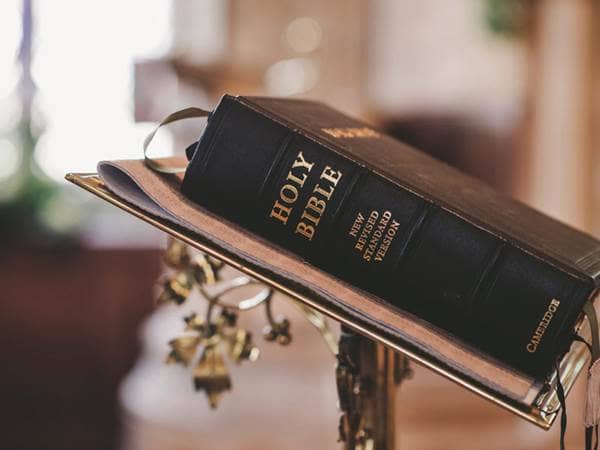
Tithing is a commandment. Cred: Lightstock
While some may be put off by the supposed wealth of certain Christian denominations or even independent “Mega-Churches,” if we’re honest, we must admit that in order to run any organization, it requires money. Very early in the Bible, God commanded His followers to pay tithing in order to support the work of the ministry, including prophets, priests, and others who would labor to move forward the cause of God’s people. (See Numbers 18:21; 2 Chronicles 31:4-5)
Our English term “tithing” comes from a Hebrew word which means literally “tenth,” because it was one-tenth that God commanded to be given from the “increase” of His people. Thus, in Leviticus chapter 27, we read: “Ten percent of everything you harvest is holy and belongs to me, whether it grows in your fields or on your fruit trees… When you count your flocks and herds, one out of ten of every newborn animal is holy and belongs to me.” (CEV Leviticus 27:30 & 32) This law has never been recalled by God, and it appears in both the Hebrew Bible (or “Old Testament”) and in the New Testament. Jesus even pointed out: “Don’t suppose I came to do away with the Law and the Prophets. I did not come to do away with them, but to give them their full meaning.” (CEV Matthew 5:17) So, Christians and Jews are each told in the Bible that they are obligated to live this ancient law of God.
In Numbers chapter 18, we read: “Moreover, you shall speak and say to the Levites, ‘When you take from the people of Israel the tithe that I have given you from them for your inheritance, then you shall present a contribution from it to the LORD, a tithe of the tithe.” (ESV Numbers 18:26) Essentially, God is saying that the tithing contributed by the believes to the organization should be used to support the priests who run the organization (and, in this case, who run the Tabernacle or Temple). However, God then tells those same priests, they too should “tithe” the “tithe” that they receive from the people. Thus, no one is exempt from this law; the giver or the receiver. This is evidenced in the Book of Genesis, where we read that “Abram [later to be called “Abraham”] gave Melchizedek a tenth of everything.” (CEV Genesis 14:20)
There are those who preach what’s often termed the “Prosperity Gospel,” which essentially says that as you devote yourself to God, and accept Christ as your Savior, He will bless you with the ability to transcend poverty (and other challenges in your life). One verse commonly quoted to support this theological model is found in Proverbs 3, which states: “Honor the Lord by giving him your money and the first part of all your crops. Then you will have more grain and grapes than you will ever need.” (CEV Proverbs 3:9-10) A similar verse is found in Malachi chapter 3: “Will a man rob God? Yet ye have robbed me. But ye say, ‘Wherein have we robbed thee?’ In tithes and offerings. Ye are cursed with a curse: for ye have robbed me, even this whole nation. Bring ye all the tithes into the storehouse, that there may be meat in mine house, and prove me now herewith, saith the Lord of hosts, if I will not open you the windows of heaven, and pour you out a blessing, that there shall not be room enough to receive it.” (KJV Malachi 3:8-10) Both of these verses are frequently cited to support the “Prosperity Gospel” perspective. While you may or may not subscribe to that theology, what’s important to note (in both passages) is that God doesn’t say ‘Just believe in me and you will be rich.’ Rather, He effectively says ‘Pay your tithing and I will bless you with more than you can use, with more than you will have room for.’ Some will interpret that solely to mean monetary blessings; and part of those blessings can be exactly that. However, God is not first and foremost interested in temporal wealth. Rather, He is in the business of spiritual wealth—the only kind of wealth that truly matters. As a consequence, these verses can be interpreted many ways, but what seems clear is that God is still commanding us to pay our tithing to him, and then let the blessings flow in whatever form God chooses to send them.
While there are some Christians and Jews who feel it is their place to determine where their tithing goes and how it is used, a passage from the Book of Nehemiah is instructive. It states: “To the priests in the temple of our God, we will bring the bread dough from the first harvest, together with our best fruit, and an offering of new wine and olive oil. We will bring ten percent of our grain harvest to those Levites who are responsible for collecting it in our towns.” (CEV Nehemiah 10:37-38) Repeatedly, the Lord has made statements akin to this one (from the Book of Leviticus): “Ten percent of everything…belongs to me,” sayeth the Lord. (CEV Leviticus 27:30) In other words, we’re not simply commanded to give 10% of our income to charity. Rather, we’re commanded to give it to God; for it is His prerogative to decide how He will use it. In scripture, He has designated His representatives (in this case, the “priests”) to collect the tithes and to manage the use of those same sacred funds. We may feel that it is our money and, thus, our right to decide how it is used. However, the Lord reminds us that it is all His, and He has simply loaned it to us—expecting us to give back to Him 10% for the use of His work and the support of those whom He has appointed to carry it out.
Finally, Jesus makes an important point about tithing. He chided some of the Jewish leaders of His day for their hypocrisy, saying: “You Pharisees and teachers are show-offs, and you're in for trouble! You give God a tenth of the spices from your garden, such as mint, dill, and cumin. Yet you neglect the more important matters of the Law, such as justice, mercy, and faithfulness. These are the important things you should have done, though you should not have left the others undone either.” (CEV Matthew 23:23) Notice Jesus doesn’t say “Don’t worry about paying tithing but simply be just, merciful, and faithful.” Rather, He says in essence, ‘If you pay tithing but then you’re essentially a jerk, how does your tithing help you? So, be fair, merciful, and faithful, but don’t leave your tithing unpaid either.’ Jesus was trying to highlight that it is not enough to go through the motions. One must strive to keep commandments for the purpose of being changed by those. However, if we’re simply checking off boxes but not being changed by our behaviors, then they are really meaningless. Tithing helps to provide the money needed to run the Church or Synagogue, but it also changes us into more holy and selfless persons as we willingly pay it. As Jesus pointed out earlier in the Book of Matthew: “For where your treasure is, there your heart will be also.” (KJV Matthew 6:21) In other words, tithing is really a measurement of whether our heart is right with God. Do we love Him more than we love our money or our “things”? As we pay our tithing in an unbegrudging manner, the Spirit will work on our hearts, making us less worldly, more compassionate, more obedient to God, and more filled with His love.
Some denominations of Christianity and Judaism have abandoned the biblical law of tithing and, instead, urge parishioners to give a “free will offering” or, in some cases, a “love offering” of an amount determined by the giver. In many ways, this accomplishes the same thing as the Law of Tithing. It can help to provide the money necessary to run the Church or the Synagogue, it can help us to break any addiction we might have to temporal things and, to some degree, it shows our love for the Lord and those who have dedicated their lives to His service. Nonetheless, most “free will offerings” are not as large as 10%, which is the amount God commanded in scripture that we give. Thus, choosing to give less than a full tithe is like changing God’s commandments so that they ask less of us, because we feel that living the command the way God gave it is somehow too restrictive or asks too much of us. However, God would have us join Jacob of old, by vowing (as he did): “I will give back to you a tenth of everything you give me.” (CEV Genesis 28:22) It is only then that we have the promise of God that He will “open the windows of heaven and pour out a blessing so large that there will not be room enough to receive it.” (Malachi 3:10)
Bible Verses About Tithing
- Numbers 18:21: "To the Levites I have given every tithe in Israel for an inheritance, in return for their service that they do, their service in the tent of meeting."
- 2 Chronicles 31:4-5: "He ordered the people living in Jerusalem to give the portion due to the priests and the Levites so they could devote themselves to the Law of the LORD. As soon as the order went out, the Israelites generously gave the firstfruits of their grain, new wine, olive oil and honey and all that the fields produced. They brought a great amount, a tithe of everything."
- Leviticus 27:30 & 32: "Every tithe of the land, whether of the seed of the land or of the fruit of the trees, is the LORD's; it is holy to the LORD. And every tithe of herds and flocks, every tenth animal of all that pass under the herdsman's staff, shall be holy to the LORD."
- Matthew 5:17: "Do not think that I have come to abolish the Law or the Prophets; I have not come to abolish them but to fulfill them."
- Numbers 18:26: "Moreover, you shall speak to the Levites and say to them, ‘When you take from the people of Israel the tithe that I give you from them for your inheritance, then you shall present a contribution from it to the LORD, a tithe of the tithe."
- Genesis 14:20: "And blessed be God Most High, who has delivered your enemies into your hand!" And Abram gave him a tenth of everything."
- Proverbs 3:9-10: "Honor the LORD with your wealth and with the firstfruits of all your produce; then your barns will be filled with plenty, and your vats will be bursting with wine."
- Malachi 3:8-10: "Will man rob God? Yet you are robbing me. But you say, ‘How have we robbed you?’ In your tithes and contributions. You are cursed with a curse, for you are robbing me, the whole nation of you. Bring the full tithe into the storehouse, that there may be food in my house. And thereby put me to the test, says the LORD of hosts, if I will not open the windows of heaven for you and pour down for you a blessing until there is no more need."
- Nehemiah 10:37-38: "And to bring the first of our dough and our contributions, the fruit of every tree, the wine and the oil, to the priests, to the chambers of the house of our God; and to bring to the Levites the tithes from our ground, for it is the Levites who collect the tithes in all our towns where we labor."
- Leviticus 27:30: "Every tithe of the land, whether of the seed of the land or of the fruit of the trees, is the LORD's; it is holy to the LORD."
- Matthew 23:23: "Woe to you, scribes and Pharisees, hypocrites! For you tithe mint and dill and cumin, and have neglected the weightier matters of the law: justice and mercy and faithfulness. These you ought to have done, without neglecting the others."
- Matthew 6:21: "For where your treasure is, there your heart will be also."
- Genesis 28:22: "And this stone, which I have set up for a pillar, shall be God's house. And of all that you give me I will give a full tenth to you."
2/12/2024 3:15:51 PM
Are There Books Missing from the Bible?
A very brief look at the development of the biblical canon...

What does Psalms 122 mean? Pray for Jerusalem?
Whether one reads the Hebrew Bible, the New Testament, or...

What Does The Bible Say About Anxiety?
Not only does the Bible teach about anxiety, but also many...

What Does the Bible Say About Cremation?
The article delves into the biblical perspective on...

What Does The Bible Say About Gossip?
According to Paul, gossipers are "God-haters."

What Does The Bible Say About Pride?
Explore the Bible's insights on pride, its spiritual...

About Alonzo L. Gaskill, PhD
Alonzo L. Gaskill is a Professor of Church history and doctrine. He holds a bachelor's degree in philosophy, a masters in theology, and a PhD in biblical studies.
Most Popular

- Home
- Evangelical
- Answers
- What Does The Bible Say About Tithing?
57th Dove Awards Honor Dolly Parton, Crown New Voices

- Home
- Evangelical
- Answers
- What Does The Bible Say About Tithing?
General Christian
A Biblical Vision of Success in Christian Life and...

- Home
- Evangelical
- Answers
- What Does The Bible Say About Tithing?
General Christian
What a Stop Sign Can Teach Us About God’s Will

- Home
- Evangelical
- Answers
- What Does The Bible Say About Tithing?
Catholic

- Home
- Evangelical
- Answers
- What Does The Bible Say About Tithing?
The Real AI Story Is Adoption Without Trust

- Home
- Evangelical
- Answers
- What Does The Bible Say About Tithing?
The First Eucharistic Controversy: Christ’s Real Presence

- Home
- Evangelical
- Answers
- What Does The Bible Say About Tithing?
General Christian
Archdiocese Hosts Military Marriage Retreat in Germany

- Home
- Evangelical
- Answers
- What Does The Bible Say About Tithing?
Catholic
Swimfan: Forgotten Aughts Pleasures

- Home
- Evangelical
- Answers
- What Does The Bible Say About Tithing?
Catholic
Top Three Anti-Catholic Lies About Catholicism

- Home
- Evangelical
- Answers
- What Does The Bible Say About Tithing?
Latter-day Saint

- Home
- Evangelical
- Answers
- What Does The Bible Say About Tithing?
Catholic
Pope Leo Celebrates Mass for Nurses & Docs While in...

- Home
- Evangelical
- Answers
- What Does The Bible Say About Tithing?
Catholic
The Sermon on the Mount, Part I: Matthew 4:12-5:12
Patheos Explore the world's faith through different perspectives on religion and spirituality! Patheos has the views of the prevalent religions and spiritualities of the world.
Ad-Free & Subscriber Log-In Subscription Support
- About Us
- 2026 Calendar
- Videos
- Podcasts
- Library of World Religions
- Faith In Media Tracker
- Advertise With Us
- Write for Us
- Privacy Policy
- Terms of Service
- Do Not Sell My Data
- Contact Us
- Radiant Digital
- Manage Newsletter Subscriptions
- Unsubscribe From Notifications
- Sitemap
Copyright 2008-2026, Patheos. All rights reserved.
Subscription Support Ad-Free & Subscriber Log-In
Follow Patheos