
BuddhistCatholicContemplativeEvangelicalGeneral ChristianHinduJewishLatter-day SaintMuslimNew VisionsProgressive Christian
Beliefs
- Buddhist
- Catholic
- Contemplative
- Evangelical
- General Christian
- Hindu
- Jewish
- Latter-day Saint
- More Voices
- Muslim
- New Visions
- Pagan
- Progressive Christian
Topics
- Religion News
- Food and Religion
- Sports and Religion
- Religious Art
- Religious Music and Entertainment
- Religious Events
- History and Religion
- Style and Religion
- Politics and Religion
- Women in Religion
- Recreation Outdoors and Religion
- Business Finance and Religion
- Careers Workplace and Religion
- Education and Religion
- Family Parenting and Religion
- Health Fitness and Religion
- Home and Religion
- Relationships and Religion
- Technology and Religion
- Travel and Religion
Columnists
- Buddhist Columnists
- Business Finance and Religion Columnists
- Careers Workplace and Religion Columnists
- Catholic Columnists
- Contemplative Columnists
- Education and Religion Columnists
- Evangelists Columnists
- Family Parenting and Religion Columnists
- General Christian Columnists
- Health Fitness and Religion Columnists
- Hindu Columnists
- History and Religion Columnists
- Home and Religion Columnists
- Jewish Columnists
- More Voices Columnists
- Latter Day Columnists
- Muslim Columnists
- New Visions Columnists
- Nonreligious Columnists
- Pagan Columnists
- Politics and Religion Columnists
- Progressive Columnists
- Recreation Outdoors and Religion Columnists
- Relationships and Religion Columnists
- Religion News Columnists
- Religious Art Columnists
- Religious Events Columnists
- Religious Music and Entertainment Columnists
- Sports and Religion Columnists
- Style and Religion Columnists
- Technology and Religion Columnists
- Travel and Religion Columnists
- Women in Religion Columnists
Resource Library
- 2026 Calendar
- Library of World Religions
- The 100 Most Holy Places on Earth
- Patheos Answers
- Podcasts
- Videos
- Faith Leaders Database
- Anglican Episcopalian
- Bahai
- Baptist
- Buddhism
- Christianity
- Confucianism
- Eastern Orthodoxy
- Hinduism
- Holiness and Pentecostal
- ISKCON
- Islam
- Judaism
- Lutheran
- Methodist
- The Church of Jesus Christ of Latter-day Saints
- New Age
- Paganism
- Presbytarian and Reformed
- Protestantism
- Religion Behind the Scenes
- Roman Catholic
- Scientology
- Shia Islam
- Sikhism
- Sufism
- Sunni Islam
- Taoism
- Zen
- See all religions
Research Tools
 Ad-Free & Subscriber Log-In Subscription Support
Ad-Free & Subscriber Log-In Subscription Support
Follow Patheos 

- Trending:
- Forgiveness
- |
- Marriage
- |
- Consciousness
- |
- Death Penalty
- |
- Election
- |
- Halloween
- Home
- General Christian
- Answers
- what does the bible say about hell
General Christian
Patheos answers the question:
What Does The Bible Say About Hell?
Understanding the Terminology
Our English word for “hell” comes from the Hebrew word “sheh-ole'” and the Greek words “gheh'ennah” or “hades” (the latter technically being the name of the god of the lower regions or “underworld”). In a singular case (1 Peter 2:4), the Greek word “tartaróo” (which refers to a dark, subterranean religion) is used. While “gheh'ennah” only appears 12 times in the Greek, “hades” is employed some 86 times—making it, by far, the most common term for “hell” in the New Testament.
Interpretations and Translations
The word “sheh-ole'” is sometimes translated as “the grave,” as well as “the pit” and as “hell” (in the Hebrew Bible). The words “hades,” “gheh'ennah,” and “tartaróo,” on the other hand, are typically rendered as “hell” (in English), but the former two Greek terms are sometimes also translated as “grave.” Whereas the King James Version of the Bible leans heavily toward the universal use of the term “hell,” most modern translations are more inclined to use the Hebrew and Greek terms, or to use alternate translations, such as “the grave,” “death,” or “the pit.”
Conceptual Origins
It should also be understood that, technically speaking, the Hebrew word “sheh-ole'” does not actually refer specifically to what we would call “hell,” but instead refers to “death” or the “grave” (though it is often rendered “hell” in certain translations of the Bible). Likewise, “gheh'ennah” was a term borrowed from the “Valley of Hinnom” (on the western and southwestern borders of Jerusalem). It was the location where the ancients burned their trash. It became equated with hell because the fire in the Valley of Hinnom never burned out. It perpetually burned and, thus, became an apt metaphor for “eternal punishment.”
Biblical Teachings about Hell
Here are a few of the most important things that the biblical text teaches us about hell and who will inhabit it (after this life). Of course, various denominations will have their own theological views. Nonetheless, these are some of the most commonly cited passages discussing the nature of hell.
Divine Judgment and Punishment
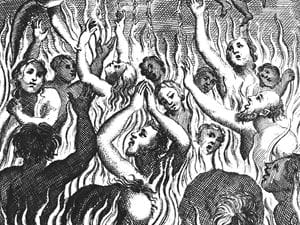
In the Book of Daniel, we find this: “Many of those who lie dead in the ground will rise from death. Some of them will be given eternal life, and others will receive nothing but eternal shame and disgrace. Everyone who has been wise will shine as bright as the sky above, and everyone who has led others to please God will shine forever like the stars.” (CEV Daniel 12:2-3) Essentially, this passage is most often interpreted to mean that everyone that ever lives will eventually inherit heaven or hell. Daniel describes hell as a place of “eternal shame and disgrace.” Jesus described hell as the abode of the “condemned” (CEV John 5:29) where those who were sent there “will be punished forever.” (CEV Matthew 25:46) This same eternal accountability and torment is echoed in the words of John the Revelator: “Afterwards, death and its kingdom were thrown into the lake of fire. This is the second death. Anyone whose name wasn't written in the book of life was thrown into the lake of fire.” (CEV Revelation 20:14-15) Here John tells us that hell is not only like a “lake of fire” (giving off an image of extreme torment), but it is also the “second death”—meaning the place where those who died spiritually prior to their physical death will be sent.
Salvation and Rejection of Christ
John chapter three offers a very optimistic message about God’s will for each of us. In one of the most famous passages of the Bible, we read: “God loved the people of this world so much that he gave his only Son, so that everyone who has faith in him will have eternal life and never really die. God did not send his Son into the world to condemn its people. He sent him to save them!” (CEV John 3:16-17) God didn’t send Jesus here to damn us. He sent Him to save us. That was His sole purpose. As positive as that message is, the last verse of this same chapter offers this sober warning: “Whoever believes [or “obeys,” as the Greek is often rendered] in the Son has eternal life, but whoever rejects the Son will not see life [eternal], for God’s wrath [or “punishment,” as the Greek implies] remains on them.” (NIV John 3:36) The lesson of John chapter 3, as it pertains to hell, is that the “ball is in our court.” Believing in Christ, accepting Christ, trusting in Christ and, as the Greek suggests, striving to “obey” Christ make it possible for us to escape hell. John suggests that it is only those who “reject the Son” that will experience God’s “punishment” or “wrath.”
Identification of Sinners and Their Fate
In addition to rejecting Christ, John informs us of a list of other things which will also lead us to hell. In his Revelation, John wrote: “But as for the cowardly, the untrustworthy, the vile, the murderers, the sexually immoral, those involved with the occult and with drugs, idol-worshippers, and all liars—their destiny is the lake burning with fire and sulfur, the second death.” (CJB Revelation 21:8) According to John, hell is not occupied simply by the faithless, but also those whose lives have been wicked. Of course, “All of us have sinned and fallen short of God's glory.” (CEV Romans 3:23) However, those John describes in this verse are they who apparently also reject the grace of God and, therefore, are held responsible for their sins and the wicked life they have lived. The list of potentially damnable behaviors is broad, but the key appears to be one’s rejection of the only Being who can redeem us from such sins. Thus, in John’s vision, he sees sin generally as damnable—at least, if the sinner doesn’t yoke himself to Christ.
Understanding Divine Judgment
Here’s another important thing the Bible teaches us about hell. Contrary to the various dharmic religions (e.g., Hinduism, Jainism, Buddhism, and Sikhism), the Book of Hebrews tells us, “We die only once, and then we are judged.” (CEV Hebrews 9:27) In essence, what we learn about hell from this verse is that you’re not going to get a “do over.” Now is the time to accept Christ. Now is the day to repent. Now is the time to prepare to be judged by God. Postponing these things, according to Hebrews chapter 9, may fix your situation in the next life— but not for the good.
Understanding Satan's Role
Jesus taught, “I saw Satan fall from heaven like a flash of lightning.” (CEV Luke 10:18) Similarly, in Revelation chapter 12 we read: “And the great dragon was thrown down, that ancient serpent, who is called the devil and Satan, the deceiver of the whole world—he was thrown down to the earth, and his angels were thrown down with him.” (ESV Revelation 12:9) Because of these, and many other verses, Christians typically believe that the devil fell from heaven, becoming Satan (which means the one who “opposes” God or the one who is God’s “adversary”). In the Gospel of St. Matthew, Jesus tells us that “the everlasting fire” associated with hell—whether literally or metaphorically—was “prepared for the devil and his angels!” (CEV Matthew 25:41) Similarly, in the twentieth chapter of the Book of Revelation, we read: “Then the devil who fooled them will be thrown into the lake of fire and burning sulfur. He will…be in pain day and night forever and ever.” (CEV Revelation 20:10) From these verses, we learn not only that hell is the eternal abode of the devil and the angels who followed him out of heaven but, by inference, hell becomes the abode of those who become (here in mortality) his “angels” or “messengers” (in the Hebrew and Greek). In other words, if we enlist in his work, and serve as the “messengers” of his way and teachings, we will dwell with him for eternity in that “everlasting fire prepared for the devil and his angels.”
Understanding the Nature of Punishment
Here’s an interesting insight about hell from Jesus Himself. He says, “everyone who does wrong or causes others to sin…will be thrown into a flaming furnace, where they will cry and grit their teeth in pain.” (CEV Matthew 13:41 & 50) For Jesus, one’s personal wickedness can damn his or her soul, but so can the choice to entice others to sin. While we can’t be held responsible for the choices or sins of others, we certainly can be held responsible for our own choice to entice others to sin. If we, like the devil himself, encourage others to sin, then (in the end) we “would be better off thrown into the ocean with a heavy stone tied around [our] neck” (CEV Luke 17:2)—for we have become the “messenger” (or “angel”) of the devil, doing his bidding by enticing others to rebel against God.
Understanding the Suffering of the Wicked
Finally, one of the most descriptive things the Bible tells us about hell is that the suffering the wicked endure there is painful. Jesus describes it as being like a “fiery furnace where there will be weeping and gnashing of teeth.” (EHV Matthew 13:50) He says that it is a place where the “worms that eat the body never die, and the fire is never put out.” (NOB Mark 9:48) And in hell, according to Jesus, “you will be tortured with fire and burning sulfur” and the “smoke from your torture will go up forever and ever, and you will never be able to rest.” (CEV Revelation 14:10-11) Some see the description of these punishments as metaphorical and others as literal. Whether we will actually have our teeth ground down or “gnashed,” our flesh “burnt” with “sulfur” or “brimstone,” and whether we will “never be able to rest” day and night for all eternity, misses the point. What’s being described here is an eternal regret that may be as painful as any physical punishment which could be enacted upon us.
Conclusion
God only knows what hell will be like; God alone can comprehend it. Surely this much is true: even if it is not as bad as these horrific descriptions suggest, being told by Jesus and His prophets how very bad it may be should be sufficient motivation for you and me to accept Christ, repent of our sinful ways, and seek to live lives in harmony with God’s holy mind and will. Otherwise, like the devil, on the day of judgement we may hear Jesus say to us: “‘Depart from me, you cursed, into the eternal fire prepared for the devil” and those who follow him. (ESV Matthew 25:41)
Bible Verses about Hell
- 1 Peter 2:4 - For if God did not spare angels when they sinned, but sent them to hell, putting them in chains of darkness to be held for judgment;
- Daniel 12:2-3 - Many of those who sleep in the dust of the earth shall awake, Some to everlasting life, Some to shame and everlasting contempt. Those who are wise shall shine Like the brightness of the firmament, And those who turn many to righteousness Like the stars forever and ever.
- John 5:29 - and come out—those who have done good to the resurrection of life, and those who have done evil to the resurrection of judgment.
- Matthew 25:46 - And these will go away into eternal punishment, but the righteous into eternal life.
- Revelation 20:14-15 - Then Death and Hades were thrown into the lake of fire. This is the second death, the lake of fire. And if anyone's name was not found written in the book of life, he was thrown into the lake of fire.
- John 3:16-17 - For God so loved the world, that he gave his only Son, that whoever believes in him should not perish but have eternal life. For God did not send his Son into the world to condemn the world, but in order that the world might be saved through him.
- NIV John 3:36 - Whoever believes in the Son has eternal life; but whoever rejects the Son will not see life, for God's wrath remains on them.
- Revelation 21:8 - But the cowardly, the unbelieving, the vile, the murderers, the sexually immoral, those who practice magic arts, the idolaters and all liars—they will be consigned to the fiery lake of burning sulfur. This is the second death.
- Romans 3:23 - For all have sinned and fall short of the glory of God,
- Hebrews 9:27 - And just as it is appointed for man to die once, and after that comes judgment,
- Luke 10:18 - He replied, "I saw Satan fall like lightning from heaven."
- Revelation 12:9 - And the great dragon was thrown down, that ancient serpent, who is called the devil and Satan, the deceiver of the whole world—he was thrown down to the earth, and his angels were thrown down with him.
- Matthew 25:41 - “Then he will say to those on his left, ‘Depart from me, you cursed, into the eternal fire prepared for the devil and his angels.'
- Revelation 20:10 - And the devil, who deceived them, was thrown into the lake of burning sulfur, where the beast and the false prophet had been thrown. They will be tormented day and night forever and ever.
- Matthew 13:41 & 50 - The Son of Man will send his angels, and they will collect out of his kingdom all causes of sin and all law-breakers, and throw them into the fiery furnace. In that place there will be weeping and gnashing of teeth. Then he will throw them into the fiery furnace, where there will be weeping and gnashing of teeth.
- Luke 17:2 - It would be better for them to be thrown into the sea with a millstone tied around their neck than to cause one of these little ones to stumble.
- Mark 9:48 - 'where their worm does not die and the fire is not quenched.'
- Revelation 14:10-11 - they, too, will drink the wine of God's fury, which has been poured full strength into the cup of his wrath. They will be tormented with burning sulfur in the presence of the holy angels and of the Lamb. And the smoke of their torment will rise for ever and ever. There will be no rest day or night for those who worship the beast and its image, or for anyone who receives the mark of its name.
3/21/2024 5:29:54 PM

What Religions Believe in Hell?
Lets look at the world's religions and the different...

Cremation is the process of using fire to render a human...
What Does the Bible Say About Heaven?
The Bible’s descriptions of heaven are not...
Why is There a Hell if God is All-Loving?
The question of how an all-loving God could send anyone...

The Christian doctrine of the Trinity is the belief that...

What Does The Bible Say About Pride?
Explore the Bible's insights on pride, its spiritual...

About Alonzo L. Gaskill, PhD
Alonzo L. Gaskill is a Professor of Church history and doctrine. He holds a bachelor's degree in philosophy, a masters in theology, and a PhD in biblical studies.
Most Popular

- Home
- General Christian
- Answers
- what does the bible say about hell
General Christian
A Biblical Vision of Success in Christian Life and...

- Home
- General Christian
- Answers
- what does the bible say about hell
General Christian
What a Stop Sign Can Teach Us About God’s Will

- Home
- General Christian
- Answers
- what does the bible say about hell
Catholic

- Home
- General Christian
- Answers
- what does the bible say about hell
The Real AI Story Is Adoption Without Trust

- Home
- General Christian
- Answers
- what does the bible say about hell
The First Eucharistic Controversy: Christ’s Real Presence

- Home
- General Christian
- Answers
- what does the bible say about hell
General Christian
Archdiocese Hosts Military Marriage Retreat in Germany

- Home
- General Christian
- Answers
- what does the bible say about hell
Catholic
Swimfan: Forgotten Aughts Pleasures

- Home
- General Christian
- Answers
- what does the bible say about hell
Catholic
Top Three Anti-Catholic Lies About Catholicism

- Home
- General Christian
- Answers
- what does the bible say about hell
Latter-day Saint

- Home
- General Christian
- Answers
- what does the bible say about hell
Catholic
Pope Leo Celebrates Mass for Nurses & Docs While in...

- Home
- General Christian
- Answers
- what does the bible say about hell
Catholic
The Sermon on the Mount, Part I: Matthew 4:12-5:12

- Home
- General Christian
- Answers
- what does the bible say about hell
Catholic
Janie Learns the Way of the Cross: A Catholic Review
Patheos Explore the world's faith through different perspectives on religion and spirituality! Patheos has the views of the prevalent religions and spiritualities of the world.
Ad-Free & Subscriber Log-In Subscription Support
- About Us
- 2026 Calendar
- Videos
- Podcasts
- Library of World Religions
- Faith In Media Tracker
- Advertise With Us
- Write for Us
- Privacy Policy
- Terms of Service
- Do Not Sell My Data
- Contact Us
- Radiant Digital
- Manage Newsletter Subscriptions
- Unsubscribe From Notifications
- Sitemap
Copyright 2008-2026, Patheos. All rights reserved.
Subscription Support Ad-Free & Subscriber Log-In
Follow Patheos