
BuddhistCatholicContemplativeEvangelicalGeneral ChristianHinduJewishLatter-day SaintMuslimNew VisionsProgressive Christian
Beliefs
- Buddhist
- Catholic
- Contemplative
- Evangelical
- General Christian
- Hindu
- Jewish
- Latter-day Saint
- More Voices
- Muslim
- New Visions
- Pagan
- Progressive Christian
Topics
- Religion News
- Food and Religion
- Sports and Religion
- Religious Art
- Religious Music and Entertainment
- Religious Events
- History and Religion
- Style and Religion
- Politics and Religion
- Women in Religion
- Recreation Outdoors and Religion
- Business Finance and Religion
- Careers Workplace and Religion
- Education and Religion
- Family Parenting and Religion
- Health Fitness and Religion
- Home and Religion
- Relationships and Religion
- Technology and Religion
- Travel and Religion
Columnists
- Buddhist Columnists
- Business Finance and Religion Columnists
- Careers Workplace and Religion Columnists
- Catholic Columnists
- Contemplative Columnists
- Education and Religion Columnists
- Evangelists Columnists
- Family Parenting and Religion Columnists
- General Christian Columnists
- Health Fitness and Religion Columnists
- Hindu Columnists
- History and Religion Columnists
- Home and Religion Columnists
- Jewish Columnists
- More Voices Columnists
- Latter Day Columnists
- Muslim Columnists
- New Visions Columnists
- Nonreligious Columnists
- Pagan Columnists
- Politics and Religion Columnists
- Progressive Columnists
- Recreation Outdoors and Religion Columnists
- Relationships and Religion Columnists
- Religion News Columnists
- Religious Art Columnists
- Religious Events Columnists
- Religious Music and Entertainment Columnists
- Sports and Religion Columnists
- Style and Religion Columnists
- Technology and Religion Columnists
- Travel and Religion Columnists
- Women in Religion Columnists
Resource Library
- 2026 Calendar
- Library of World Religions
- The 100 Most Holy Places on Earth
- Patheos Answers
- Podcasts
- Videos
- Faith Leaders Database
- Anglican Episcopalian
- Bahai
- Baptist
- Buddhism
- Christianity
- Confucianism
- Eastern Orthodoxy
- Hinduism
- Holiness and Pentecostal
- ISKCON
- Islam
- Judaism
- Lutheran
- Methodist
- The Church of Jesus Christ of Latter-day Saints
- New Age
- Paganism
- Presbytarian and Reformed
- Protestantism
- Religion Behind the Scenes
- Roman Catholic
- Scientology
- Shia Islam
- Sikhism
- Sufism
- Sunni Islam
- Taoism
- Zen
- See all religions
Research Tools
 Ad-Free & Subscriber Log-In Subscription Support
Ad-Free & Subscriber Log-In Subscription Support
Follow Patheos 

- Trending:
- Forgiveness
- |
- Marriage
- |
- Consciousness
- |
- Death Penalty
- |
- Election
- |
- Halloween
- Home
- General Christian
- Answers
- what does james 2 14 17 mean
General Christian
Patheos answers the question:
What Does James 2: 14-17 Mean? Faith & Works
Shutterstock.com
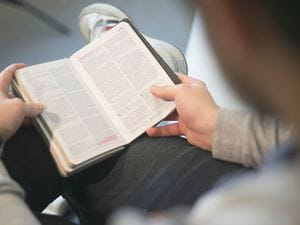
"What good is it, my brothers and sisters, if someone claims to have faith but has no deeds? Can such faith save them? Suppose a brother or a sister is without clothes and daily food. If one of you says to them, 'Go in peace; keep warm and well fed,' but does nothing about their physical needs, what good is it? In the same way, faith by itself, if it is not accompanied by action, is dead." - James 2:14-17
This passage from the first century Epistle of James is a profound reflection on the relationship between faith and deeds. It challenges believers to examine the authenticity of their faith, emphasizing that genuine faith is not merely an intellectual acknowledgment but should manifest in tangible actions.
Catholic Perspective
The Catholic Church teaches that faith and works are intrinsically linked. While faith is the foundation of our relationship with God, it is through our deeds that this faith is made manifest. The sacraments, especially the Eucharist and Confession, are avenues through which believers receive grace to perform good deeds, aligning their actions with their faith. While the Catholic Church has traditionally emphasized the need for sacraments, and even their salvific nature, the Church holds that sacraments are simply vehicles to God’s grace. The sacraments are not what save you. Only the grace of God can do so. But, in harmony with James’ declaration, Catholicism has traditionally claimed that one must engage in works to qualify for God’s unmerited grace.
The Church of Jesus Christ of Latter-day Saints (or “Mormon”) Perspective
For members of The Church of Jesus Christ of Latter-Day Saints, faith is a principle of action. While faith in Jesus Christ is central, it is through righteous deeds that individuals show their commitment to the gospel. The LDS teachings emphasize that faith and works go hand in hand in the journey towards eternal life. Grace saves, but righteous efforts (or “works”) enable the believer to vouchsafe (or lay hands upon) God’s grace.
Evangelical Perspective
Evangelicals believe that salvation is by faith alone, through grace alone, in Christ alone. However, James' message resonates with the evangelical belief that genuine faith will inevitably produce good works. While works cannot earn salvation, they are evidence of a living faith. Hence, Luther is said to have taught, “Good works do not make a good man, but a good man does good works.”
Modern Christian Perspective
In contemporary Christian thought, there's an understanding that while faith is a personal relationship with Christ, it should also influence one's actions in the world. This perspective emphasizes the importance of living out one's faith in daily life, making a positive impact on society–not out of fear of going to hell, but out of love for God and all of his children.
Progressive Christian Perspective
Progressive Christians often focus on the social implications of faith. For them, faith is not just about personal salvation but also about working towards social justice, equality, and environmental stewardship. James' emphasis on deeds aligns with the progressive call to action in the world. For many Progressive Christians, James’ words suggest that you cannot truly be Christian if you are not concerned about social justice, equality, and related issues.
Islamic Perspective
While the Quran does not directly reference this passage from James, the concept of faith and deeds is integral to Islamic teachings. The Prophet Muhammad (PBUH) said, “No one’s works will get him into...Paradise.” He added: “None of you will be saved by [your] acts.” Muslims believe that faith (or “iman”) must be accompanied by righteous deeds (or “amal”) to be meaningful. The Five Pillars of Islam are a testament to this belief, where faith is put into action.
Pagan Perspective
Many pagan traditions emphasize the importance of living in harmony with nature and the world around them. While the concept of faith might differ, the idea of aligning one's beliefs with actions, especially in terms of respecting the earth and its cycles, resonates with many pagan beliefs. A pagan who ignores the world, the spirits, and certain rituals, is hardly living the life of paganism–which incorporates “works” into its system of beliefs, regardless of the pagan tradition one belongs to.
Hindu Perspective
In Hinduism, the Bhagavad Gita speaks of the importance of selfless action (karma yoga). While faith and devotion are essential, it is through selfless deeds that one can attain spiritual growth and liberation. Much of Hindu belief revolves around works–whether those consist of visiting a temple, making an offering at a home shrine, engaging in bhakti (or devotion to a specific deity), or trying to improve the way one lives (in order to shed karma). Hinduism, in various ways, would agree with James’ declaration.
Buddhist Perspective
Buddhism teaches the Eightfold Path as a guide to ethical and mental development, leading to enlightenment. Right action, one of the steps, emphasizes the importance of deeds in line with moral and ethical principles. While not all Buddhist traditions put as much emphasis on the Eightfold Middle Path as does the oldest Buddhist tradition–the Theravada denomination; nevertheless, because Buddhism focuses so heavily on non-attachment and mindfulness, James’ works about the connection between faith and works would very much be at home in traditional Buddhist approaches to salvation and lived religion.
Conclusion
James 2:14-17 serves as a powerful reminder of the interconnectedness of faith and deeds. Across various religious and philosophical traditions, the message is clear: genuine faith is not passive but actively influences one's actions and interactions with the world.
10/24/2023 10:04:35 PM

About Patheos Editorial Team
The Patheos Editorial Management Team consists of Travis Henry, Senior Director of Content for Patheos.com, Cameron Taylor, Product SEO for Patheos.com, Alan Crandall, Content Community Manager for Patheos.com, and Treasa Edmond, Content Recruitment Manager for Patheos.com. The team has decades of experience with major news publications, online publishers, religion institutions and online communities.
The team partners with world religion experts, authors and scholars to provide authoritative, original, and trusted religious news, information, and perspectives. Alonzo L. Gaskill, PhD in Biblical Studies and Professor at BYU contributes, fact checks and edits content for Patheos.com Answers series.
Patheos is the website of choice for millions of people looking for credible and balanced information about religion. Patheos brings together faith communities, academics, authors, and the broader public into a single environment, and is the place where many people turn on a regular basis for insight, inspiration.
Most Popular

- Home
- General Christian
- Answers
- what does james 2 14 17 mean
Evangelical
The REST of Your Life: A Creative Wrestles With Sabbath

- Home
- General Christian
- Answers
- what does james 2 14 17 mean
#107: Cast of Character(s): This Weeks Episode of The...
- Home
- General Christian
- Answers
- what does james 2 14 17 mean
Progressive Christian
BONUS SHOW: Autism and RFK Jr.'s Cameo

- Home
- General Christian
- Answers
- what does james 2 14 17 mean
57th Dove Awards Honor Dolly Parton, Crown New Voices

- Home
- General Christian
- Answers
- what does james 2 14 17 mean
General Christian
A Biblical Vision of Success in Christian Life and...

- Home
- General Christian
- Answers
- what does james 2 14 17 mean
General Christian
What a Stop Sign Can Teach Us About God’s Will

- Home
- General Christian
- Answers
- what does james 2 14 17 mean
Catholic

- Home
- General Christian
- Answers
- what does james 2 14 17 mean
The Real AI Story Is Adoption Without Trust

- Home
- General Christian
- Answers
- what does james 2 14 17 mean
The First Eucharistic Controversy: Christ’s Real Presence

- Home
- General Christian
- Answers
- what does james 2 14 17 mean
General Christian
Archdiocese Hosts Military Marriage Retreat in Germany

- Home
- General Christian
- Answers
- what does james 2 14 17 mean
Catholic
Swimfan: Forgotten Aughts Pleasures

- Home
- General Christian
- Answers
- what does james 2 14 17 mean
Catholic
Top Three Anti-Catholic Lies About Catholicism
Patheos Explore the world's faith through different perspectives on religion and spirituality! Patheos has the views of the prevalent religions and spiritualities of the world.
Ad-Free & Subscriber Log-In Subscription Support
- About Us
- 2026 Calendar
- Videos
- Podcasts
- Library of World Religions
- Faith In Media Tracker
- Advertise With Us
- Write for Us
- Privacy Policy
- Terms of Service
- Do Not Sell My Data
- Contact Us
- Radiant Digital
- Manage Newsletter Subscriptions
- Unsubscribe From Notifications
- Sitemap
Copyright 2008-2026, Patheos. All rights reserved.
Subscription Support Ad-Free & Subscriber Log-In
Follow Patheos