
BuddhistCatholicContemplativeEvangelicalGeneral ChristianHinduJewishLatter-day SaintMuslimNew VisionsProgressive Christian
Beliefs
- Buddhist
- Catholic
- Contemplative
- Evangelical
- General Christian
- Hindu
- Jewish
- Latter-day Saint
- More Voices
- Muslim
- New Visions
- Pagan
- Progressive Christian
Topics
- Religion News
- Food and Religion
- Sports and Religion
- Religious Art
- Religious Music and Entertainment
- Religious Events
- History and Religion
- Style and Religion
- Politics and Religion
- Women in Religion
- Recreation Outdoors and Religion
- Business Finance and Religion
- Careers Workplace and Religion
- Education and Religion
- Family Parenting and Religion
- Health Fitness and Religion
- Home and Religion
- Relationships and Religion
- Technology and Religion
- Travel and Religion
Columnists
- Buddhist Columnists
- Business Finance and Religion Columnists
- Careers Workplace and Religion Columnists
- Catholic Columnists
- Contemplative Columnists
- Education and Religion Columnists
- Evangelists Columnists
- Family Parenting and Religion Columnists
- General Christian Columnists
- Health Fitness and Religion Columnists
- Hindu Columnists
- History and Religion Columnists
- Home and Religion Columnists
- Jewish Columnists
- More Voices Columnists
- Latter Day Columnists
- Muslim Columnists
- New Visions Columnists
- Nonreligious Columnists
- Pagan Columnists
- Politics and Religion Columnists
- Progressive Columnists
- Recreation Outdoors and Religion Columnists
- Relationships and Religion Columnists
- Religion News Columnists
- Religious Art Columnists
- Religious Events Columnists
- Religious Music and Entertainment Columnists
- Sports and Religion Columnists
- Style and Religion Columnists
- Technology and Religion Columnists
- Travel and Religion Columnists
- Women in Religion Columnists
Resource Library
- 2026 Calendar
- Library of World Religions
- The 100 Most Holy Places on Earth
- Patheos Answers
- Podcasts
- Videos
- Faith Leaders Database
- Anglican Episcopalian
- Bahai
- Baptist
- Buddhism
- Christianity
- Confucianism
- Eastern Orthodoxy
- Hinduism
- Holiness and Pentecostal
- ISKCON
- Islam
- Judaism
- Lutheran
- Methodist
- The Church of Jesus Christ of Latter-day Saints
- New Age
- Paganism
- Presbytarian and Reformed
- Protestantism
- Religion Behind the Scenes
- Roman Catholic
- Scientology
- Shia Islam
- Sikhism
- Sufism
- Sunni Islam
- Taoism
- Zen
- See all religions
Research Tools
 Ad-Free & Subscriber Log-In Subscription Support
Ad-Free & Subscriber Log-In Subscription Support
Follow Patheos 

- Trending:
- Forgiveness
- |
- Marriage
- |
- Consciousness
- |
- Death Penalty
- |
- Election
- |
- Halloween
- Home
- General Christian
- Answers
- Are You A Cultural Christian
General Christian
Patheos answers the question:
Are You A Cultural Christian?

Canva Pro - Prostock Studio
Comedian, Jeff Foxworthy, became famous for his “redneck” stand-up comedy routines. Foxworthy coined the famous line, “You might be a ‘redneck’ if…”—which he always followed up with some humorous stereotypical attribute found in most “rednecks.” Well, in the spirit of Jeff Foxworthy, if you define yourself a “Christian,” you might consider asking yourself—not “Are you a ‘redneck’?” but—“Are you a ‘Cultural Christian’?”
Definition of Cultural Christianity
So, what’s a “Cultural Christian”? Well, in essence, a cultural Christian is someone who has some connection to Christianity (perhaps because he or she was raised in a “Christian home”) but is only loosely connected to the Church and Christ today. The cultural Christian may or may not attend Church; but upbringing, family traditions (or practices), or his or her social circle might keep the cultural Christian in a sort of “Christian orbit”—even if Jesus is not the “center” of that person’s own life.
Some cultural Christians don’t believe at all but find it socially easier to “identify” as “Christian” while living in a predominately “Christian nation.” In other words, for the sake of “upward mobility,” he or she might identify as Christian because there are social and/or professional benefits to doing so.
Other cultural Christians are largely connected to Christianity because they see Jesus as the equivalent of their personal “Buddha”—a guy with great moral teaches that they identify with (e.g., be “good,” be “kind,” be “loving,” etc.), and sometimes choose to practice.
A few individuals might be defined as “cultural Christians” because they are drawn to the Christian holiday cycle. They enjoy celebrating the “high holidays” of Christmas and Easter, in addition to some of the minor religious holidays (like Valentines Day or St. Patrick’s Day), but their commemorations of these popular holidays have zero religious meaning for them. Their celebrations are festive and secular, but never religious or devotional.
Examples of Cultural Christians
The outspoken atheist, Richard Dawkins, recently defined himself as a “cultural Christian,” explaining that if he “had to choose between Christianity and Islam,” he would “choose Christianity every single time.” Dawkins is a self-proclaimed “dyed in the wool” atheist who absolutely doesn’t believe in God; something you necessarily have to believe in if you’re a Christian. However, he does identify with the “ethic” of Christianity. Thus, he sees himself as a “cultural Christian”—striving to live a moral lifestyle akin to what Jesus taught His followers to live; though Dawkins does not believe in the divinity of Jesus and may even question the historicity of Jesus. Not surprisingly, Dawkins certainly rejects the historicity of the Bible as well.
Secular Humanism has connections to cultural Christianity, in that it is a form of “non-religion” in which practitioners emphasize the ability and need for humans to live a moral, ethical life—contributing to the “greater good” of humanity—but doing so without a need for or belief in God. Secular Humanists are sometimes atheists, sometimes agnostics, but often disinterested in “religion.” Rather, they are interested in “self-fulfillment,” living a kind, ethical, and moral life, and having self-governance (rather than “divine dictates”). Secular Humanists can sometimes fall under the umbrella of “cultural Christianity”—not only because they often meet weekly (in congregations, like many religious people do), but also because their ethic, their lifestyle, is one that harmonizes (in many ways) with the ethics, teachings, and lifestyle of devoted Christians. However, at best, a secular humanist might see Jesus as a “great moral teacher,” but not as God, the Son of God, nor as a divine being.
A third “flavor” of cultural Christianity was defined above; namely, those who culturally celebrate Christmas and Easter, but do so in entirely non-religious ways and for non-religious reasons. A Jewish friend of mine purchases a “Hanukkah bush” each year. (Essentially, this is a Christmas tree decorated with Jewish symbols.) Another acquaintance of mine is Muslim but celebrates Christmas with her children… “because it is fun!” A friend of many decades, who is one of Jehovah’s Witness, does “end of the year presents” with his family—not for “religious” reasons (as the celebrating of Christmas is against the teachings of the Witness faith), but because it is a cultural practice that he does not want his kids to miss out on. Any of these might be seen as expressions of “cultural Christianity,” as each makes some effort to engage in an innately Christian practice, but for “cultural” rather than religious reasons.
Signs You May Be A Cultural Christian
While some cultural Christians are atheists, secular humanists, or participants in a non-Christian faith tradition, but embrace Christian ethics, morality, or holidays; there are many cultural Christians who are actually members of a denomination of Christianity. So, how do you know if you’re a “Cultural Christian”? Well, perhaps we should return to our Jeff Foxworthy analogy: “You might be a ‘Cultural Christian’ if…”:
- You consider yourself a “Christian,” but you rationalize living in a way that is not in harmony with the teachings of Jesus.—An increasing number of Christians believe, for example, that sex outside of the “bonds of marriage” is okay, and that the biblical approach to morality is “old fashioned” and irrelevant today. Thus, their views are dictated more by culture than scripture or commandments.
- Related to the previous point, You identify as a “Christian,” but you take a smorgasbord approach to Jesus’ teachings.—More and more Christians emphasize the teachings of Jesus that they like (e.g., “love everyone”), but downplay or reject the teachings Christ offered which they personally don’t like (e.g., “repent” or “shun pride”). Cultural Christianity might give you an “out” as it pertains to the burdensome requirements laide down by Jesus; though that may also push you toward the margins of what would be defined as “main-stream” Christian thinking.
- You identify as “Christian” but seldom (if ever) attend Church.—While the United States has traditionally considered itself a “Christian Nation,” more than half of Americans do not attend Church, Temple, Mosque or Synagogue with any regularity. Thus, we may “culturally” identify as a country with Christian underpinnings, but we’re clearly not engaged in formal worship of the God to Whom we attribute those underpinnings.
- You say you’re “Christian” but you do not believe that the Bible is the “revealed” word of God; and you likely don’t regularly read it.—An increasing number of “Christians” [1] deny the Bible as historical and [2] “God-breathed” (as some Christians call it), meaning they do not believe that ancient prophets “spoke” with God, received “revelations” from God, or recorded actual “historical” events. Additionally, a very low number of those who identify as “believers” have ever read the Bible cover to cover.
- You say you are “Christian” but you also question the need to “repent” for behaviors that are defined as “sinful” or inappropriate in the Bible.—Perhaps because of the prevalence of abuse, some feel that confession to a priest, pastor, or other Church “leader,” is no longer needed; and that’s certainly understandable for victims of abuse (particularly clerical abuse). However, “Many churches don’t even preach about the need for repentance anymore.” The idea of a God who “commands” us to better ourselves has become a “thing of the past” in come Christian circles and is often not part of the cultural Christian mindset.
Causes of Cultural Christianity
One of the largest causes of cultural Christianity has been the shift in thinking among Christians. What was once considered “a given” (regarding the existence of God, the importance of the Church, and even the validity of the religious ethic) is no longer considered such. We are now living in what some have called “Post-Christendom”; and what was formerly the single most influential driver in how people lived their lives (i.e., Christianity) is no longer significantly impactful. Indeed, while it still has “cultural” impact—particularly around the holidays—Christianity has limited impact on belief, faith, morals, ethics, and lifestyle in much of the “Christian world” today.
A second, but equally impactful factor in the rise of cultural Christianity, has been the movement (in the post-Vatican II) era to be religiously inclusive to a degree that many Christian denominations have moved away from the stance that there is such a thing as “absolute truth.” Relativism has been embraced by many Christians, and “truth” is left up to the individual to define, resulting in more and more (even in Christianity) speaking of “their truth” rather than “God’s truth.”
The Difference Between Cultural Christianity and Religious Christianity
Perhaps the biggest difference between “Cultural Christianity” and “Religious Christianity” is found in the words of James (in the New Testament): “Someone might claim, ‘You have faith and I have action.’ But how can I see your faith apart from your actions? Instead, I’ll show you my faith by putting it into practice in faithful action. It’s good that you believe that God is one. Ha! Even the demons believe this, and they tremble with fear. Are you so slow? Do you need to be shown that faith without actions has no value at all?” (James 2:18-20, CEB) James’ point is that the devil believes in God, but it doesn’t change his behavior; that “belief” (or knowledge) doesn’t cause him to live righteously.
Cultural Christians often claim a “belief” in God or the Church, but then they don’t really live the teachings of Christ or the Church. However, “Religious Christianity” requires a practice of Christ’s teachings in a very real and intentional way. Whereas “Religious Christianity” is about both believing and living the way Jesus taught, “Cultural Christianity” tends to be more about “affiliation” or convenient “participation” when that suits the cultural Christian. Attributed to the Protestant reformer, Martin Luther, is this idea: “While good works do not make a man good, a good man does good works.” Or, as another source cited it: “While good works do not save a man, a saved man does good works.” Essentially, Luther was saying that our works can’t save us, but how can we say that we are “saved”—that we are a “Religious Christian”—if there are no fruits of righteousness in our lives? If we say we “believe” but do not produce “fruits” of belief (like sincerely living what Jesus taught), then we’re probably more of a “Cultural Christian” than a “Religious” or “real” Christian.
None of this is intended to condemn cultural Christians. People have a right to live, believe, and even identify as they wish. While not everyone is going to agree on what is “required” to be a “good Christian,” it seems pretty clear that “culture” and “religiosity” are not one and the same. So, “You might be a ‘Cultural Christian’ if” you simply aren’t “that into” it. But perhaps practicing Christians ought to be happy that Christianity still has some influence in the life of the cultural Christian. Of course, the ideal (in the “Religious Christian” view) is to have everyone fully faithful. Nonetheless, if we really are in what appears to be an increasingly post-Christian world, then maybe we should be grateful for what influence God and Christ have in the lives of others, even if it is more “cultural” than “religious.”
Many will ask, “Is being a cultural Christian sufficient to be ‘saved’?” Well, again, not everyone is going to agree on the answer to this question either. Perhaps the best thing to do is to heed Jesus’ words (from the Sermon on the Mount), when He advised, “Don’t judge, so that you won’t be judged. You’ll receive the same judgment you give. Whatever you deal out will be dealt out to you.” (CEV Matthew 7:1-2). God certainly will “weed out” those whom He deems “unworthy” of some heavenly reward (Matthew 7:21-23) but, since none of us are God, it is probably best to leave it to Him to decide the degree to which “cultural Christianity” is acceptable and salvific!
4/16/2024 5:42:54 PM

About Alonzo L. Gaskill, PhD
Alonzo L. Gaskill is a Professor of Church history and doctrine. He holds a bachelor's degree in philosophy, a masters in theology, and a PhD in biblical studies.

Giants and Adam: How Tall Was Adam According to the Bible?
Biblical giants, metaphors, longevity and more. The Bible...

Does The Bible Say The Earth Is Flat?
There is no question, a literal reading of the Bible could...

What Does The Bible Say About Abortion?
Gain clarity on the abortion debate within...
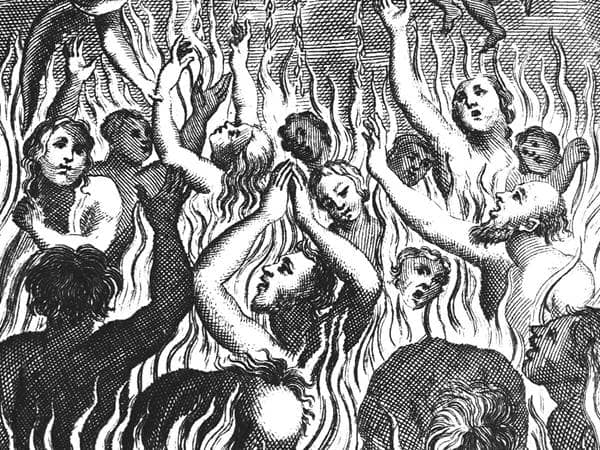
What Does The Bible Say About Hell?
Hell is figurative, literal, and spiritual all at the same...

What Does The Bible Say About Sex Before Marriage?
The Bible has condemned sexual immorality from the...

What Does The Bible Say About Drinking Alcohol?
Are you a certified boozer? Do you do keg stands during...
Most Popular

- Home
- General Christian
- Answers
- Are You A Cultural Christian
Catholic
The Sermon on the Mount, Part I: Matthew 4:12-5:12

- Home
- General Christian
- Answers
- Are You A Cultural Christian
Catholic
Janie Learns the Way of the Cross: A Catholic Review

- Home
- General Christian
- Answers
- Are You A Cultural Christian
Entertainment

- Home
- General Christian
- Answers
- Are You A Cultural Christian
Evangelical
How the author of the world's best hymn became a Christian

- Home
- General Christian
- Answers
- Are You A Cultural Christian
Catholic
Looking For Good Catholic Writing - October 2026

- Home
- General Christian
- Answers
- Are You A Cultural Christian

- Home
- General Christian
- Answers
- Are You A Cultural Christian
INNER CIRCLE: Profound Mystery (Of Christ In All Of Us)

- Home
- General Christian
- Answers
- Are You A Cultural Christian
General Christian
What Does Gêvâh Mean For Kimberley Guifoyle & Pete...

- Home
- General Christian
- Answers
- Are You A Cultural Christian
General Christian

- Home
- General Christian
- Answers
- Are You A Cultural Christian
Evangelical
Do Not Rejoice When Your Enemy Falls: The Cheers for Death

- Home
- General Christian
- Answers
- Are You A Cultural Christian
Progressive Christian
The purpose-driven labor priest
- Home
- General Christian
- Answers
- Are You A Cultural Christian
The Golden Rule Demands More than We Think
Patheos Explore the world's faith through different perspectives on religion and spirituality! Patheos has the views of the prevalent religions and spiritualities of the world.
Ad-Free & Subscriber Log-In Subscription Support
- About Us
- 2026 Calendar
- Videos
- Podcasts
- Library of World Religions
- Faith In Media Tracker
- Advertise With Us
- Write for Us
- Privacy Policy
- Terms of Service
- Do Not Sell My Data
- Contact Us
- Radiant Digital
- Manage Newsletter Subscriptions
- Unsubscribe From Notifications
- Sitemap
Copyright 2008-2026, Patheos. All rights reserved.
Subscription Support Ad-Free & Subscriber Log-In
Follow Patheos