
BuddhistCatholicContemplativeEvangelicalGeneral ChristianHinduJewishLatter-day SaintMuslimNew VisionsProgressive Christian
Beliefs
- Buddhist
- Catholic
- Contemplative
- Evangelical
- General Christian
- Hindu
- Jewish
- Latter-day Saint
- More Voices
- Muslim
- New Visions
- Pagan
- Progressive Christian
Topics
- Religion News
- Food and Religion
- Sports and Religion
- Religious Art
- Religious Music and Entertainment
- Religious Events
- History and Religion
- Style and Religion
- Politics and Religion
- Women in Religion
- Recreation Outdoors and Religion
- Business Finance and Religion
- Careers Workplace and Religion
- Education and Religion
- Family Parenting and Religion
- Health Fitness and Religion
- Home and Religion
- Relationships and Religion
- Technology and Religion
- Travel and Religion
Columnists
- Buddhist Columnists
- Business Finance and Religion Columnists
- Careers Workplace and Religion Columnists
- Catholic Columnists
- Contemplative Columnists
- Education and Religion Columnists
- Evangelists Columnists
- Family Parenting and Religion Columnists
- General Christian Columnists
- Health Fitness and Religion Columnists
- Hindu Columnists
- History and Religion Columnists
- Home and Religion Columnists
- Jewish Columnists
- More Voices Columnists
- Latter Day Columnists
- Muslim Columnists
- New Visions Columnists
- Nonreligious Columnists
- Pagan Columnists
- Politics and Religion Columnists
- Progressive Columnists
- Recreation Outdoors and Religion Columnists
- Relationships and Religion Columnists
- Religion News Columnists
- Religious Art Columnists
- Religious Events Columnists
- Religious Music and Entertainment Columnists
- Sports and Religion Columnists
- Style and Religion Columnists
- Technology and Religion Columnists
- Travel and Religion Columnists
- Women in Religion Columnists
Resource Library
- 2026 Calendar
- Library of World Religions
- The 100 Most Holy Places on Earth
- Patheos Answers
- Podcasts
- Videos
- Faith Leaders Database
- Anglican Episcopalian
- Bahai
- Baptist
- Buddhism
- Christianity
- Confucianism
- Eastern Orthodoxy
- Hinduism
- Holiness and Pentecostal
- ISKCON
- Islam
- Judaism
- Lutheran
- Methodist
- The Church of Jesus Christ of Latter-day Saints
- New Age
- Paganism
- Presbytarian and Reformed
- Protestantism
- Religion Behind the Scenes
- Roman Catholic
- Scientology
- Shia Islam
- Sikhism
- Sufism
- Sunni Islam
- Taoism
- Zen
- See all religions
Research Tools
 Ad-Free & Subscriber Log-In Subscription Support
Ad-Free & Subscriber Log-In Subscription Support
Follow Patheos 

- Trending:
- Forgiveness
- |
- Marriage
- |
- Consciousness
- |
- Death Penalty
- |
- Election
- |
- Halloween
Pagan
Patheos answers the question:
Are There Male Witches?
by Kathleen Mulhern, PH.D.
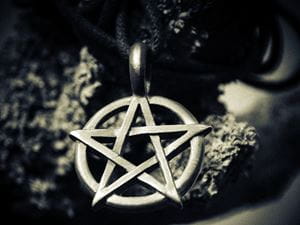
Pixabay.com
Witchcraft is a part of spirituality for many Pagans. As such, most Pagans who practice witchcraft prefer to be called “witches,” regardless of their gender identity. While witches and witchcraft are usually associated with the Wiccan religious movement, not all witches are Wiccan.
In 1974, several prominent witches organized the American Council of Witches, an institution designed to define and promote witchcraft. Even at that date, the Council was clear that membership had nothing to do with race, gender, or sexuality. Though the Council was short-lived and was disbanded after a year, it has since been revived as the U.S. American Council of Witches.
In Paganism, witchcraft is the practice of “white magic,” which involves spells and incantations that are meant to heal or benefit the self or others. Pagan witches reject any practice of magic that may inflict curses or harm on another person—practices that are sometimes known as “black magic.” “White magic” rituals engage a variety of implements from nature or the occult—crystals, candles, herbs, incense, and tarot cards. Wiccans, in particular, are known in part for their moral code, referred to by many as the Wiccan Rede. It is summarized as “If it harms none, do what you will.” This ethic allows for maximum individuality and freedom, and yet warns followers that malice and rituals that seek to manipulate others or inflict harm will redound on the practitioner.
The term “warlock,” which some may associate with male witches, is considered by many Pagans to be an offensive and misleading term. Some believe that calling someone a “warlock” indicates satanic or dark activities, whereas witches, of any gender, practice what they call white, or light, magic. (Some Pagans add a ‘k’ to the word: magick.)
Other appellations include wizard and sorcerer. These, too, are not normally gender-specific terms. They usually denote a degree of training, expertise, or extraordinary ability. Wizards may have trained under other wizards in particular practices or may have attended a school of wizardry that instructs students in different forms of magic. Sorcerers are often considered to be those with inborn abilities which, combined with training, result in even more powerful magic. Magic (or magick) for all of these classifications may include casting spells, reading tarot cards, communicating with unseen spirits, telekinesis, channeling energy, mind reading, and more.
None of these categories is relevant to most pop cultural expressions of witchcraft or wizardry today. J.K. Rowling has been clear that her Harry Potter series is a different world of magic than anything Pagan today. Television shows that feature witches or witchcraft—like WandaVision, A Discovery of Witches, Bewitched, or The Charmed Ones—have very little to do with the real practice of witchcraft or those who pursue this form of spirituality.
Read more about the Pagan world—its beliefs, rituals, ceremonies, history, and ethics—here.
3/6/2023 10:07:36 PM
About About Kathleen Mulhern, PH.D.
Kathleen Mulhern is a writer, editor, historian, speaker, and professor. She teaches courses in world history, European history, and history of Christianity. She has taught at Colorado School of Mines and Regis University, and is currently an adjunct professor at Denver Seminary in the areas of Church History and Spiritual Formation. Kathleen graduated with a B.A. from Wheaton College, earned an M.A. in French Literature from the University of Denver, an M.A. degree in Church History from Denver Seminary, and a Ph.D. in History from the University of Colorado.
More from Patheos about the Pagan world
A Different Cut: The Witch on the Edge
Witch Theology: The Sacredness of the Now
Discovering The Truth of Myth
Witch Way Is The Right Way
Most Popular

General Christian
A Biblical Vision of Success in Christian Life and...

Catholic

The Real AI Story Is Adoption Without Trust

Catholic
Swimfan: Forgotten Aughts Pleasures

Catholic
Top Three Anti-Catholic Lies About Catholicism

Latter-day Saint

Catholic
Pope Leo Celebrates Mass for Nurses & Docs While in...

Catholic
The Sermon on the Mount, Part I: Matthew 4:12-5:12

Catholic
Janie Learns the Way of the Cross: A Catholic Review

Entertainment

Evangelical
How the author of the world's best hymn became a Christian

Catholic
Looking For Good Catholic Writing - October 2026
Patheos Explore the world's faith through different perspectives on religion and spirituality! Patheos has the views of the prevalent religions and spiritualities of the world.
Ad-Free & Subscriber Log-In Subscription Support
- About Us
- 2026 Calendar
- Videos
- Podcasts
- Library of World Religions
- Faith In Media Tracker
- Advertise With Us
- Write for Us
- Privacy Policy
- Terms of Service
- Do Not Sell My Data
- Contact Us
- Radiant Digital
- Manage Newsletter Subscriptions
- Unsubscribe From Notifications
- Sitemap
Copyright 2008-2026, Patheos. All rights reserved.
Subscription Support Ad-Free & Subscriber Log-In
Follow Patheos