
BuddhistCatholicContemplativeEvangelicalGeneral ChristianHinduJewishLatter-day SaintMuslimNew VisionsProgressive Christian
Beliefs
- Buddhist
- Catholic
- Contemplative
- Evangelical
- General Christian
- Hindu
- Jewish
- Latter-day Saint
- More Voices
- Muslim
- New Visions
- Pagan
- Progressive Christian
Topics
- Religion News
- Food and Religion
- Sports and Religion
- Religious Art
- Religious Music and Entertainment
- Religious Events
- History and Religion
- Style and Religion
- Politics and Religion
- Women in Religion
- Recreation Outdoors and Religion
- Business Finance and Religion
- Careers Workplace and Religion
- Education and Religion
- Family Parenting and Religion
- Health Fitness and Religion
- Home and Religion
- Relationships and Religion
- Technology and Religion
- Travel and Religion
Columnists
- Buddhist Columnists
- Business Finance and Religion Columnists
- Careers Workplace and Religion Columnists
- Catholic Columnists
- Contemplative Columnists
- Education and Religion Columnists
- Evangelists Columnists
- Family Parenting and Religion Columnists
- General Christian Columnists
- Health Fitness and Religion Columnists
- Hindu Columnists
- History and Religion Columnists
- Home and Religion Columnists
- Jewish Columnists
- More Voices Columnists
- Latter Day Columnists
- Muslim Columnists
- New Visions Columnists
- Nonreligious Columnists
- Pagan Columnists
- Politics and Religion Columnists
- Progressive Columnists
- Recreation Outdoors and Religion Columnists
- Relationships and Religion Columnists
- Religion News Columnists
- Religious Art Columnists
- Religious Events Columnists
- Religious Music and Entertainment Columnists
- Sports and Religion Columnists
- Style and Religion Columnists
- Technology and Religion Columnists
- Travel and Religion Columnists
- Women in Religion Columnists
Resource Library
- 2026 Calendar
- Library of World Religions
- The 100 Most Holy Places on Earth
- Patheos Answers
- Podcasts
- Videos
- Faith Leaders Database
- Anglican Episcopalian
- Bahai
- Baptist
- Buddhism
- Christianity
- Confucianism
- Eastern Orthodoxy
- Hinduism
- Holiness and Pentecostal
- ISKCON
- Islam
- Judaism
- Lutheran
- Methodist
- The Church of Jesus Christ of Latter-day Saints
- New Age
- Paganism
- Presbytarian and Reformed
- Protestantism
- Religion Behind the Scenes
- Roman Catholic
- Scientology
- Shia Islam
- Sikhism
- Sufism
- Sunni Islam
- Taoism
- Zen
- See all religions
Research Tools
 Ad-Free & Subscriber Log-In Subscription Support
Ad-Free & Subscriber Log-In Subscription Support
Follow Patheos 

- Trending:
- Forgiveness
- |
- Marriage
- |
- Consciousness
- |
- Death Penalty
- |
- Election
- |
- Halloween
Pagan
Patheos answers the question:
Are Birthdays Pagan?

The most ancient surviving reference to the commemoration of a birthday dates from around 3,000 BCE. It was the occasion of the coronation of an Egyptian pharaoh and, thus, a celebration of his “birth” into godhood. Not a typical birthday, to be sure. Nonetheless, it evidences that birthdays originally had some pagan origins and were, in their beginning, a religious commemoration.
Like the Egyptians (and probably because of them), the ancient Greeks also commemorated birthdays; and for religious reasons as well. Many ancients believed that, on important life events or during significant changes in one’s life, evil spirits might threaten the person whose life was in transition. Birthdays were one of those occasions of “risk.” Thus, the pagan Greeks often made offerings to their many gods as a means of gaining favors, protection, and in order to appease the divine powers in the universe.
One such gift to the gods was cake, often offered to Artemis—the goddess of nature and hunting—in the hopes of success during the hunt (among other things). As with Taoism, where it is believed that bonfires can scare away the kuei (sometimes perceived as bad spirits), there are those who believe that the ancient Greeks added candles to their cake offerings as a means of provoking protection. Hence the birth of a very common birthday tradition—the “birthday cake” with candles.
While the details can be debated, and not all agree on the degree to which specific popular practices have come down to us from ancient pagan observances, there seems to be little debate regarding the fact that the earliest celebration of birthdays is found in ancient paganism. And yet, the definite connections have caused some (mostly in Islam and Jehovah’s Witness tradition) to question whether one should celebrate birthdays at all.
Origen of Alexandria (circa AD 185-253) appears to be the singular early Christian critic of birthdays. He made the following observation: “And on birthdays, when the lawless world reigns over them, they dance so that their movements please that world. Some [have] observed what is written in Genesis about the birthday of Pharaoh, and [have noted] that the worthless man who loves things connected with birth keeps birthday festivals; and we…find in no Scripture that a birthday was kept by a righteous man. For Herod was more unjust than that famous Pharaoh; for by the latter on his birthday feast a chief baker is killed; but by the former, John” the Baptist is slain.
Thus, by the third century, at least one Church Father had some concerns about the commemoration of birthdays. One Jehovah’s Witness text points out: “Birthday celebrations were also held in honor of pagan deities… Hence, birthday celebrations were associated with paganism, not with Christianity.” [See What Does the Bible Really Teach? (2006), 157.] That being said, for many of Jehovah’s Witnesses, the concern is less about the “pagan connections” and more about “honoring” a mortal (as birthdays do) when one should reserve all honor for God.
Similarly, in Islam, some do celebrate birthdays. However, there is specific question about the propriety of doing so if one is a faithful Muslim. Many point out that the Prophet Muhammed (PBUH) didn’t celebrate his birthday. Other Muslims express concern about the obvious pagan connections at the heart of celebrating birthdays—and then note that the Qur’an forbids engaging in any pagan practices or religious observances.
Thus, by default, this is seen as a condemnation of birthday commemorations (because they are rooted in pagan culture and religion). Other Muslims will say, if it isn’t a “religious celebration,” then it is divorced from paganism and is okay to commemorate. However, the Ulema or Muftis (i.e., the scholars of Islamic law) pretty consistently question the proprietary of participation in any birthday celebration.
All that being said, it is worth noting that many traditions common in Westering culture have been drawn from pagan practices. For example, wedding rings find their origins in paganism. However, since the various Abrahamic traditions have turned these tokens of affection into symbols for a bride and grooms love for each other, their commitment to their marriage, or their covenant relationship, neither Jews, Christians, or Muslims see wedding rings as innately pagan or wrong.
Thus, whether it be the commemoration of a birthday, the lighting of a birthday cake’s candles, the giving of gifts, or the celebration of a person’s life, each of these things can be said to have pagan roots; and yet, if they are interpreted in completely non-pagan ways, one has to ask whether they remain pagan for the person who practices them. For most, the answer will be a resounding “No!”
5/10/2024 5:30:30 PM

Much of Nordic paganism parallels other pagan traditions,...

What Pagan Goddess is Associated With Easter?
There are many pagan practices that have slipped into the...

Admittedly, anyone who has paid attention to the...
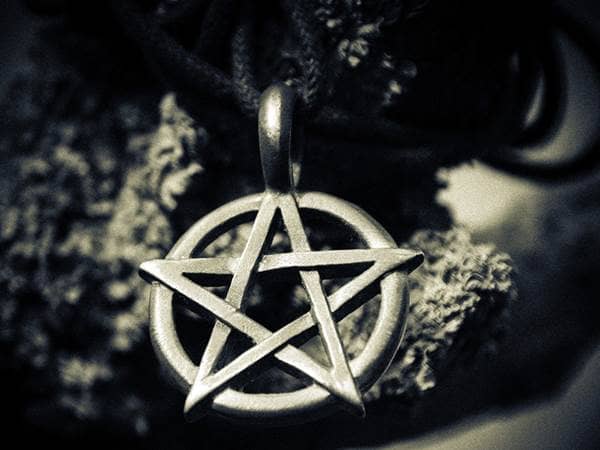
Witchcraft is a part of spirituality for many Pagans. As...

Today, Druids are an order of Pagans who seek to recover...

About Alonzo L. Gaskill, PhD
Alonzo L. Gaskill is a Professor of Church history and doctrine. He holds a bachelor's degree in philosophy, a masters in theology, and a PhD in biblical studies.
Most Popular

General Christian
A Biblical Vision of Success in Christian Life and...

Catholic
Swimfan: Forgotten Aughts Pleasures

Catholic
Top Three Anti-Catholic Lies About Catholicism

Catholic
Pope Leo Celebrates Mass for Nurses & Docs While in...

Catholic
The Sermon on the Mount, Part I: Matthew 4:12-5:12

Catholic
Janie Learns the Way of the Cross: A Catholic Review

Entertainment

Evangelical
How the author of the world's best hymn became a Christian

Catholic
Looking For Good Catholic Writing - October 2026


INNER CIRCLE: Profound Mystery (Of Christ In All Of Us)

General Christian
What Does Gêvâh Mean For Kimberley Guifoyle & Pete...
Patheos Explore the world's faith through different perspectives on religion and spirituality! Patheos has the views of the prevalent religions and spiritualities of the world.
Ad-Free & Subscriber Log-In Subscription Support
- About Us
- 2026 Calendar
- Videos
- Podcasts
- Library of World Religions
- Faith In Media Tracker
- Advertise With Us
- Write for Us
- Privacy Policy
- Terms of Service
- Do Not Sell My Data
- Contact Us
- Radiant Digital
- Manage Newsletter Subscriptions
- Unsubscribe From Notifications
- Sitemap
Copyright 2008-2026, Patheos. All rights reserved.
Subscription Support Ad-Free & Subscriber Log-In
Follow Patheos