
BuddhistCatholicContemplativeEvangelicalGeneral ChristianHinduJewishLatter-day SaintMuslimNew VisionsProgressive Christian
Beliefs
- Buddhist
- Catholic
- Contemplative
- Evangelical
- General Christian
- Hindu
- Jewish
- Latter-day Saint
- More Voices
- Muslim
- New Visions
- Pagan
- Progressive Christian
Topics
- Religion News
- Food and Religion
- Sports and Religion
- Religious Art
- Religious Music and Entertainment
- Religious Events
- History and Religion
- Style and Religion
- Politics and Religion
- Women in Religion
- Recreation Outdoors and Religion
- Business Finance and Religion
- Careers Workplace and Religion
- Education and Religion
- Family Parenting and Religion
- Health Fitness and Religion
- Home and Religion
- Relationships and Religion
- Technology and Religion
- Travel and Religion
Columnists
- Buddhist Columnists
- Business Finance and Religion Columnists
- Careers Workplace and Religion Columnists
- Catholic Columnists
- Contemplative Columnists
- Education and Religion Columnists
- Evangelists Columnists
- Family Parenting and Religion Columnists
- General Christian Columnists
- Health Fitness and Religion Columnists
- Hindu Columnists
- History and Religion Columnists
- Home and Religion Columnists
- Jewish Columnists
- More Voices Columnists
- Latter Day Columnists
- Muslim Columnists
- New Visions Columnists
- Nonreligious Columnists
- Pagan Columnists
- Politics and Religion Columnists
- Progressive Columnists
- Recreation Outdoors and Religion Columnists
- Relationships and Religion Columnists
- Religion News Columnists
- Religious Art Columnists
- Religious Events Columnists
- Religious Music and Entertainment Columnists
- Sports and Religion Columnists
- Style and Religion Columnists
- Technology and Religion Columnists
- Travel and Religion Columnists
- Women in Religion Columnists
Resource Library
- 2026 Calendar
- Library of World Religions
- The 100 Most Holy Places on Earth
- Patheos Answers
- Podcasts
- Videos
- Faith Leaders Database
- Anglican Episcopalian
- Bahai
- Baptist
- Buddhism
- Christianity
- Confucianism
- Eastern Orthodoxy
- Hinduism
- Holiness and Pentecostal
- ISKCON
- Islam
- Judaism
- Lutheran
- Methodist
- The Church of Jesus Christ of Latter-day Saints
- New Age
- Paganism
- Presbytarian and Reformed
- Protestantism
- Religion Behind the Scenes
- Roman Catholic
- Scientology
- Shia Islam
- Sikhism
- Sufism
- Sunni Islam
- Taoism
- Zen
- See all religions
Research Tools
 Ad-Free & Subscriber Log-In Subscription Support
Ad-Free & Subscriber Log-In Subscription Support
Follow Patheos 

- Trending:
- Forgiveness
- |
- Marriage
- |
- Consciousness
- |
- Death Penalty
- |
- Election
- |
- Halloween
Public Square
Coming to Our Senses: Savoring as Spiritual Practice
June 17, 2015 by Michelle Wilbert
Editors' Note: This article is part of the Patheos Public Square on Slow Living. Read other perspectives here.
Many of us are familiar with Mary Oliver's poetry — her gentle but insistent invitation to notice the beauty in hidden corners, creatures, places, and people most of us wander past unawares. Mary's poetry is a paean to wonder — to being utterly and completely alive in every moment. In her poem "Forgive Me," from Blue Horses: Poems, she writes of "the mind and the roots of the trees, or the well, or the barn, or the rock with its citron map of lichen," and these allow her to express, through her poetry, the peace and beauty—the wholeness—of all creation.
While clearly a master of the art and practice of mindfulness, Mary Oliver has also accomplished something more profound and nuanced: the cultivation of a way of life that daily brings one to the threshold of joy. She lives the spiritual practice of savoring, of living into her senses and the impressions life leaves upon them. Her poetry is the result of an organic evolution of the integration of body and spirit without the false distinction between creaturely existence and spiritual experience.
Over many years working as a midwife, spiritual director, and writer, I too have travelled the path of an awakening to my body, mind, and spirit as an interconnected whole living a small, simple life devoted to savoring the moments that make up that life. I get no special credit for this and it wasn't pursued as a means to a spiritual end. Learning how to love existence for its own sake — and for all the beauty contained within — evolved out of a deeply painful "dark night of the soul" experience that went on for a very long time and, as anyone who has experienced it can attest, the "dark night" experience, like birth and death, is a time of surrender to natural forces we cannot see or control.
During such a time, we discover that our former ways of living a "spiritual life" no longer work: prayer, meditation, religious services — all seems to collapse into meaninglessness, and every effort to regain our former beliefs and ways of living rebel and retreat from our grasp and faith is shaken to the core.
Ultimately, I found my healing through poetry and was led through the example of the poets I love — Mary Oliver, William Stafford, Wendell Berry, and others — to the practice of savoring. Unattached to an ideology or a particular religious expression, it's the spiritual practice of being fully alive and relishing the experience for exactly that; it's a practice of "enough" — it is enough to be here and to feel the presence of life in our bodies. Savoring is the experiential cornerstone of being fully alive and fully acknowledging and taking joy in the mundane, what my father-in-law, a painter, would call, "ennobling the ordinary."
We begin by "coming to our senses" as my friend, writer, and teacher Tina Welling says in her wonderful book, Writing Wild: Forming a Creative Partnership with Nature:
It all started with a postcard.
I was on my way to opening the Rosebud, my resort shop in Jackson Hole, Wyoming, but stopped first at the health-food store to pick up coffee and pastry. There it was, right on the counter, a postcard with a picture of earth taken from space. Against a shiny black sky, our planet glowed with swirly blues and purples, framed by two lines of a message: "Wake up! You live here!" … I had just been outdoors, but I couldn't say what the sky looked like, cloudy or clear, or whether birds sang or if I'd felt a breeze on my cheeks. I had been locked inside my head, thinking. I didn't live inside my own body, much less on the earth.
After that, a phrase I'd heard all of my life, "Come to your senses," began to take on new meaning. I abruptly awakened to my senses, to dramatic consequence … I descended into my body.
Tina advocates a body-centered spiritual practice I too have embraced, called "the spirit walk." In essence, this is a practice devoted to savoring — to coming into our bodies and senses to savor and delight not only in the natural world, but in all aspects of existence from the first taste of morning coffee to the glory of the moon at night. It requires only that you notice your life and everything in it with your senses attuned to savoring all that you find there in that moment: Breathe, and feel the air enter and exit your lungs; you are alive! Feel the stretch of legs, arms, and back as you move. Look at your surroundings with an eye for life and beauty; find an object that catches your attention and pick it up; feel it with fingers, the palm of the hand, rub it on your face, smell it, taste it; savor the life it contains. If you like, especially as you are developing your practice, keep your found objects with you as companions in your "spirit walk" through your daily life.
Whatever your spiritual orientation, grounding yourself in the gifts of the created world is healing to body and spirit alike. As your practice becomes part of the daily round of life, you'll begin to notice everything — the sounds, sights, and scents of every room, of beloved people and animals — and you will feel the joy of savoring, the relish of living your entire life as a spiritual practice. Spiritual practice is about a way of being and the point of practice is a life of graced human development, a life lived fully not only with mindfulness of the present moment, but with the joy and appreciation of existence itself.
6/17/2015 4:00:00 AM
Slow Living
Public Square
Awareness
Poetry
Progressive Christianity
Spirituality
Christianity
Evangelicalism
more at patheos
1

The Silent Crisis of Gen AI Anxiety in the Workplace
2

Grateful Anyway: Finding God in Hard Seasons
3
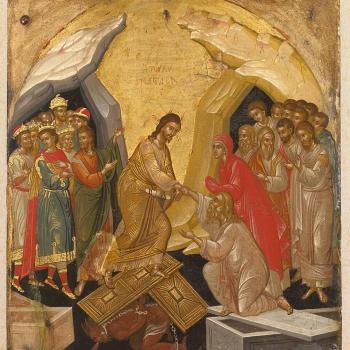
Easter 2026: How Jesus as the New Adam Restores Humanity
4

We Are Not the Resistance — We Are the River
About
Patheos Explore the world's faith through different perspectives on religion and spirituality! Patheos has the views of the prevalent religions and spiritualities of the world.
Ad-Free & Subscriber Log-In Subscription Support
- About Us
- 2026 Calendar
- Videos
- Podcasts
- Library of World Religions
- Faith In Media Tracker
- Advertise With Us
- Write for Us
- Privacy Policy
- Terms of Service
- Do Not Sell My Data
- Contact Us
- Radiant Digital
- Manage Newsletter Subscriptions
- Unsubscribe From Notifications
- Sitemap
Copyright 2008-2026, Patheos. All rights reserved.
Subscription Support Ad-Free & Subscriber Log-In
Follow Patheos