
BuddhistCatholicContemplativeEvangelicalGeneral ChristianHinduJewishLatter-day SaintMuslimNew VisionsProgressive Christian
Beliefs
- Buddhist
- Catholic
- Contemplative
- Evangelical
- General Christian
- Hindu
- Jewish
- Latter-day Saint
- More Voices
- Muslim
- New Visions
- Pagan
- Progressive Christian
Topics
- Religion News
- Food and Religion
- Sports and Religion
- Religious Art
- Religious Music and Entertainment
- Religious Events
- History and Religion
- Style and Religion
- Politics and Religion
- Women in Religion
- Recreation Outdoors and Religion
- Business Finance and Religion
- Careers Workplace and Religion
- Education and Religion
- Family Parenting and Religion
- Health Fitness and Religion
- Home and Religion
- Relationships and Religion
- Technology and Religion
- Travel and Religion
Columnists
- Buddhist Columnists
- Business Finance and Religion Columnists
- Careers Workplace and Religion Columnists
- Catholic Columnists
- Contemplative Columnists
- Education and Religion Columnists
- Evangelists Columnists
- Family Parenting and Religion Columnists
- General Christian Columnists
- Health Fitness and Religion Columnists
- Hindu Columnists
- History and Religion Columnists
- Home and Religion Columnists
- Jewish Columnists
- More Voices Columnists
- Latter Day Columnists
- Muslim Columnists
- New Visions Columnists
- Nonreligious Columnists
- Pagan Columnists
- Politics and Religion Columnists
- Progressive Columnists
- Recreation Outdoors and Religion Columnists
- Relationships and Religion Columnists
- Religion News Columnists
- Religious Art Columnists
- Religious Events Columnists
- Religious Music and Entertainment Columnists
- Sports and Religion Columnists
- Style and Religion Columnists
- Technology and Religion Columnists
- Travel and Religion Columnists
- Women in Religion Columnists
Resource Library
- 2026 Calendar
- Library of World Religions
- The 100 Most Holy Places on Earth
- Patheos Answers
- Podcasts
- Videos
- Faith Leaders Database
- Anglican Episcopalian
- Bahai
- Baptist
- Buddhism
- Christianity
- Confucianism
- Eastern Orthodoxy
- Hinduism
- Holiness and Pentecostal
- ISKCON
- Islam
- Judaism
- Lutheran
- Methodist
- The Church of Jesus Christ of Latter-day Saints
- New Age
- Paganism
- Presbytarian and Reformed
- Protestantism
- Religion Behind the Scenes
- Roman Catholic
- Scientology
- Shia Islam
- Sikhism
- Sufism
- Sunni Islam
- Taoism
- Zen
- See all religions
Research Tools
 Ad-Free & Subscriber Log-In Subscription Support
Ad-Free & Subscriber Log-In Subscription Support
Follow Patheos 

- Trending:
- Forgiveness
- |
- Marriage
- |
- Consciousness
- |
- Death Penalty
- |
- Election
- |
- Halloween
What is Lent?
January 01, 2000 by Christine Sine
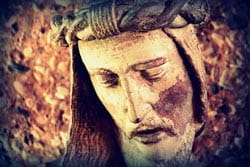 Lent is a 40-day period before Easter that commemorates the time Jesus spent in the wilderness. In the early church, this was a time of preparation for those about to be baptized. Today it is more often regarded as a season of soul searching and repentance for all Christians when we prepare for the joy and celebration of Easter by giving ourselves an annual spiritual check up. It begins with Ash Wednesday and ends at sundown on Holy Thursday (the Thursday before Easter). If you are a good mathematician you probably realize that there are more than 40 days between Ash Wednesday and Holy Thursday. That is because early Christians never fasted on Sundays. They are excluded from the days of Lent because they are always celebrations of Christ's resurrection.
The temptations of Christ parallel those of the children of Israel in the wilderness, but how different are his responses.
- The children of Israel were dissatisfied with God's provision of manna. They remembered the rich foods from their captivity in Egypt and greedily hungered for more so that their physical cravings could be satisfied (Num 11:4-36). Christ saw his physical hunger as unimportant and trusted in God to provide for all his needs.
- At Massah, the Israelites demanded miraculous signs that revealed God's presence, totally ignoring God's constant and miraculous care for them (Ex. 17:1-7). Jesus refused to test God by the use of miraculous signs.
- The Israelites fashioned a golden calf to worship (Ex. 32:1-6), but Christ turned his back on temptations of worldly wealth and power.
Each time he is tempted by Satan, Christ deliberately turned away from the attractions of a self-centered and self-serving world in order to place God's purposes and the outwardly focused values of God's kingdom at the center of all he was and did.
Lent is a time for "confrontation with the false self" (Thomas Keating),when we reflect on the responses and behaviors we exhibit that are least Christ-like and seek God's help in rededicating ourselves to God and God's purposes. This is a time for self-denial and fasting when we give up some of the comforts of our lives in order to make ourselves more available to God.
Traditionally, Lent is marked by penitential prayer, fasting, and almsgiving. Some churches, especially in the Orthodox tradition, still observe a rigid schedule of fasting on certain days during Lent, especially the giving up of meat, alcohol, sweets, and other types of food. Other traditions do not place as great an emphasis on fasting, but focus on charitable deeds, especially helping those in physical need with food and clothing, or simply the giving of money to charities. Most Christian churches that observe Lent at all focus on it as a time of prayer, especially penitential prayer, repenting for failures and sin as a way to focus on the need for God's grace. It is really a preparation to celebrate God's marvelous redemption at Easter, and the resurrected life that we live, and hope for, as Christians.
Interestingly the concept of spring-cleaning emerged from the practice of Lent. This was the time of year in Europe when one cleaned house -- first physically and then spiritually. I love this idea of connecting our daily lives and routines to the seasons of the church calendar. However what we "sweep out" or give up at this season should be more than food. It could be soccer or TV or social commitments. We might discuss with our families ways to give up our busyness and focus on the truly important things of God. The time we free up can be used for special prayers and Bible readings, for spiritual retreats and for involvement in local or overseas missions that enable us to focus beyond ourselves and on our responsibility to those who are hurting and in need.
During Lent it is as though we join Jesus in his walk toward Good Friday and the crucifixion. Our self-denial is a way to enter into the fellowship of Christ's suffering so that we can identify more fully with those who are chronically hungry, oppressed, in pain, or in need.
This year as we walk toward the Cross may we invite God to make us aware of those things that distract us from a wholehearted commitment to God. We may want to gather up all those things we are aware of that vie for our attention and literally nail them to the Cross.
This article is reprinted with permission from the blog Godspace.
1/1/2000 5:00:00 AM
Lent
Meditation
Christianity
more at patheos
1
2

The Poor Have Rights—and Responsibilities
3

I Almost Won at PGA's Doral in '66. This Week, Faith Did Win
4

Hate Crimes: Understanding the Rising Trends
About
Patheos Explore the world's faith through different perspectives on religion and spirituality! Patheos has the views of the prevalent religions and spiritualities of the world.
Ad-Free & Subscriber Log-In Subscription Support
- About Us
- 2026 Calendar
- Videos
- Podcasts
- Library of World Religions
- Faith In Media Tracker
- Advertise With Us
- Write for Us
- Privacy Policy
- Terms of Service
- Do Not Sell My Data
- Contact Us
- Radiant Digital
- Manage Newsletter Subscriptions
- Unsubscribe From Notifications
- Sitemap
Copyright 2008-2026, Patheos. All rights reserved.
Subscription Support Ad-Free & Subscriber Log-In
Follow Patheos