
BuddhistCatholicContemplativeEvangelicalGeneral ChristianHinduJewishLatter-day SaintMuslimNew VisionsProgressive Christian
Beliefs
- Buddhist
- Catholic
- Contemplative
- Evangelical
- General Christian
- Hindu
- Jewish
- Latter-day Saint
- More Voices
- Muslim
- New Visions
- Pagan
- Progressive Christian
Topics
- Religion News
- Food and Religion
- Sports and Religion
- Religious Art
- Religious Music and Entertainment
- Religious Events
- History and Religion
- Style and Religion
- Politics and Religion
- Women in Religion
- Recreation Outdoors and Religion
- Business Finance and Religion
- Careers Workplace and Religion
- Education and Religion
- Family Parenting and Religion
- Health Fitness and Religion
- Home and Religion
- Relationships and Religion
- Technology and Religion
- Travel and Religion
Columnists
- Buddhist Columnists
- Business Finance and Religion Columnists
- Careers Workplace and Religion Columnists
- Catholic Columnists
- Contemplative Columnists
- Education and Religion Columnists
- Evangelists Columnists
- Family Parenting and Religion Columnists
- General Christian Columnists
- Health Fitness and Religion Columnists
- Hindu Columnists
- History and Religion Columnists
- Home and Religion Columnists
- Jewish Columnists
- More Voices Columnists
- Latter Day Columnists
- Muslim Columnists
- New Visions Columnists
- Nonreligious Columnists
- Pagan Columnists
- Politics and Religion Columnists
- Progressive Columnists
- Recreation Outdoors and Religion Columnists
- Relationships and Religion Columnists
- Religion News Columnists
- Religious Art Columnists
- Religious Events Columnists
- Religious Music and Entertainment Columnists
- Sports and Religion Columnists
- Style and Religion Columnists
- Technology and Religion Columnists
- Travel and Religion Columnists
- Women in Religion Columnists
Resource Library
- 2026 Calendar
- Library of World Religions
- The 100 Most Holy Places on Earth
- Patheos Answers
- Podcasts
- Videos
- Faith Leaders Database
- Anglican Episcopalian
- Bahai
- Baptist
- Buddhism
- Christianity
- Confucianism
- Eastern Orthodoxy
- Hinduism
- Holiness and Pentecostal
- ISKCON
- Islam
- Judaism
- Lutheran
- Methodist
- The Church of Jesus Christ of Latter-day Saints
- New Age
- Paganism
- Presbytarian and Reformed
- Protestantism
- Religion Behind the Scenes
- Roman Catholic
- Scientology
- Shia Islam
- Sikhism
- Sufism
- Sunni Islam
- Taoism
- Zen
- See all religions
Research Tools
 Ad-Free & Subscriber Log-In Subscription Support
Ad-Free & Subscriber Log-In Subscription Support
Follow Patheos 

- Trending:
- Forgiveness
- |
- Marriage
- |
- Consciousness
- |
- Death Penalty
- |
- Election
- |
- Halloween
Catholic
Viva Guadalupe! Viva Life!
February 10, 2011 by Pat Gohn
 Note: I am pleased to introduce María Morera Johnson as my guest columnist. We recently had a dynamic conversation about the meaningfulness of the sacramentals we grew up with, and since last week's column described the affection and sentimentality surrounding sacramental blessings, objects, and practices, I asked Maria to share her perspective from her Hispanic background. As she has graciously agreed, I hope you enjoy learning about how María's Cuban heritage informs and enriches her faith. ~ Pat Gohn
By María Morera Johnson
I have fallen in love with a statue of Our Lady of Guadalupe. "She" stands just to the right of the altar in our parish chapel, solitary and without the bright sunburst that we associate with Guadalupe. Pose with hands in prayer, wearing a sweet look that matches the serene, simple, and muted colors of her robes, her stillness and the simplicity inherent in her design soothes me. I find peace when I am before her.
I am Cuban-American. Like many Hispanics, religious iconography and jewelry appeal to my senses. They are more than sacramentals to aid our daily worship, but objets d'art. Our icons are bright, often rustic or primitive and imbued with a beauty that transcends the actual piece, particularly in the relationship that we develop with it, whether for sheer love of beauty, or because the icon represents a special devotion or cultural identification.
It is easy to misinterpret that relationship as idolatry since outwardly we shower those objects with attention and affection. To be honest, sometimes there may be a little superstitious confusion mixed into these bonds, particularly within older generations who have not benefitted from the sound and earnest catechesis of recent years. I recognize, too, how these small but meaningful cultural idiosyncrasies might appear to our sisters and brothers in Christ who do not share an identical background or history.
Culturally, I come from a sensory-driven people drawn to the deep rhythms of music, strong scents, and shiny pretty things. To be Hispanic and Catholic means to embrace, passionately, all of the physical reminders of our faith. We revel in these tangible images because they make our faith immediate and present to us as we move through our daily activities. We bring them into our homes in elaborate and decorative altars. We wear medals and scapulars. These are quite catholic, small "c," practices that I have also noted in my non-Hispanic friends; the distinction is perhaps not so much in the devotion, as in the open—and yes, it is okay to say it—loud, celebratory approach we take.
A strong devotion to the Blessed Virgin Mary permeates Hispanic culture, whether it is Our Lady of Charity—patroness of the land of my birth, Cuba—or Our Lady of Divine Providence, beloved by my Puerto Rican friends. Our Lady of Guadalupe, the patroness of Mexico, appeared 500 years ago, leading the Mexican people in a faith journey that continues today. As patroness of the Americas, her reach extends beyond borders. Guadalupe's continued presence in our lives serves to unite her children and lead us to her Son.
She belongs to all of us, but we also belong to her, drawn together under the protection of her mantle.
That's what I think when I sit in the dimly lit chapel, natural light coming in through the window behind the altar, illuminating Guadalupe with golden rays of sunlight in the morning, completing naturally what no gilded backdrop can do. Her mantle is a mother's warm, sure protection.
I am comforted by her presence, not only because I have a strong devotion to Our Lady of Guadalupe, but because under any of her titles Mary represents the profound part of my Cuban-American identity that is built around the matriarch. She is the madre of the gathering of siblings and aunts and uncles, grandparents, parents, and extended family and friends that comprise what we loosely and affectionately call mi familia, my family. Mary is present in my life just as surely as my mother, grandmothers, aunts, sisters, and dear girlfriends are, sharing with me the joys of womanhood and motherhood, and the sacrifice and pain, too.
Holding Mary present in my life, through the big and small sacramentals that surround me, is a reminder that I walk the journey with her. She cared for a household. She raised a child. She made sacrifices. She loved.
She loved profoundly. Unequivocally. Unconditionally. And with abandonment.
Mary's Yes to God is the model by which we all should live.
Article Continued On Next Page
Page: 1 of 2
2/10/2011 5:00:00 AM
Catholic
A Word in Season
Virgin Mary
Cuba
Hispanic
Mexico
Prayer
Sacraments
Christianity
Roman Catholicism
more at patheos
1

Will Gen AI Drive Marketing Teams to One?
2
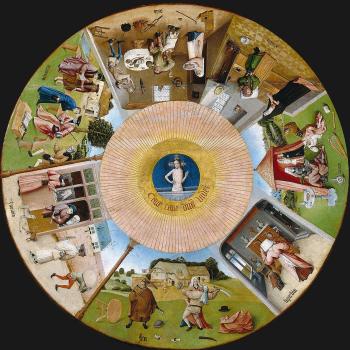
Recognizing Vices Disguised As Moral Goodness
3

Jesus and Lao Tzu: Allowing Your Enemies
4

Lindsay Clancy: Sympathy and Systematic Victimhood

About Pat Gohn
Pat Gohn is a Catholic writer, speaker, and the host of the Among Women Podcast and blog. Her book Blessed, Beautiful and Bodacious: Celebrating the Gift of Catholic Womanhood is published by Ave Maria Press.
Patheos Explore the world's faith through different perspectives on religion and spirituality! Patheos has the views of the prevalent religions and spiritualities of the world.
Ad-Free & Subscriber Log-In Subscription Support
- About Us
- 2026 Calendar
- Videos
- Podcasts
- Library of World Religions
- Faith In Media Tracker
- Advertise With Us
- Write for Us
- Privacy Policy
- Terms of Service
- Do Not Sell My Data
- Contact Us
- Radiant Digital
- Manage Newsletter Subscriptions
- Unsubscribe From Notifications
- Sitemap
Copyright 2008-2026, Patheos. All rights reserved.
Subscription Support Ad-Free & Subscriber Log-In
Follow Patheos