
BuddhistCatholicContemplativeEvangelicalGeneral ChristianHinduJewishLatter-day SaintMuslimNew VisionsProgressive Christian
Beliefs
- Buddhist
- Catholic
- Contemplative
- Evangelical
- General Christian
- Hindu
- Jewish
- Latter-day Saint
- More Voices
- Muslim
- New Visions
- Pagan
- Progressive Christian
Topics
- Religion News
- Food and Religion
- Sports and Religion
- Religious Art
- Religious Music and Entertainment
- Religious Events
- History and Religion
- Style and Religion
- Politics and Religion
- Women in Religion
- Recreation Outdoors and Religion
- Business Finance and Religion
- Careers Workplace and Religion
- Education and Religion
- Family Parenting and Religion
- Health Fitness and Religion
- Home and Religion
- Relationships and Religion
- Technology and Religion
- Travel and Religion
Columnists
- Buddhist Columnists
- Business Finance and Religion Columnists
- Careers Workplace and Religion Columnists
- Catholic Columnists
- Contemplative Columnists
- Education and Religion Columnists
- Evangelists Columnists
- Family Parenting and Religion Columnists
- General Christian Columnists
- Health Fitness and Religion Columnists
- Hindu Columnists
- History and Religion Columnists
- Home and Religion Columnists
- Jewish Columnists
- More Voices Columnists
- Latter Day Columnists
- Muslim Columnists
- New Visions Columnists
- Nonreligious Columnists
- Pagan Columnists
- Politics and Religion Columnists
- Progressive Columnists
- Recreation Outdoors and Religion Columnists
- Relationships and Religion Columnists
- Religion News Columnists
- Religious Art Columnists
- Religious Events Columnists
- Religious Music and Entertainment Columnists
- Sports and Religion Columnists
- Style and Religion Columnists
- Technology and Religion Columnists
- Travel and Religion Columnists
- Women in Religion Columnists
Resource Library
- 2026 Calendar
- Library of World Religions
- The 100 Most Holy Places on Earth
- Patheos Answers
- Podcasts
- Videos
- Faith Leaders Database
- Anglican Episcopalian
- Bahai
- Baptist
- Buddhism
- Christianity
- Confucianism
- Eastern Orthodoxy
- Hinduism
- Holiness and Pentecostal
- ISKCON
- Islam
- Judaism
- Lutheran
- Methodist
- The Church of Jesus Christ of Latter-day Saints
- New Age
- Paganism
- Presbytarian and Reformed
- Protestantism
- Religion Behind the Scenes
- Roman Catholic
- Scientology
- Shia Islam
- Sikhism
- Sufism
- Sunni Islam
- Taoism
- Zen
- See all religions
Research Tools
 Ad-Free & Subscriber Log-In Subscription Support
Ad-Free & Subscriber Log-In Subscription Support
Follow Patheos 

- Trending:
- Forgiveness
- |
- Marriage
- |
- Consciousness
- |
- Death Penalty
- |
- Election
- |
- Halloween
Evangelical
Timothy McVeigh Was Not a “Christian Terrorist”
October 27, 2010
By Jeremy Lott
 If you want to invite the near universal opprobrium of journalists everywhere in the English-speaking world, just suggest that Barack Obama is, was, or could be considered a Muslim. When the reverend Franklin Graham said on CNN that Obama “was born a Muslim” but had long ago “renounced the prophet Mohammad” and “accepted Jesus Christ,” ink turned to tar and feathers flew.
Boston University professor Stephen Prothero's response was on the polite end of the spectrum. On CNN’s Belief Blog, Prothero accused Graham of waging a “disinformation campaign against both the president of the United States and the religion of Islam” and of violating the ninth commandment by “bear[ing] false witness.” Prothero also compared Graham unfavorably with his famous revivalist father, saying that Franklin was “increasingly sounding like a garden variety political hack, carrying the holy water for the most unholy elements in American society.”
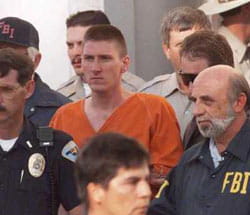
But if it's considered beyond the pale and a smear to both Islam and Obama to call him a Muslim, then why is it acceptable to insist that one of the great monsters of recent American history was a Christian when that is far from clear? I speak, of course, of Timothy McVeigh, the now-executed terrorist who blew up the Alfred P. Murrah Federal Building in Oklahoma City in April 1995. The blast killed 168 people, including 19 children, so you might think that commentators would be somewhat circumspect in linking the Oklahoma City Bomber to people who are not generally inclined to blow things up.
You would be wrong about that. McVeigh has become part of the PC balancing act that analysts are expected to perform every time they are confronted with evidence of Islamist terrorism. Witness the flap over National Public Radio analyst Juan Williams' recent firing because of impolitic remarks he had made about Muslims on FOX News. In his defense, Williams actually cited his casual smearing of Christians as evidence that he was not a bigot.
In an op-ed published in the Daily Caller, Williams explained that he had pointed out to Fox host Bill O'Reilly that we should rein in our feelings and be careful about holding the violent actions of individuals against their respective religions. To illustrate this, Williams had used a shoe's-on-the-other-foot example. Take the Atlanta Olympic bomber “as well as Timothy McVeigh and the people who protest against gay rights at military funerals.” These people, said Williams “are Christians” yet “we journalists” do not typically “identify them by their religion.”
Williams' statement was wrong on several levels. Members of the Westboro Baptist Church -- those ubiquitous, hateful protesters of military funerals -- are irritants, not terrorists. They are few, annoying, and denounced by the vast majority of practicing Christians in the United States. But at least they belong to an actual church and offer its teachings as the reason for their protests. This was not true of McVeigh.
McVeigh was born Catholic but drifted away from the faith. He told Time magazine in 1996 that he believed in a deity but had “lost touch with the religion” of his birth. He did “maintain core beliefs,” but declined in the interview to spell those beliefs out.
He became a little bit more specific before his execution in 2001. We might call him spiritual but not religious. He claimed to be agnostic but not an atheist. McVeigh believed in “science” and not “religion,” he said. (In fact, he said his religion was science.) His murky metaphysical notions included some sort of Deistic creator who set things in motion, not the personal God of Christianity.
The Oklahoma City Bomber didn’t believe in an afterlife and he certainly didn’t believe in hell. When asked what he would do if it turned out he was wrong about that, McVeigh fell back on a martial solution. He told the authors of American Terrorist that he would “improvise, adapt, and overcome,” per his U.S. Army training.
Article Continued On Next Page
Page: 1 of 2
10/27/2010 4:00:00 AM
Evangelical
politics
Christianity
Christian Science
Evangelicalism
more at patheos
1

The Power of Critical Thinking 2
2

One Person Listened. One Life was Saved.
3

Port of Call: Sometimes We Need More Than a Weekly Sabbath
4

AI-Ready Regions And Teams Are Redefining Tech Strategy
About
Patheos Explore the world's faith through different perspectives on religion and spirituality! Patheos has the views of the prevalent religions and spiritualities of the world.
Ad-Free & Subscriber Log-In Subscription Support
- About Us
- 2026 Calendar
- Videos
- Podcasts
- Library of World Religions
- Faith In Media Tracker
- Advertise With Us
- Write for Us
- Privacy Policy
- Terms of Service
- Do Not Sell My Data
- Contact Us
- Radiant Digital
- Manage Newsletter Subscriptions
- Unsubscribe From Notifications
- Sitemap
Copyright 2008-2026, Patheos. All rights reserved.
Subscription Support Ad-Free & Subscriber Log-In
Follow Patheos