
BuddhistCatholicContemplativeEvangelicalGeneral ChristianHinduJewishLatter-day SaintMuslimNew VisionsProgressive Christian
Beliefs
- Buddhist
- Catholic
- Contemplative
- Evangelical
- General Christian
- Hindu
- Jewish
- Latter-day Saint
- More Voices
- Muslim
- New Visions
- Pagan
- Progressive Christian
Topics
- Religion News
- Food and Religion
- Sports and Religion
- Religious Art
- Religious Music and Entertainment
- Religious Events
- History and Religion
- Style and Religion
- Politics and Religion
- Women in Religion
- Recreation Outdoors and Religion
- Business Finance and Religion
- Careers Workplace and Religion
- Education and Religion
- Family Parenting and Religion
- Health Fitness and Religion
- Home and Religion
- Relationships and Religion
- Technology and Religion
- Travel and Religion
Columnists
- Buddhist Columnists
- Business Finance and Religion Columnists
- Careers Workplace and Religion Columnists
- Catholic Columnists
- Contemplative Columnists
- Education and Religion Columnists
- Evangelists Columnists
- Family Parenting and Religion Columnists
- General Christian Columnists
- Health Fitness and Religion Columnists
- Hindu Columnists
- History and Religion Columnists
- Home and Religion Columnists
- Jewish Columnists
- More Voices Columnists
- Latter Day Columnists
- Muslim Columnists
- New Visions Columnists
- Nonreligious Columnists
- Pagan Columnists
- Politics and Religion Columnists
- Progressive Columnists
- Recreation Outdoors and Religion Columnists
- Relationships and Religion Columnists
- Religion News Columnists
- Religious Art Columnists
- Religious Events Columnists
- Religious Music and Entertainment Columnists
- Sports and Religion Columnists
- Style and Religion Columnists
- Technology and Religion Columnists
- Travel and Religion Columnists
- Women in Religion Columnists
Resource Library
- 2026 Calendar
- Library of World Religions
- The 100 Most Holy Places on Earth
- Patheos Answers
- Podcasts
- Videos
- Faith Leaders Database
- Anglican Episcopalian
- Bahai
- Baptist
- Buddhism
- Christianity
- Confucianism
- Eastern Orthodoxy
- Hinduism
- Holiness and Pentecostal
- ISKCON
- Islam
- Judaism
- Lutheran
- Methodist
- The Church of Jesus Christ of Latter-day Saints
- New Age
- Paganism
- Presbytarian and Reformed
- Protestantism
- Religion Behind the Scenes
- Roman Catholic
- Scientology
- Shia Islam
- Sikhism
- Sufism
- Sunni Islam
- Taoism
- Zen
- See all religions
Research Tools
 Ad-Free & Subscriber Log-In Subscription Support
Ad-Free & Subscriber Log-In Subscription Support
Follow Patheos 

- Trending:
- Forgiveness
- |
- Marriage
- |
- Consciousness
- |
- Death Penalty
- |
- Election
- |
- Halloween
Progressive Christian
Thriving Seminaries Admit What They Don't Know
November 10, 2011 by David Lose
Editor's Note: This article is part of an online symposium, "Does Seminary Have a Future?" hosted at Patheos this month. Read other perspectives here.
There are a number of reasons theological seminaries are struggling: declining membership in their sponsoring bodies, smaller pools of qualified and interested candidates for ministry, aging physical plants that require significant investment, just to name a few. Yet I'd argue the single most significant cause of decline is far simpler: most seminaries are training leaders for a church and world that no longer exists.
In their book The Missional Leader (Jossey-Bass, 2006), Alan Roxburgh and Fred Romanuk suggest that organizations and their leaders experience three distinct periods of development. In the emergent zone, leaders in a significantly changed context are highly experimental in their approach to leadership, innovative with regard to practices, and comfortable with loose coalitions. Growth of the organization is chaotic, often in fits and starts, and organizational identity is fluid. During the more stable performative zone, leaders shift their emphasis from bold innovation to skillful performance of the most helpful practices and focus on structural organization. Growth during this period is steadier and more significant, and institutional identity has solidified. When the context again changes but leaders fail (or refuse) to recognize it, organizations flounder. In response, leaders become more reactive, resisting innovation and increasingly relying on regulation to protect the prevailing (and failing) paradigm.
I believe that we live in a context that has changed significantly enough in recent years that we have inadvertently slipped into a reactive posture, applying more vigorously the successful practices of the past rather than embracing the spirit of innovation and experimentation crucial to adaptive change. What are these cultural changes? They are legion, but space allows briefly naming only two.
First, the Christian story no longer holds the cultural center of gravity but is one of any number of larger stories, or metanarratives, that seek to provide ultimate meaning. While a generation ago church leaders complained that we lived in a nominally Christian culture, today's leaders nostalgically reminisce that it was at least nominally Christian. Many of us didn't realize how dependent we'd become on the culture—from public school Christmas pageants to television holiday programming and religiously oriented movies—and stripped of these supports we have failed to teach our story in a compelling way. As a result, our people don't know the Christian story well enough to have it shape and inform their lives and consequently have only a loose, even superficial, allegiance to that story.
Second, we have moved from the age of duty, when we did things because we knew we should, to the age of discretion (think "discretionary time and income"), when we make decisions about our commitments based in part on determining what's in it for me. In a 24/7 world of endless opportunities, obligations, and information, many adults exercise an exacting, if often unconscious, formula for time management based on immediate and tangible rewards and will no longer dedicate an hour on Sunday morning to something that doesn't help them make sense of the other 167 hours of their week.
In this setting, congregational leaders can no longer model themselves after lawyers and doctors, the people we go to for expert knowledge otherwise unavailable. Rather, pastors need to imagine their role more as coaches and conductors—those whose expertise is directed to equipping their congregants to perform the essential skills of the Christian life like interpreting Scripture, making connections between faith and life, and sharing their faith with others. The mark of excellent and faithful ministry in our changed context is therefore no longer that I, as a leader, can make sense of Scripture or talk about my faith, but rather that I have equipped my people to do the same, not just at church but in everyday life.
Why, then, do we continue to train leaders in a performative, rather than innovative, mode? Two inter-connected reasons: 1) The practices we teach are the ones we were taught and have worked not only for us but for several generations of leaders before us. 2) It is terrifying—for adults generally but particularly for credentialed leaders—to admit that we don't know what competent performance looks like in a changed context. Ironically, therefore, it is our well-founded confidence in what we know that makes it difficult to recognize and accept what we don't know; namely, what practices will be most effective in a changed and changing world.
Article Continued On Next Page
Page: 1 of 2
11/10/2011 5:00:00 AM
Progressive Christian
education
FOSE
History
Innovation
Pedagogy
Seminaries
Seminary education
Christianity
more at patheos
1
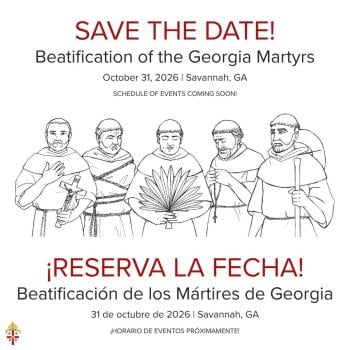
Georgia Martyrs to be Beatified October 31 in Savannah
2

7 Ways Dolly Parton Shared Jesus: One Will Surprise You
3

4

How We Accidentally Found a Great Gnostic Poem
About
Patheos Explore the world's faith through different perspectives on religion and spirituality! Patheos has the views of the prevalent religions and spiritualities of the world.
Ad-Free & Subscriber Log-In Subscription Support
- About Us
- 2026 Calendar
- Videos
- Podcasts
- Library of World Religions
- Faith In Media Tracker
- Advertise With Us
- Write for Us
- Privacy Policy
- Terms of Service
- Do Not Sell My Data
- Contact Us
- Radiant Digital
- Manage Newsletter Subscriptions
- Unsubscribe From Notifications
- Sitemap
Copyright 2008-2026, Patheos. All rights reserved.
Subscription Support Ad-Free & Subscriber Log-In
Follow Patheos