
BuddhistCatholicContemplativeEvangelicalGeneral ChristianHinduJewishLatter-day SaintMuslimNew VisionsProgressive Christian
Beliefs
- Buddhist
- Catholic
- Contemplative
- Evangelical
- General Christian
- Hindu
- Jewish
- Latter-day Saint
- More Voices
- Muslim
- New Visions
- Pagan
- Progressive Christian
Topics
- Religion News
- Food and Religion
- Sports and Religion
- Religious Art
- Religious Music and Entertainment
- Religious Events
- History and Religion
- Style and Religion
- Politics and Religion
- Women in Religion
- Recreation Outdoors and Religion
- Business Finance and Religion
- Careers Workplace and Religion
- Education and Religion
- Family Parenting and Religion
- Health Fitness and Religion
- Home and Religion
- Relationships and Religion
- Technology and Religion
- Travel and Religion
Columnists
- Buddhist Columnists
- Business Finance and Religion Columnists
- Careers Workplace and Religion Columnists
- Catholic Columnists
- Contemplative Columnists
- Education and Religion Columnists
- Evangelists Columnists
- Family Parenting and Religion Columnists
- General Christian Columnists
- Health Fitness and Religion Columnists
- Hindu Columnists
- History and Religion Columnists
- Home and Religion Columnists
- Jewish Columnists
- More Voices Columnists
- Latter Day Columnists
- Muslim Columnists
- New Visions Columnists
- Nonreligious Columnists
- Pagan Columnists
- Politics and Religion Columnists
- Progressive Columnists
- Recreation Outdoors and Religion Columnists
- Relationships and Religion Columnists
- Religion News Columnists
- Religious Art Columnists
- Religious Events Columnists
- Religious Music and Entertainment Columnists
- Sports and Religion Columnists
- Style and Religion Columnists
- Technology and Religion Columnists
- Travel and Religion Columnists
- Women in Religion Columnists
Resource Library
- 2026 Calendar
- Library of World Religions
- The 100 Most Holy Places on Earth
- Patheos Answers
- Podcasts
- Videos
- Faith Leaders Database
- Anglican Episcopalian
- Bahai
- Baptist
- Buddhism
- Christianity
- Confucianism
- Eastern Orthodoxy
- Hinduism
- Holiness and Pentecostal
- ISKCON
- Islam
- Judaism
- Lutheran
- Methodist
- The Church of Jesus Christ of Latter-day Saints
- New Age
- Paganism
- Presbytarian and Reformed
- Protestantism
- Religion Behind the Scenes
- Roman Catholic
- Scientology
- Shia Islam
- Sikhism
- Sufism
- Sunni Islam
- Taoism
- Zen
- See all religions
Research Tools
 Ad-Free & Subscriber Log-In Subscription Support
Ad-Free & Subscriber Log-In Subscription Support
Follow Patheos 

- Trending:
- Forgiveness
- |
- Marriage
- |
- Consciousness
- |
- Death Penalty
- |
- Election
- |
- Halloween
Catholic
Thomas Verner Moore and the Carthusians
July 25, 2011 by Pat McNamara
"Like" the Patheos Catholic Page on Facebook to receive today's best commentary on Catholic issues.
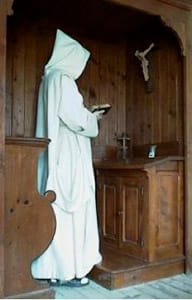
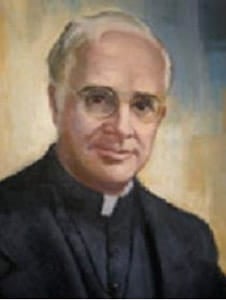 High in a mountain valley in southern Vermont lies an estate of several hundred acres occupied by a group of Catholic monks known as the Carthusians, founded in Medieval France and named for the Chartreuse Valley where they began. Known as the "Marine Corps of monastic orders," they live in complete isolation from the world in the strictest of silence, pursuing a purely contemplative existence. Their daily schedule has changed little since their founding, and modern innovations have little place therein. (Recently they were featured in the award-winning documentary Into Great Silence.)
The Vermont monastery, the Charterhouse of the Transfiguration, is the sole Carthusian community in North America. Its founding was the work of a remarkable priest named Thomas Verner Moore (1877-1969), an accomplished psychiatrist and academic who founded two monasteries. A member of three different religious communities during his lifetime, Moore's journey was a slow progression from the active apostolate to the contemplative life.
The son of a Confederate veteran, Moore was born in Louisville, Kentucky. Named for his grandfather, a famous Presbyterian minister, he was baptized Catholic, in his mother's faith. After his father's early death, the family moved to New York City, where Thomas studied at Fordham. While he considered joining the Jesuits there, he was more attracted to the Paulist Fathers, a community devoted to working with non-Catholics. After briefly working in business, he joined them.
After his ordination in 1901, Father Moore earned a doctorate in psychology at Washington, D.C.'s Catholic University of America, where he would teach on and off for nearly fifty years. While teaching is not a major feature of Paulist ministry, the community had taken an active role at Catholic University from the start, providing some of its early faculty, and they continue to maintain a strong presence on the campus to this day.
 After working in campus ministry at the University of California, Berkeley, Moore finished a medical degree in psychiatry at Johns Hopkins University. As his biographer Benedict Neenan notes, he considered scientific research and activity a "field of apostolic labor" with direct pastoral application. During World War I, he served in the U.S. Army's Medical Corps, working with shell-shocked soldiers in France. He was the first Catholic priest to serve in the American military not as a chaplain.
A committed physician and scholar, Moore also had a deeply contemplative bent that he wanted to pursue further. The war seems to have increased his monastic interests, but Neenan notes there "was always something of the monk" in him. Moore was looking for a greater balance between prayer and scholarship than he felt the Paulists could offer.
He found his answer in the Benedictine community, whose motto is Ora Et Labora ("pray and work"). Since the Middle Ages, the Benedictines balanced a love of learning with a rich communal prayer life. In his late forties, Moore left the Paulists to undergo monastic training in Scotland. Back in America, he founded St. Anselm's Abbey near the Catholic University campus. He continued teaching there, and he headed the psychiatry and psychology department.
During his long academic career, he would write over twenty books, many of them dealing with the relationship between religion and psychology. At a time when many Catholics were skeptical of the new science of psychology, Moore set out to show that science and religion were not incompatible, but could reinforce and help one another. Another focus of his research was child psychology, and he was particularly interested in working with developmentally disabled youth.
In 1947, at age seventy, Moore retired from Catholic University. For several years he had felt a call to live the contemplative life more deeply, so he applied to the Carthusians, the strictest of all monastic orders. There were none in the United States, however, so he applied to a Spanish charterhouse. When he left the United States to begin his training, he never expected to return home again.
Article Continued On Next Page
Page: 1 of 2
7/25/2011 4:00:00 AM
Catholic
In Ages Past
History
Roman Catholicism
more at patheos
1
More Than Signs: How The Sacraments Give Us Grace
2

Goldfinger: Bond, Finally Bond
3
4

Why Do We Build? Pope Leo XIV on Babel and the Vineyard

About Pat McNamara
Dr. Pat McNamara is a published historian. He blogs about American Catholic History at McNamara's Blog.
Patheos Explore the world's faith through different perspectives on religion and spirituality! Patheos has the views of the prevalent religions and spiritualities of the world.
Ad-Free & Subscriber Log-In Subscription Support
- About Us
- 2026 Calendar
- Videos
- Podcasts
- Library of World Religions
- Faith In Media Tracker
- Advertise With Us
- Write for Us
- Privacy Policy
- Terms of Service
- Do Not Sell My Data
- Contact Us
- Radiant Digital
- Manage Newsletter Subscriptions
- Unsubscribe From Notifications
- Sitemap
Copyright 2008-2026, Patheos. All rights reserved.
Subscription Support Ad-Free & Subscriber Log-In
Follow Patheos