
BuddhistCatholicContemplativeEvangelicalGeneral ChristianHinduJewishLatter-day SaintMuslimNew VisionsProgressive Christian
Beliefs
- Buddhist
- Catholic
- Contemplative
- Evangelical
- General Christian
- Hindu
- Jewish
- Latter-day Saint
- More Voices
- Muslim
- New Visions
- Pagan
- Progressive Christian
Topics
- Religion News
- Food and Religion
- Sports and Religion
- Religious Art
- Religious Music and Entertainment
- Religious Events
- History and Religion
- Style and Religion
- Politics and Religion
- Women in Religion
- Recreation Outdoors and Religion
- Business Finance and Religion
- Careers Workplace and Religion
- Education and Religion
- Family Parenting and Religion
- Health Fitness and Religion
- Home and Religion
- Relationships and Religion
- Technology and Religion
- Travel and Religion
Columnists
- Buddhist Columnists
- Business Finance and Religion Columnists
- Careers Workplace and Religion Columnists
- Catholic Columnists
- Contemplative Columnists
- Education and Religion Columnists
- Evangelists Columnists
- Family Parenting and Religion Columnists
- General Christian Columnists
- Health Fitness and Religion Columnists
- Hindu Columnists
- History and Religion Columnists
- Home and Religion Columnists
- Jewish Columnists
- More Voices Columnists
- Latter Day Columnists
- Muslim Columnists
- New Visions Columnists
- Nonreligious Columnists
- Pagan Columnists
- Politics and Religion Columnists
- Progressive Columnists
- Recreation Outdoors and Religion Columnists
- Relationships and Religion Columnists
- Religion News Columnists
- Religious Art Columnists
- Religious Events Columnists
- Religious Music and Entertainment Columnists
- Sports and Religion Columnists
- Style and Religion Columnists
- Technology and Religion Columnists
- Travel and Religion Columnists
- Women in Religion Columnists
Resource Library
- 2026 Calendar
- Library of World Religions
- The 100 Most Holy Places on Earth
- Patheos Answers
- Podcasts
- Videos
- Faith Leaders Database
- Anglican Episcopalian
- Bahai
- Baptist
- Buddhism
- Christianity
- Confucianism
- Eastern Orthodoxy
- Hinduism
- Holiness and Pentecostal
- ISKCON
- Islam
- Judaism
- Lutheran
- Methodist
- The Church of Jesus Christ of Latter-day Saints
- New Age
- Paganism
- Presbytarian and Reformed
- Protestantism
- Religion Behind the Scenes
- Roman Catholic
- Scientology
- Shia Islam
- Sikhism
- Sufism
- Sunni Islam
- Taoism
- Zen
- See all religions
Research Tools
 Ad-Free & Subscriber Log-In Subscription Support
Follow Patheos 

- Trending:
- Advent
- |
- Forgiveness
- |
- Thanksgiving
- |
- Election
- |
- Seasonal Holidays
- |
- Marriage
The First 9/11
September 10, 2010
By Janiece Johnson
Editorial Note: This Article originally ran on September 9th, 2009 on patheos.com.
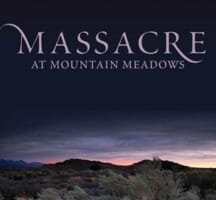 The eighth anniversary of September 11, 2001 will soon arrive. Along with that anniversary comes the 152nd anniversary of the Mountain Meadows Massacre -- when Mormons and their recruited Paiute Indian confederates killed 120 men, women, and children from Arkansas on their way to California. Both are horrific examples of violence occurring on a now infamous day. Marketers for the 2007 film depicting the massacre, September Dawn, saw the September 11 link as the key draw to their movie. Each trailer and poster overtly reminded viewers that 2001 was not the first September 11th -- 1857 marked the first 9/11.
September Dawn wove a tale of secret oaths and sinister machinations motivated by extreme devotion to God -- and tacked on a painfully cheesy love story. For the filmmakers, it was a secret 19th-century holy war waged against good Christian Americans (white-hat wearing Arkansas emigrants) by evil apostates (black-hat wearing Mormons). Focusing on radical oaths, phrases like "in the name of God" and "do your duty," coupled with the egregious sin of a woman wearing pants, the filmmakers heightened the religious elements of the massacre to extreme levels.[1]
The September Dawn filmmakers desired to depict the reputed fanaticism of Mormonism.Interestingly, this was the same strategy of the prosecuting attorneys at John D. Lee's first trial in 1875. As the Boreman transcripts of the trial show, U.S. Attorney Robert Baskin thought that the massacre provided a "wonderful commentary" on Mormonism. In contrast to benevolent Christianity, John D. Lee's "religion was to kill." Mormonism "betray[ed] and then...kill[ed] young women and children." John D. Lee's trial for the massacre would finally bring the savagery of the Mormon Church to "the eyes of the whole civilized world." The September Dawn creators hoped to likewise expose this "secret" story to the world.
September Dawn was a cinematic flash in the pan, yet it illuminates why, for some individuals, Mountain Meadows continues to be the illustration of American religious fanaticism as much today as it was in the 19th century. Some, like Jon Kraukauer in his 2003 book Under the Banner of Heaven, expand this argument beyond Mormonism and see the possibility of religious extremism as sufficient rationale to throw religion out all together. Believers of all stripes reject this for it negates any potential for good through religion. Perhaps, for many Mormons, such depictions of religious extremism are foreign to their own personal, lived religious experience and are thereby summarily dismissed.
In early 2009, three LDS authors, including the Assistant LDS Church Historian Richard E. Turley, Jr., published the monograph Massacre at Mountain Meadows. Many Latter-day Saints did not just dismiss this book out of hand.As one who worked on the project, I have been privy to a wide variety of responses to the effort.
For many, the mere appearance of Massacre at Mountain Meadows signals relief. Some see the book as a sign that we, as a church, are not ignoring this horrible atrocity or perhaps we are attempting to understand more difficult parts of our history. Others automatically assume this book explains how we weren't as at fault as some might think. Some assume that it will silence all critics. Yet others think that now we've dealt with it, we can forget about it. At times, it almost seems like some perceive the book as collective penance for the massacre.
As the Mountain Meadows book functions as a sign of sorts, for many early 19th-century LDS converts the mere existence of the Book of Mormon was a significant sign. (See By the Hand of Mormon, written by Terryl Givens, who is interviewed here. Before Mary Ann Angell opened the Book, she interpreted it as a signal that a new dispensation had opened.[2] Had Angell and other Mormons like her never opened the book and moved past the sign itself, they might never have felt for themselves the potential power of the Book of Mormon as they applied it to their lives. We are very familiar with Nephi's frequent pleas that his readers "liken" the word unto them. Without likening, we may know about the book, but it cannot change us.
Article Continued On Next Page
Page: 1 of 2
9/10/2010 4:00:00 AM
Violence
History
Mormonism
more at patheos
1
'The Odyssey': What a (Very) Long, Strange Trip It Was
2
Love Streams: What Film is For
3
Finding Forgiveness in the Great Horror Film ‘Hokum’
4

About
Patheos Explore the world's faith through different perspectives on religion and spirituality! Patheos has the views of the prevalent religions and spiritualities of the world.
Ad-Free & Subscriber Log-In Subscription Support
- About Us
- 2026 Calendar
- Videos
- Podcasts
- Library of World Religions
- Faith In Media Tracker
- Advertise With Us
- Write for Us
- Privacy Policy
- Terms of Service
- Do Not Sell My Data
- Contact Us
- Radiant Digital
- Manage Newsletter Subscriptions
- Unsubscribe From Notifications
- Sitemap
Copyright 2008-2026, Patheos. All rights reserved.
Subscription Support Ad-Free & Subscriber Log-In
Follow Patheos