
BuddhistCatholicContemplativeEvangelicalGeneral ChristianHinduJewishLatter-day SaintMuslimNew VisionsProgressive Christian
Beliefs
- Buddhist
- Catholic
- Contemplative
- Evangelical
- General Christian
- Hindu
- Jewish
- Latter-day Saint
- More Voices
- Muslim
- New Visions
- Pagan
- Progressive Christian
Topics
- Religion News
- Food and Religion
- Sports and Religion
- Religious Art
- Religious Music and Entertainment
- Religious Events
- History and Religion
- Style and Religion
- Politics and Religion
- Women in Religion
- Recreation Outdoors and Religion
- Business Finance and Religion
- Careers Workplace and Religion
- Education and Religion
- Family Parenting and Religion
- Health Fitness and Religion
- Home and Religion
- Relationships and Religion
- Technology and Religion
- Travel and Religion
Columnists
- Buddhist Columnists
- Business Finance and Religion Columnists
- Careers Workplace and Religion Columnists
- Catholic Columnists
- Contemplative Columnists
- Education and Religion Columnists
- Evangelists Columnists
- Family Parenting and Religion Columnists
- General Christian Columnists
- Health Fitness and Religion Columnists
- Hindu Columnists
- History and Religion Columnists
- Home and Religion Columnists
- Jewish Columnists
- More Voices Columnists
- Latter Day Columnists
- Muslim Columnists
- New Visions Columnists
- Nonreligious Columnists
- Pagan Columnists
- Politics and Religion Columnists
- Progressive Columnists
- Recreation Outdoors and Religion Columnists
- Relationships and Religion Columnists
- Religion News Columnists
- Religious Art Columnists
- Religious Events Columnists
- Religious Music and Entertainment Columnists
- Sports and Religion Columnists
- Style and Religion Columnists
- Technology and Religion Columnists
- Travel and Religion Columnists
- Women in Religion Columnists
Resource Library
- 2026 Calendar
- Library of World Religions
- The 100 Most Holy Places on Earth
- Patheos Answers
- Podcasts
- Videos
- Faith Leaders Database
- Anglican Episcopalian
- Bahai
- Baptist
- Buddhism
- Christianity
- Confucianism
- Eastern Orthodoxy
- Hinduism
- Holiness and Pentecostal
- ISKCON
- Islam
- Judaism
- Lutheran
- Methodist
- The Church of Jesus Christ of Latter-day Saints
- New Age
- Paganism
- Presbytarian and Reformed
- Protestantism
- Religion Behind the Scenes
- Roman Catholic
- Scientology
- Shia Islam
- Sikhism
- Sufism
- Sunni Islam
- Taoism
- Zen
- See all religions
Research Tools
 Ad-Free & Subscriber Log-In Subscription Support
Follow Patheos 

- Trending:
- Advent
- |
- Forgiveness
- |
- Thanksgiving
- |
- Election
- |
- Seasonal Holidays
- |
- Marriage
Sport is Life
October 15, 2009
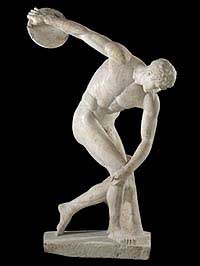 Midway through the 45-day span of the Iliad, the 8th-century B.C. epic poem about the Trojan War, Homer describes the funeral games for Patroclus, the fallen comrade of the hero Achilles. Achilles, broken with grief, sets out prizes for those who will compete for glory -- a pause in the midst of the war for the sake of sport.
Elsewhere, in his Odyssey, Homer returns to the theme of sporting games by describing his hero Odysseus competing against much younger men -- an ancient Bret Favre, if you will -- as a way of showing the hero's towering stature, even amidst the vagaries of his ten-year voyage home from the ten-year war. Some six centuries later, the Roman poet Virgil, returning to the scene of the Trojan War in his Aeneid, describes games in honor of Aeneas' father Anchises: there are rowing races, footraces, javelin contests, and boxing. These games, like those described in the Iliad, represent a peculiar detour amidst a larger divinely-inspired mission.
Why do these epics, these towering stories of great men accomplishing great things, grind to a halt in order to describe sporting contests? The short answer, I think, is because sport was for these authors, and those whose stories they told, a microcosm of life. Certainly in the Greek world -- and by extension, the Roman world, which took so many of its cues from its predecessors -- physical prowess was integral to manhood. The painting and sculpture from at least the late 6th century B.C. idealized the athletic male body, perhaps because of the need to promote the skills for warfare. Coupled with the head of an older, wiser man, these sculptures, such as the statue of Zeus or Poseidon throwing a spear, effectively show the ideal of manhood, designed to inspire young soldiers to strive for glory.
Yet these ancient depictions of sport are more than martial propaganda. Saint Paul, writing only a few decades after Virgil, used athletics as a metaphor for the discipline of the good life:
Do you not know that in a race all the runners compete, but only one receives the prize? So run that you may obtain it. Every athlete exercises self-control in all things. They do it to receive a perishable wreath, but we an imperishable. Well, I do not run aimlessly, I do not box as one beating the air; but I pommel my body and subdue it, lest after preaching to others I myself should be disqualified. (1 Corinthians 9:24-27)
For Paul, as for Virgil and Homer, sport was the most apt metaphor for life itself. In sport, one must practice discipline for the sake of a higher, more distant good. The wreath that Paul mentions is a clear reference to the laurel branches given to the victors of Greek games; Paul suggests, of course, that he is pursuing an even more noble goal in the Christian life: "I press on toward the goal for the prize of the upward call of God in Christ Jesus" (Philippians 3:14).
Sport is life because athletes inspire us to strive to imagine ourselves anew, to reach for goals, to use the gifts of our bodies in marvelous and exciting ways. The discipline of sport reminds us that pleasure is temporary, that suffering can yield greater glory, that our opponents can be friends, that even at our best we are radically dependent on others, that our limits can be surpassed and sometimes obliterated, that our minds can overcome what seem to be insurmountable hurdles.
For the cynic who criticizes the narcissism of athletes or the ugly tendencies of cheating, we must observe that sport is not exempt from the darker side of all human striving: in the Catholic tradition we call this tendency original sin. But we must go a step further, and recognize that our better selves create rules, establish officiating, and hope against hope that our games will elicit the best of all who compete. There is gain, and there is loss: in the old broadcasts of Wide World of Sports, Jim McKay waxed poetic about "the thrill of victory and the agony of defeat." In sports, these are real, and they teach us lessons.
Sport is life because in sport we undertake a kind of spiritual discipline: a way of imagining ourselves in the world, of taking stock of the kinds of human beings we are created to be in relation to others. Athletes don't just speak about what they can do: they speak about who they are. "I'm a runner." "I'm a boxer." "I'm a rower." These disciplines shape self-perception; they build confidence; they affect relationships.
Article Continued On Next Page
Page: 1 of 2
10/15/2009 4:00:00 AM
Sports
Roman Catholicism
more at patheos
1

Beyond Blind Submission: Building a True Partnership
2
Why Didn’t God Just Destroy Satan? A Theological Explanation
3
Christians Helped Invent Race. Some Now Call It Unbiblical
4

Will Our Loneliness Be Healed In Heaven?
About
Patheos Explore the world's faith through different perspectives on religion and spirituality! Patheos has the views of the prevalent religions and spiritualities of the world.
Ad-Free & Subscriber Log-In Subscription Support
- About Us
- 2026 Calendar
- Videos
- Podcasts
- Library of World Religions
- Faith In Media Tracker
- Advertise With Us
- Write for Us
- Privacy Policy
- Terms of Service
- Do Not Sell My Data
- Contact Us
- Radiant Digital
- Manage Newsletter Subscriptions
- Unsubscribe From Notifications
- Sitemap
Copyright 2008-2026, Patheos, part of the Radiant Digital network of media brands. All rights reserved.
Subscription Support Ad-Free & Subscriber Log-In
Follow Patheos