
BuddhistCatholicContemplativeEvangelicalGeneral ChristianHinduJewishLatter-day SaintMuslimNew VisionsProgressive Christian
Beliefs
- Buddhist
- Catholic
- Contemplative
- Evangelical
- General Christian
- Hindu
- Jewish
- Latter-day Saint
- More Voices
- Muslim
- New Visions
- Pagan
- Progressive Christian
Topics
- Religion News
- Food and Religion
- Sports and Religion
- Religious Art
- Religious Music and Entertainment
- Religious Events
- History and Religion
- Style and Religion
- Politics and Religion
- Women in Religion
- Recreation Outdoors and Religion
- Business Finance and Religion
- Careers Workplace and Religion
- Education and Religion
- Family Parenting and Religion
- Health Fitness and Religion
- Home and Religion
- Relationships and Religion
- Technology and Religion
- Travel and Religion
Columnists
- Buddhist Columnists
- Business Finance and Religion Columnists
- Careers Workplace and Religion Columnists
- Catholic Columnists
- Contemplative Columnists
- Education and Religion Columnists
- Evangelists Columnists
- Family Parenting and Religion Columnists
- General Christian Columnists
- Health Fitness and Religion Columnists
- Hindu Columnists
- History and Religion Columnists
- Home and Religion Columnists
- Jewish Columnists
- More Voices Columnists
- Latter Day Columnists
- Muslim Columnists
- New Visions Columnists
- Nonreligious Columnists
- Pagan Columnists
- Politics and Religion Columnists
- Progressive Columnists
- Recreation Outdoors and Religion Columnists
- Relationships and Religion Columnists
- Religion News Columnists
- Religious Art Columnists
- Religious Events Columnists
- Religious Music and Entertainment Columnists
- Sports and Religion Columnists
- Style and Religion Columnists
- Technology and Religion Columnists
- Travel and Religion Columnists
- Women in Religion Columnists
Resource Library
- 2026 Calendar
- Library of World Religions
- The 100 Most Holy Places on Earth
- Patheos Answers
- Podcasts
- Videos
- Faith Leaders Database
- Anglican Episcopalian
- Bahai
- Baptist
- Buddhism
- Christianity
- Confucianism
- Eastern Orthodoxy
- Hinduism
- Holiness and Pentecostal
- ISKCON
- Islam
- Judaism
- Lutheran
- Methodist
- The Church of Jesus Christ of Latter-day Saints
- New Age
- Paganism
- Presbytarian and Reformed
- Protestantism
- Religion Behind the Scenes
- Roman Catholic
- Scientology
- Shia Islam
- Sikhism
- Sufism
- Sunni Islam
- Taoism
- Zen
- See all religions
Research Tools
 Ad-Free & Subscriber Log-In Subscription Support
Ad-Free & Subscriber Log-In Subscription Support
Follow Patheos 

- Trending:
- Forgiveness
- |
- Marriage
- |
- Consciousness
- |
- Death Penalty
- |
- Election
- |
- Halloween
Evangelical
Prop 8: Three Options for Social Conservatives
August 06, 2010 by Timothy Dalrymple
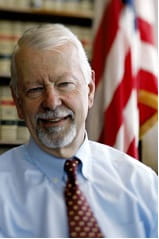
By Timothy Dalrymple
While the conclusion Judge Vaughn Walker drew in Perry v. Schwarzenegger is completely unsurprising, the scope of the ruling and its many declarations on matters ethical, psychological, and theological is nothing short of astonishing. To call it a case of judicial overreach is to indulge in severe understatement. Judge Walker not only ruled that Prop 8 violated the equal protection and due process clauses, he held forth on everything from the motives of California voters to the essential nature of marriage to the appropriateness of voting according to moral and religious convictions. What was supposed to be a trial of the constitutionality of Proposition 8 became a trial of the rationality of those who oppose same-sex marriage -- and Perez Hilton could hardly have supplied a more one-sided conclusion.
Judge Walker was conscious, of course, that his ruling would be appealed all the way to the Supreme Court. Appellate courts do not generally rehearse the discovery of "facts." They investigate whether the right laws and precedents were rightly applied to the facts of the case. Yet Judge Walker strategically located his most explosive claims -- which are not "facts" at all but his own moral intuitions -- in the lengthy "findings of fact" portion of his ruling. He determines, for instance, that "Gender no longer forms an essential part of marriage." Yet this, it must be admitted even by those who agree with the statement, is not a simple finding of fact. How was the judge able to determine this? What does it mean to be an essential part of marriage, and if it is no longer essential, then when exactly did it cease to be so? The attempt to discover demonstrable "facts" when it comes to matters of value, psychology, and theology was a misbegotten enterprise from the beginning.
Some have suggested that Judge Walker, a practicing homosexual with a personal interest at stake, should have stepped aside. What is more relevant than Walker's sexual orientation is the culture of which he is a part. Let us give him the benefit of the doubt that Judge Walker made an earnest attempt to rule impartially according to the facts. What appear as "facts" to him, however, are shaped profoundly by the plausibility structures of a liberal, pro-homosexual community. Walker cannot rule impartially on whether the state has a legitimate interest in encouraging heterosexual marriages, because he inhabits a worldview that makes it nearly impossible to take that possibility seriously. For Judge Walker, homosexual unions are obviously morally and socially equal to heterosexual unions, and homosexuals are obviously just as suitable as parents, because homosexuality obviously does not constitute a morally culpable set of decisions shaped by a disordering of the will, but is obviously genetically determined and therefore eludes moral categories. Since these things are so obvious, anyone who believes otherwise must do so by the force of bigotry and irrationality.
This is not necessarily to say that Judge Walker should have recused himself, but it does mean that his discovery of "facts" was predetermined from the outset, and would have been better avoided. This is why, as Gerard Bradley writes, Judge Walker "portrays those who supported traditional marriage in the Proposition 8 fight as not only wrong," but "wrong in every decisive respect, and utterly so." The discovery process was an elaborate act of judicial theater whose conclusion had been written long before the play began.
The question that confronts social conservatives now is: How shall we respond? What is the best strategy now when it comes to the same-sex marriage debate? I want to mention three options, and explain the third in detail.
1) Fall back and defend our own rights.
Since the younger generations are far more likely to look favorably upon homosexuality in general and homosexual marriage in particular, some have suggested that the battle for the biblical and historical definition of marriage is unwinnable, or that the costs of waging that battle are simply too high. The gay community is more invested, emotionally and financially, in this fight, and since the elites in media and entertainment agree with them, social conservatives cannot win, or cannot win without doing irreparable harm to their public perception.
The sociologist Michael Lindsay, for instance, suggests that Christians should fall back from the front lines of this particular battle, and take up trenches closer to home. Churches will have to defend their rights to refuse to marry gay couples, for examples, and any number of church-affiliated organizations will have to defend their rights to refuse to hire practicing homosexuals and to pass their views on sexuality down to the next generation. "The real test for evangelicals in public policy over the next decade," he suggests, will not be over the marital rights of homosexuals, but over the religious rights of churches and church-related organizations to act in accordance with their moral convictions.
Article Continued On Next Page
Page: 1 of 3
8/6/2010 4:00:00 AM
Evangelical
Homosexuality
politics
Christianity
Evangelicalism
more at patheos
1

2

What Ancient Sanskrit Wisdom Says About Real Success
3

No Hell? Dialogue on Conditional Immortality
4

Is IVF Truly Pro-Life? A Catholic Perspective

About Timothy Dalrymple
Timothy Dalrymple is the CEO and Chief Creative Officer of Polymath Innovations, a strategic storytelling agency that advances the good with visionary organizations and brands. He leads a unique team of communicators from around North America and across the creative spectrum, serving mission-driven businesses and nonprofits who need a partner to amplify their voice and good works. Once a world-class gymnast whose career ended with a broken neck, Tim channeled his passions for faith and storytelling into his role as VP of Business Development for Patheos, helping to launch and grow the network into the world's largest religion website. He holds a Ph.D. in Religion from Harvard's Graduate School of Arts and Sciences. Tim blogs at Philosophical Fragments.
Patheos Explore the world's faith through different perspectives on religion and spirituality! Patheos has the views of the prevalent religions and spiritualities of the world.
Ad-Free & Subscriber Log-In Subscription Support
- About Us
- 2026 Calendar
- Videos
- Podcasts
- Library of World Religions
- Faith In Media Tracker
- Advertise With Us
- Write for Us
- Privacy Policy
- Terms of Service
- Do Not Sell My Data
- Contact Us
- Radiant Digital
- Manage Newsletter Subscriptions
- Unsubscribe From Notifications
- Sitemap
Copyright 2008-2026, Patheos. All rights reserved.
Subscription Support Ad-Free & Subscriber Log-In
Follow Patheos