
BuddhistCatholicContemplativeEvangelicalGeneral ChristianHinduJewishLatter-day SaintMuslimNew VisionsProgressive Christian
Beliefs
- Buddhist
- Catholic
- Contemplative
- Evangelical
- General Christian
- Hindu
- Jewish
- Latter-day Saint
- More Voices
- Muslim
- New Visions
- Pagan
- Progressive Christian
Topics
- Religion News
- Food and Religion
- Sports and Religion
- Religious Art
- Religious Music and Entertainment
- Religious Events
- History and Religion
- Style and Religion
- Politics and Religion
- Women in Religion
- Recreation Outdoors and Religion
- Business Finance and Religion
- Careers Workplace and Religion
- Education and Religion
- Family Parenting and Religion
- Health Fitness and Religion
- Home and Religion
- Relationships and Religion
- Technology and Religion
- Travel and Religion
Columnists
- Buddhist Columnists
- Business Finance and Religion Columnists
- Careers Workplace and Religion Columnists
- Catholic Columnists
- Contemplative Columnists
- Education and Religion Columnists
- Evangelists Columnists
- Family Parenting and Religion Columnists
- General Christian Columnists
- Health Fitness and Religion Columnists
- Hindu Columnists
- History and Religion Columnists
- Home and Religion Columnists
- Jewish Columnists
- More Voices Columnists
- Latter Day Columnists
- Muslim Columnists
- New Visions Columnists
- Nonreligious Columnists
- Pagan Columnists
- Politics and Religion Columnists
- Progressive Columnists
- Recreation Outdoors and Religion Columnists
- Relationships and Religion Columnists
- Religion News Columnists
- Religious Art Columnists
- Religious Events Columnists
- Religious Music and Entertainment Columnists
- Sports and Religion Columnists
- Style and Religion Columnists
- Technology and Religion Columnists
- Travel and Religion Columnists
- Women in Religion Columnists
Resource Library
- 2026 Calendar
- Library of World Religions
- The 100 Most Holy Places on Earth
- Patheos Answers
- Podcasts
- Videos
- Faith Leaders Database
- Anglican Episcopalian
- Bahai
- Baptist
- Buddhism
- Christianity
- Confucianism
- Eastern Orthodoxy
- Hinduism
- Holiness and Pentecostal
- ISKCON
- Islam
- Judaism
- Lutheran
- Methodist
- The Church of Jesus Christ of Latter-day Saints
- New Age
- Paganism
- Presbytarian and Reformed
- Protestantism
- Religion Behind the Scenes
- Roman Catholic
- Scientology
- Shia Islam
- Sikhism
- Sufism
- Sunni Islam
- Taoism
- Zen
- See all religions
Research Tools
 Ad-Free & Subscriber Log-In Subscription Support
Ad-Free & Subscriber Log-In Subscription Support
Follow Patheos 

- Trending:
- Forgiveness
- |
- Marriage
- |
- Consciousness
- |
- Death Penalty
- |
- Election
- |
- Halloween
Evangelical
Preacher's Bookshelf: Preaching (and Living) Leviticus
February 28, 2011 by Daniel Harrell
Editorial Note: We publish Daniel Harrell's sermons on the Church Fathers every Monday at Patheos' Preachers Portal. This week, we are pausing from that series to discuss Dr. Harrell's new book, How to Be Perfect: One Church's Audacious Experiment in Living the Old Testament Book of Leviticus. Author and speaker Tony Jones calls it "a meditation on what it really means to love and follow the Lord," and Barry H. Corey, president of Biola University, says it helped him "grasp my own faith as a child of God on a deeper level."
Harrell was formerly an associate pastor at Park Street Church in Boston, where he preached the evening services and conducted his Leviticus experiment. He is presently lead pastor at Colonial Church in Edina, Minnesota.
 What's the basic hunch of the book—its most essential claim—and why is it important?
The basic hunch is that Leviticus still matters for Christians and preachers. Central New Testament terms such as atonement, sacrifice, holiness, and blood are all Levitical terms that serve as the background for the gospel. Moreover, the second greatest commandment, "love your neighbor as yourself," is found in the Old Testament only in Leviticus. Wrestling with the covenant demands of God, if not the particular commandments, remains essential for serious believers.
What can pastors learn from this book for their own spiritual lives?
That God is concerned with every detail of life—from food to skin to clothing to money to how we relate to our family, friends, and strangers. And because God is concerned with every detail, every detail matters. We're invited to devote everything to God.
Can this book be preached? What might a sermon or sermon series based on the book look like?
I don't think you can preach Leviticus straight up. You need stories or a hook, which is what inspired me to try this "reality sermon series." Including others' stories (sometimes by video) as they wrestled with living Leviticus in modern America was priceless. At the same time, you could interview Jewish scholars or a rabbi friend for inspiration and background. And of course, you should feel free to use our stories from the book and the photos and videos found on the Living Leviticus Facebook page.
Are there any particular anecdotes or stories that crystallize the message of your book—or, for that matter, the message of Leviticus?
There were many. One that really captured the essence centered on a woman from our congregation who built a makeshift tabernacle in her apartment as the basis for reminding her daily of God's presence in her midst. She did try to come as close as she could to the Levitical model. Possessing neither ram's skin nor a porpoise skin for the roof and sides, she made do with a light blue (porpoise-colored) sheet and a red fleece (ram-textured) blanket. Inside her rendition of the Holy of Holies was her fireplace, since fire codes wouldn't allow open flames anywhere else ("Sorry it's so dirty in there, God!"). She set it up with a makeshift altar of incense (some fragrant oil and incense sticks), a lampstand (a candlestick and a few candles), a curtain to cover the Holy Place (some purple fabric), and a basin of water to wash with (and to put out any fires that got out of hand). She also added a couple of things that didn't appear in the biblical blueprints: paper and a pen and a large map of Tennessee. The paper and pen were for writing down her sins so she could burn them. The map became part of her tabernacle because it was really big and she had no other place for it; plus, she thought it could serve as a good reminder of what the Promised Land is like. She invited folks to come and pray, write their sins or idols or offerings to God on the papers, and then burn them in the Holy Fireplace and "dream about good ol' Rocky Top."
She wrote of the experience: "Leviticus reminded me (and by 'remind' I mean 'slapped across the face') of the power and holiness and justice and, yes, the grace of God. Leviticus shows us that we were created and chosen for a higher calling. That we are the 'haves,' not the 'have-nots.' That although we often bring nothing but our last fruits, we worship a God who gives us the gift of himself in Jesus. 'I will put my dwelling place among you . . . I will walk among you and be your God, and you will be my people' (Lev. 26:11-12). You may think I'm crazy, but I'm going to say it anyway: I love Leviticus. Amen and amen."
What did God do to you in the process of writing this book? How did God use it in your own spiritual life?
We preachers tend to emphasize grace at the expense of obedience. We don't want following Jesus to be too hard for our congregations or for ourselves. This leads me to any number of workarounds when it comes to living out the gospel. I rationalize and compartmentalize. But Leviticus refused to let me off the hook. To take it seriously meant paying attention to God in every part of my life. And when you pay attention to God in everything, you can't help but try doing everything better than you were.
2/28/2011 5:00:00 AM
Evangelical
Preachers
The Church Fathers ABCs
History
Leviticus
Preaching Resources
Sacred Texts
Christianity
Evangelicalism
more at patheos
1

Are Blessed Objects Powerless? The Truth About Sacramentals
2

3

Choose Light that Illuminates Your Soul
4

Rehumanizing Christa Pike: On the Consequences of Evil
About Daniel Harrell
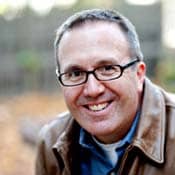
Daniel M. Harrell is Senior Minister of The Colonial Church, Edina, MN and author of How To Be Perfect: One Church's Audacious Experiment in Living the Old Testament Book of Leviticus (FaithWords, 2011). Follow him via Twitter, Facebook, or at his blog and website.
Patheos Explore the world's faith through different perspectives on religion and spirituality! Patheos has the views of the prevalent religions and spiritualities of the world.
Ad-Free & Subscriber Log-In Subscription Support
- About Us
- 2026 Calendar
- Videos
- Podcasts
- Library of World Religions
- Faith In Media Tracker
- Advertise With Us
- Write for Us
- Privacy Policy
- Terms of Service
- Do Not Sell My Data
- Contact Us
- Radiant Digital
- Manage Newsletter Subscriptions
- Unsubscribe From Notifications
- Sitemap
Copyright 2008-2026, Patheos. All rights reserved.
Subscription Support Ad-Free & Subscriber Log-In
Follow Patheos