
BuddhistCatholicContemplativeEvangelicalGeneral ChristianHinduJewishLatter-day SaintMuslimNew VisionsProgressive Christian
Beliefs
- Buddhist
- Catholic
- Contemplative
- Evangelical
- General Christian
- Hindu
- Jewish
- Latter-day Saint
- More Voices
- Muslim
- New Visions
- Pagan
- Progressive Christian
Topics
- Religion News
- Food and Religion
- Sports and Religion
- Religious Art
- Religious Music and Entertainment
- Religious Events
- History and Religion
- Style and Religion
- Politics and Religion
- Women in Religion
- Recreation Outdoors and Religion
- Business Finance and Religion
- Careers Workplace and Religion
- Education and Religion
- Family Parenting and Religion
- Health Fitness and Religion
- Home and Religion
- Relationships and Religion
- Technology and Religion
- Travel and Religion
Columnists
- Buddhist Columnists
- Business Finance and Religion Columnists
- Careers Workplace and Religion Columnists
- Catholic Columnists
- Contemplative Columnists
- Education and Religion Columnists
- Evangelists Columnists
- Family Parenting and Religion Columnists
- General Christian Columnists
- Health Fitness and Religion Columnists
- Hindu Columnists
- History and Religion Columnists
- Home and Religion Columnists
- Jewish Columnists
- More Voices Columnists
- Latter Day Columnists
- Muslim Columnists
- New Visions Columnists
- Nonreligious Columnists
- Pagan Columnists
- Politics and Religion Columnists
- Progressive Columnists
- Recreation Outdoors and Religion Columnists
- Relationships and Religion Columnists
- Religion News Columnists
- Religious Art Columnists
- Religious Events Columnists
- Religious Music and Entertainment Columnists
- Sports and Religion Columnists
- Style and Religion Columnists
- Technology and Religion Columnists
- Travel and Religion Columnists
- Women in Religion Columnists
Resource Library
- 2026 Calendar
- Library of World Religions
- The 100 Most Holy Places on Earth
- Patheos Answers
- Podcasts
- Videos
- Faith Leaders Database
- Anglican Episcopalian
- Bahai
- Baptist
- Buddhism
- Christianity
- Confucianism
- Eastern Orthodoxy
- Hinduism
- Holiness and Pentecostal
- ISKCON
- Islam
- Judaism
- Lutheran
- Methodist
- The Church of Jesus Christ of Latter-day Saints
- New Age
- Paganism
- Presbytarian and Reformed
- Protestantism
- Religion Behind the Scenes
- Roman Catholic
- Scientology
- Shia Islam
- Sikhism
- Sufism
- Sunni Islam
- Taoism
- Zen
- See all religions
Research Tools
 Ad-Free & Subscriber Log-In Subscription Support
Ad-Free & Subscriber Log-In Subscription Support
Follow Patheos 

- Trending:
- Forgiveness
- |
- Marriage
- |
- Consciousness
- |
- Death Penalty
- |
- Election
- |
- Halloween
Catholic
Pope John Paul II's Beatification: What's In It for Me?
May 01, 2011 by Max Lindenman
On the day John Paul II died, my friend and I were visiting the home of a woman we both knew. Normally, Suzanne was a free spirit—okay, a party girl. But that morning, we found her kneeling silently in front of her flatscreen TV. Unaided by any foreign substance, her eyes were glassy; her jaw, slack.
"You guys hear?" she asked without rising as we pushed through the open door. "The pope's dead. The freaking pope." She pointed to the TV, which was showing St. Peter's square. "My mother and I have been talking about this on the phone all morning."
"I didn't realize you were Catholic," I muttered, perhaps a little tactlessly.
She looked at me as though I'd failed to realize she was female. "Of course I'm Catholic," she said. "What did you think?"
What did I think? I suppose I'd thought she subscribed to whatever branch of Christianity encourages people to eat the worm from a bottle of mescal. But I got the point: whatever she might have believed, however she might have lived, John Paul's death made her feel Catholic. Her sudden conversion was not too far from the impulse that, in the immediate aftermath of 9/11, made people all over the world declare themselves Americans or New Yorkers. A sad event of epochal significance is like the prom: nobody wants to stay home from it. Everyone sees it as a place to plant a mental flag, make a lasting memory.
Scandal and controversy lack that drawing power. Nobody on the fringes of either wants to be in the center. Practical concerns aside, there simply aren't any rituals through which the accused can express their sorrow, outrage, or remorse in a way that ennobles them, or makes them figures worthy of identifying with. The closest equivalents—the sputtering denial, the ashen-faced apology—make a person look shameless, craven, or worse. Alice Roosevelt Longford liked to say that her father, Theodore, wanted to be "the bride at every wedding and the corpse at every funeral." Who can be surprised she didn't add, "and the defendant at every trial"?
No, to stand in the dock is to stand alone, which is why this past year has felt so isolating.
Beginning in January of 2010, every week brought with it new stories of abusive priests and blindered bishops—first from Ireland, then from Germany, then from Belgium. Then, for good measure, a false red flag flew from Wisconsin. Initially, word from the Vatican was less than inspiring. Pope Benedict's pastoral letter to the Irish faithful, which blamed the crisis on secularization and a decline in traditional devotion, seemed to emerge from a mind that grasped the causes of the problem no better than the man on the street. Cardinal Sodano's dismissal of complaints as "petty gossip," and Fr. Cantalamessa's glib likening of the outrage against the Church to "the worst aspects of anti-Semitism," sounded like desperate attempts to change the subject or shift the blame.
In short, this has not been a fun year to be Catholic.
Now, some Catholics are bad news junkies. They believe the World and the Church should be engaged constantly in a zero-sum contest for influence and prestige. When the World looks askance at the Church, it proves its bad intentions, and sets itself up for a counterpunch. Here's Joseph Bottum in The Weekly Standard, explaining last spring's rash of bad press:
For almost 500 years now, Catholicism has been an available answer, a mystical key, to that deep, childish, and existentially compelling question: Why aren't we there yet? Why is progress still unfinished? Why is promise still unfulfilled? Why aren't we perfect? Why aren't we changed?
I wish I could make myself believe things were so simple. But the idea "They attack us because they hate us," sounds as self-serving as "They hate us because we're beautiful"—usually the implied conclusion. No, the Church and the world have co-existed for a long time; nothing so pure as antagonism can define their relationship. Reducing the inevitable friction has been plenty of mutual curiosity and, not occasionally, the delightful realization that they occupied some common ground.
Part of Pope John Paul II's genius was his ability to operate in that common ground even as he stumped for the Church's unique vision. He took a hard stand against communism, which earned the respect of many non-Catholics—not least President Reagan, who was unsure how to comport himself during an Episcopal service. He formalized the Church's new collegial relations with Jews and Muslims, and urged them to live in peace with one another. If his efforts in this direction were no more successful than anyone else's, neither were they less so. He was, in short, a man in whom nearly everyone could find something to admire.
Even now, those critics who pick over his record on pedophilia and his susceptibility to the blandishments of the corrupt and charismatic Marcial Maciel, find themselves having to employ an awful lot of "Buts." Take Maureen Dowd. In last week's column, she praised John Paul's "moral toughness" in the fight against communism, as well as his progressive stance on economic issues. If MoDo can't write off John Paul as an out-and-out bum, who can?
Article Continued On Next Page
Page: 1 of 2
5/1/2011 4:00:00 AM
Catholic
An Israelite Without Guile
Beatification
John Paul II
Marcial Maciel Degollado
Sexual Abuse
Christianity
Roman Catholicism
more at patheos
1
2
The Problem Of Divine Hiddenness
3
Rejecting Doom: Christian Hope And Human Action
4
The Afternoon a Cast Iron Plant Waved at Me
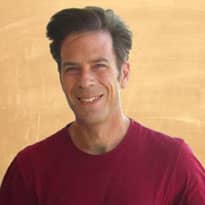
About Max Lindenman
Max Lindenman is a freelance writer, based in Phoenix. He has been published in National Catholic Reporter, Busted Halo and Salon.
Patheos Explore the world's faith through different perspectives on religion and spirituality! Patheos has the views of the prevalent religions and spiritualities of the world.
Ad-Free & Subscriber Log-In Subscription Support
- About Us
- 2026 Calendar
- Videos
- Podcasts
- Library of World Religions
- Faith In Media Tracker
- Advertise With Us
- Write for Us
- Privacy Policy
- Terms of Service
- Do Not Sell My Data
- Contact Us
- Radiant Digital
- Manage Newsletter Subscriptions
- Unsubscribe From Notifications
- Sitemap
Copyright 2008-2026, Patheos. All rights reserved.
Subscription Support Ad-Free & Subscriber Log-In
Follow Patheos