
BuddhistCatholicContemplativeEvangelicalGeneral ChristianHinduJewishLatter-day SaintMuslimNew VisionsProgressive Christian
Beliefs
- Buddhist
- Catholic
- Contemplative
- Evangelical
- General Christian
- Hindu
- Jewish
- Latter-day Saint
- More Voices
- Muslim
- New Visions
- Pagan
- Progressive Christian
Topics
- Religion News
- Food and Religion
- Sports and Religion
- Religious Art
- Religious Music and Entertainment
- Religious Events
- History and Religion
- Style and Religion
- Politics and Religion
- Women in Religion
- Recreation Outdoors and Religion
- Business Finance and Religion
- Careers Workplace and Religion
- Education and Religion
- Family Parenting and Religion
- Health Fitness and Religion
- Home and Religion
- Relationships and Religion
- Technology and Religion
- Travel and Religion
Columnists
- Buddhist Columnists
- Business Finance and Religion Columnists
- Careers Workplace and Religion Columnists
- Catholic Columnists
- Contemplative Columnists
- Education and Religion Columnists
- Evangelists Columnists
- Family Parenting and Religion Columnists
- General Christian Columnists
- Health Fitness and Religion Columnists
- Hindu Columnists
- History and Religion Columnists
- Home and Religion Columnists
- Jewish Columnists
- More Voices Columnists
- Latter Day Columnists
- Muslim Columnists
- New Visions Columnists
- Nonreligious Columnists
- Pagan Columnists
- Politics and Religion Columnists
- Progressive Columnists
- Recreation Outdoors and Religion Columnists
- Relationships and Religion Columnists
- Religion News Columnists
- Religious Art Columnists
- Religious Events Columnists
- Religious Music and Entertainment Columnists
- Sports and Religion Columnists
- Style and Religion Columnists
- Technology and Religion Columnists
- Travel and Religion Columnists
- Women in Religion Columnists
Resource Library
- 2026 Calendar
- Library of World Religions
- The 100 Most Holy Places on Earth
- Patheos Answers
- Podcasts
- Videos
- Faith Leaders Database
- Anglican Episcopalian
- Bahai
- Baptist
- Buddhism
- Christianity
- Confucianism
- Eastern Orthodoxy
- Hinduism
- Holiness and Pentecostal
- ISKCON
- Islam
- Judaism
- Lutheran
- Methodist
- The Church of Jesus Christ of Latter-day Saints
- New Age
- Paganism
- Presbytarian and Reformed
- Protestantism
- Religion Behind the Scenes
- Roman Catholic
- Scientology
- Shia Islam
- Sikhism
- Sufism
- Sunni Islam
- Taoism
- Zen
- See all religions
Research Tools
 Ad-Free & Subscriber Log-In Subscription Support
Ad-Free & Subscriber Log-In Subscription Support
Follow Patheos 

- Trending:
- Forgiveness
- |
- Marriage
- |
- Consciousness
- |
- Death Penalty
- |
- Election
- |
- Halloween
Catholic
An Orienting “Disorientation”: A Book Review
October 22, 2010
By Julie Davis
 "Okay," some might say, "Utilitarianism may be poison in politics, but what about in our personal lives? If we restrict this theory to individual decisions, surely what brings happiness for the largest number of people must be right." When Granny is in a nursing home, having lost her marbles, and lies in bed drooling all day, what shall we say? Granny has no real quality of life. She demands constant care. Constant care is expensive. Is it not more merciful (and cheaper) to simply assist her to her final journey home? She will die soon anyway. Is it not better for all the rest of the family, indeed for all the rest of society for Granny to go? ~ Dwight Longenecker, “Utilitarianism”
Never in a million years would it have occurred to me that a great motivation behind the euthanasia movement is efficiency. Or, to be more accurate, “Utilitarianism.”
Indeed, part of the motivation actually is misplaced kindness. But the rest, yep, it is Utilitarianism.
There is a great comfort in knowing what to call something, in having a definition on which to hang ideas that you have encountered. It helps clear the mind, helps one wrestle with new concepts, and helps one evaluate what is truthful and what is erroneous in the concept.
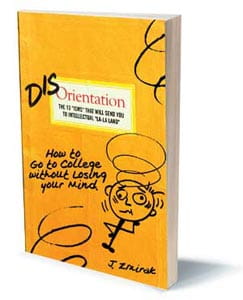
For everyone who has ever had a discussion where they were left grappling because someone has pushed an idea on them that they knew wasn't "quite right" but weren't sure exactly why, I present the grappling hook: Disorientation: How to Go to College Without Losing Your Mind.
Disorientation is specifically designed to help educate young Catholics on the threshold of leaving home for college for the "Wild West" of modern ideologies with which they will be bombarded upon entering the classrooms. The idea is that if they know what something is (progressivism, multiculturalism, hedonism, and so forth) then they can identify it up front and not fall prey to replacing solid Catholic teachings with skewed thinking.
Fourteen essays by top Catholic writers explain and put into context these “isms” and ideologies, which so many people rarely think about because they are entrenched in our society. The book is edited by John Zmirak, who provides a tongue-in-cheek light touch that permeates the book and keeps it from becoming too heavy. (For the record, I think this is a good thing, especially if you are aiming at the college-bound.)
Now, I have no idea if you can get a college student to read this book, but if you've got such a creature in your family, it is surely worth a try. For that matter, Disorientation is worth picking up just to get your own education up-to-date. I was darned glad to be working my way through it at about the same time that it fell to my lot to read God Is Not One. I knew there was a lot wrong with the latter, and I was helped in identifying exactly what by reading some of these essays.
Let's face it. Chances are that your child has been exposed to these ideologies long before heading off for college. Most of those ideas are communicated through television, movies, and pals who they see every day. Talking about these things intelligently at home is the best way to make sure that everyone understands exactly why the teachings of the Church are true, and where those other ideas have skewed both truth and reason.
If your kids are going to college, go ahead and get them a copy. When it comes to understanding how our culture thinks versus how the Church thinks, there is no time like the present.
The sentimentalist, anxious to denounce and to distance himself, does not stop to consider that the great reformers within the Church -- St. Francis, St. Teresa of Avila, St. Catherine of Siena, and others -- did not flounce away from what was difficult. They remained, and the profound insights gained through their struggles have instructed and enhanced the "worthy idea" of faith. Dismissing it all with a few overused buzzwords, a sentimentalist runs his premium brain on the cheap and inefficient fuel of superior feeling but he cannot be accounted a thinker who enhances understanding. And his destination is up for grabs too.
Article Continued On Next Page
Page: 1 of 2
10/22/2010 4:00:00 AM
Catholic
Books
education
literature
Media
Philosophy
Roman Catholicism
more at patheos
1

2

3

4

Revelation's Jesus Isn't the Lamb — He's the Destroyer
About
Patheos Explore the world's faith through different perspectives on religion and spirituality! Patheos has the views of the prevalent religions and spiritualities of the world.
Ad-Free & Subscriber Log-In Subscription Support
- About Us
- 2026 Calendar
- Videos
- Podcasts
- Library of World Religions
- Faith In Media Tracker
- Advertise With Us
- Write for Us
- Privacy Policy
- Terms of Service
- Do Not Sell My Data
- Contact Us
- Radiant Digital
- Manage Newsletter Subscriptions
- Unsubscribe From Notifications
- Sitemap
Copyright 2008-2026, Patheos. All rights reserved.
Subscription Support Ad-Free & Subscriber Log-In
Follow Patheos