
BuddhistCatholicContemplativeEvangelicalGeneral ChristianHinduJewishLatter-day SaintMuslimNew VisionsProgressive Christian
Beliefs
- Buddhist
- Catholic
- Contemplative
- Evangelical
- General Christian
- Hindu
- Jewish
- Latter-day Saint
- More Voices
- Muslim
- New Visions
- Pagan
- Progressive Christian
Topics
- Religion News
- Food and Religion
- Sports and Religion
- Religious Art
- Religious Music and Entertainment
- Religious Events
- History and Religion
- Style and Religion
- Politics and Religion
- Women in Religion
- Recreation Outdoors and Religion
- Business Finance and Religion
- Careers Workplace and Religion
- Education and Religion
- Family Parenting and Religion
- Health Fitness and Religion
- Home and Religion
- Relationships and Religion
- Technology and Religion
- Travel and Religion
Columnists
- Buddhist Columnists
- Business Finance and Religion Columnists
- Careers Workplace and Religion Columnists
- Catholic Columnists
- Contemplative Columnists
- Education and Religion Columnists
- Evangelists Columnists
- Family Parenting and Religion Columnists
- General Christian Columnists
- Health Fitness and Religion Columnists
- Hindu Columnists
- History and Religion Columnists
- Home and Religion Columnists
- Jewish Columnists
- More Voices Columnists
- Latter Day Columnists
- Muslim Columnists
- New Visions Columnists
- Nonreligious Columnists
- Pagan Columnists
- Politics and Religion Columnists
- Progressive Columnists
- Recreation Outdoors and Religion Columnists
- Relationships and Religion Columnists
- Religion News Columnists
- Religious Art Columnists
- Religious Events Columnists
- Religious Music and Entertainment Columnists
- Sports and Religion Columnists
- Style and Religion Columnists
- Technology and Religion Columnists
- Travel and Religion Columnists
- Women in Religion Columnists
Resource Library
- 2026 Calendar
- Library of World Religions
- The 100 Most Holy Places on Earth
- Patheos Answers
- Podcasts
- Videos
- Faith Leaders Database
- Anglican Episcopalian
- Bahai
- Baptist
- Buddhism
- Christianity
- Confucianism
- Eastern Orthodoxy
- Hinduism
- Holiness and Pentecostal
- ISKCON
- Islam
- Judaism
- Lutheran
- Methodist
- The Church of Jesus Christ of Latter-day Saints
- New Age
- Paganism
- Presbytarian and Reformed
- Protestantism
- Religion Behind the Scenes
- Roman Catholic
- Scientology
- Shia Islam
- Sikhism
- Sufism
- Sunni Islam
- Taoism
- Zen
- See all religions
Research Tools
 Ad-Free & Subscriber Log-In Subscription Support
Ad-Free & Subscriber Log-In Subscription Support
Follow Patheos 

- Trending:
- Forgiveness
- |
- Marriage
- |
- Consciousness
- |
- Death Penalty
- |
- Election
- |
- Halloween
Evangelical
New Challenges, New Opportunities for Suburban Churches
May 05, 2011 by Samuel Atchison
A number of studies have suggested that the greatest predictor of violent crime among adult males is joblessness. The greatest predictor of crime among youth is the absence of the father from the home. As criminologist Robert J. Sampson concluded in a 1987 study that linked joblessness among men with family disruption and violent crime, "These effects are independent of income, region, race and age composition, density, city size, and welfare benefits."
In recent years, multiple federal initiatives have been developed to address these issues, virtually all of them focused primarily on urban minority populations. While a number of promising program models have been developed in response to these initiatives, many have fallen victim to funding cutbacks associated with the ever-increasing federal deficit. Many of the most innovative programs have leveraged the resources of urban communities of faith, which are now being forced to scramble for smaller outlays of public funds.
What has not been heard to an appreciable degree is the voice of the suburban church. Partnerships between urban and suburban churches, to be sure, have become increasingly common over the past two decades. Yet the predominant dynamic in these relationships has generally been one in which the suburban church (the big brother) supplies money and other resources to the urban church (the little brother) to subsidize the latter's ministry.
What has gone unnoticed has been the flight of the poor into the suburbs. According to a 2010 study of the Brookings Institute, the majority of all racial and ethnic groups in large metropolitan areas now live outside the city limits, even as young professionals, attracted by knowledge-based jobs and shorter commutes, have returned to the cities. Among the effects of this population shift, according to a report in the Huffington Post, is that "The suburbs now have the largest poor population in the country." Not coincidentally, this population shift parallels the decade-long expansion of youth gangs into suburban and even exurban areas around the country.
The net effect is that the challenges faced by urban pastors and their congregations for generations are now being placed at the feet of their suburban counterparts, and without the social service infrastructure supports common in city governments. Among other things, this suggests a role reversal in the big brother-little brother congregational dynamic, with urban congregations providing technical assistance to their more well-heeled but less experienced brethren in the 'burbs.
Even more important is the need for many in the suburbs to rethink their congregation's mission, vision and role. This may require soul-searching from church leaders as they reassess such issues as crime, punishment and poverty within the theological framework of sin and redemption. It may also cause a reexamination of the church's role in (suburban) civil society, particularly as it relates to advocacy on behalf of those whom Jesus called "the least of these."
In "An Open Letter to the Suburban Church," Bob Lupton, founder and president of Atlanta-based FCS Urban Ministries, addresses this challenge succinctly:
"Herein lies the new challenge for the 21st century church. How does the suburban church mobilize its potential to lead the way in hospitality and reconciliation? White flight was a less than noble response to racial integration in past generations. This time we have the opportunity to get it right. While I desire very much to preserve our urban-suburban church partnerships, I realize that the new mission field for our suburban ministry partners lies much closer to their home than in years past. The need for well-managed affordable housing is shifting out from the city. The supportive services—job training, daycare, ESL classes, health care—which have traditionally been concentrated in the center-city are now needed in the suburbs. The good news is this: filling your pews are the high-capacity professionals to whom God has entrusted all the talents needed to accomplish the work of the Kingdom. Deal-makers and bankers, teachers and physicians, politicians and administrators—the very people equipped to meet these new challenges—are poised for redemptive action. What is needed now is a compelling, mobilizing vision.
"Look around you. Do you see new faces with different hues? Do you hear unfamiliar languages being spoken in the grocery store? Are signs appearing on small businesses that you cannot read? If so, this is the announcement of a new era of opportunity for your church. It is a divine invitation to extend a welcoming hand to these newcomers, share your facilities, assist them to start new churches, hire their workers, patronize their businesses, teach them our language, embrace them as neighbors. This is your time to "let your light so shine before others [in your neighborhood] that when they see your good works they will glorify your Father who is in heaven."
Suburban churches stand before an extraordinary opportunity at a moment of extraordinary need. As the stream of federal funding runs dry, these churches can bring their money, their resources and their talents to supply the lack, transforming their ministries to the care of the poor and to the glory of God.
5/5/2011 4:00:00 AM
Evangelical
A Matter of Color
History
Prison
Christianity
Black Church
Evangelicalism
more at patheos
1
Pope Leo says He's Not Afraid of Trump.
2

Short Reviews of Some 2026 Academy Award Nominated Movies
3

LA Mayoral Primary: The Challenges Facing the Candidates
4

SUFFOCATION BY DESIGN : The Body Does Not Lie
About Samuel Atchison
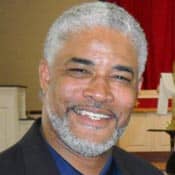
Rev. Samuel K. Atchison has served as a welfare policy analyst, social services administrator, social policy consultant, and prison chaplain. He is the president of the Trenton Ecumenical Area Ministry (TEAM), which serves as a coordinating agency for the community outreach efforts of churches in Mercer County, New Jersey. He is also a community partnership manager with the Amachi Mentoring Coalition Project (AMCP), a program of the Philadelphia Leadership Foundation that provides mentoring to children impacted by incarceration.
Patheos Explore the world's faith through different perspectives on religion and spirituality! Patheos has the views of the prevalent religions and spiritualities of the world.
Ad-Free & Subscriber Log-In Subscription Support
- About Us
- 2026 Calendar
- Videos
- Podcasts
- Library of World Religions
- Faith In Media Tracker
- Advertise With Us
- Write for Us
- Privacy Policy
- Terms of Service
- Do Not Sell My Data
- Contact Us
- Radiant Digital
- Manage Newsletter Subscriptions
- Unsubscribe From Notifications
- Sitemap
Copyright 2008-2026, Patheos. All rights reserved.
Subscription Support Ad-Free & Subscriber Log-In
Follow Patheos