
BuddhistCatholicContemplativeEvangelicalGeneral ChristianHinduJewishLatter-day SaintMuslimNew VisionsProgressive Christian
Beliefs
- Buddhist
- Catholic
- Contemplative
- Evangelical
- General Christian
- Hindu
- Jewish
- Latter-day Saint
- More Voices
- Muslim
- New Visions
- Pagan
- Progressive Christian
Topics
- Religion News
- Food and Religion
- Sports and Religion
- Religious Art
- Religious Music and Entertainment
- Religious Events
- History and Religion
- Style and Religion
- Politics and Religion
- Women in Religion
- Recreation Outdoors and Religion
- Business Finance and Religion
- Careers Workplace and Religion
- Education and Religion
- Family Parenting and Religion
- Health Fitness and Religion
- Home and Religion
- Relationships and Religion
- Technology and Religion
- Travel and Religion
Columnists
- Buddhist Columnists
- Business Finance and Religion Columnists
- Careers Workplace and Religion Columnists
- Catholic Columnists
- Contemplative Columnists
- Education and Religion Columnists
- Evangelists Columnists
- Family Parenting and Religion Columnists
- General Christian Columnists
- Health Fitness and Religion Columnists
- Hindu Columnists
- History and Religion Columnists
- Home and Religion Columnists
- Jewish Columnists
- More Voices Columnists
- Latter Day Columnists
- Muslim Columnists
- New Visions Columnists
- Nonreligious Columnists
- Pagan Columnists
- Politics and Religion Columnists
- Progressive Columnists
- Recreation Outdoors and Religion Columnists
- Relationships and Religion Columnists
- Religion News Columnists
- Religious Art Columnists
- Religious Events Columnists
- Religious Music and Entertainment Columnists
- Sports and Religion Columnists
- Style and Religion Columnists
- Technology and Religion Columnists
- Travel and Religion Columnists
- Women in Religion Columnists
Resource Library
- 2026 Calendar
- Library of World Religions
- The 100 Most Holy Places on Earth
- Patheos Answers
- Podcasts
- Videos
- Faith Leaders Database
- Anglican Episcopalian
- Bahai
- Baptist
- Buddhism
- Christianity
- Confucianism
- Eastern Orthodoxy
- Hinduism
- Holiness and Pentecostal
- ISKCON
- Islam
- Judaism
- Lutheran
- Methodist
- The Church of Jesus Christ of Latter-day Saints
- New Age
- Paganism
- Presbytarian and Reformed
- Protestantism
- Religion Behind the Scenes
- Roman Catholic
- Scientology
- Shia Islam
- Sikhism
- Sufism
- Sunni Islam
- Taoism
- Zen
- See all religions
Research Tools
 Ad-Free & Subscriber Log-In Subscription Support
Ad-Free & Subscriber Log-In Subscription Support
Follow Patheos 

- Trending:
- Forgiveness
- |
- Marriage
- |
- Consciousness
- |
- Death Penalty
- |
- Election
- |
- Halloween
Leaving Conflict Behind: An Interview with Karl Giberson
April 01, 2011
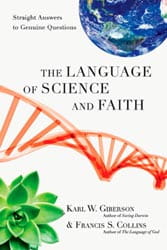 Karl Giberson and Francis Collins share a passion for reconciling science—particularly evolutionary theory—with Christian faith. Their new book, The Language of Science and Faith, pulls together the Frequently Asked Questions that were elicited by Francis Collins' earlier book, The Language of God, and presents an organized question-answer discussion of these questions. We had a few more questions of our own, which Karl Giberson has answered via an email interview.
What kinds of fears do you encounter when you present theistic evolution?
Evangelicals are fearful of theistic evolution for two reasons: 1) "Evolution" is understood on main street to be an "origins story for atheists," rather than a "scientific theory." Trying to make evolution, understood in this way, a part of God's creative process seems as oxymoronic as talking about "Christian Pornography." 2) Once people open up to the possibility of theistic evolution they realize they have to change some of their ideas about the Bible. This can often seem like a slippery slope that will lead to a loss of confidence in the Bible as a whole, including the central teachings of the New Testament.
How does BioLogos address those fears?
Not everyone has the same fears so we employ a variety of strategies that Christians have developed over the years. Many people are drawn by the simple fact that the leaders of BioLogos are Christians and that is enough. They simply need to discover that one can embrace evolution and still be a Christian and we embody that possibility. For others, however, education is needed to help them understand that science is not anti-religious, that a literal reading of Genesis is not appropriate, or that there is really no evidence for young earth creationism, the most popular alternative to the BioLogos view.
Can you explain further the ramifications of the genome project to our understanding of God's involvement in creation?
The most important contribution would be the way that the genome insights establish that humans share a common ancestor with other animals. We have non-functioning bits of useless DNA that are also found in other animals. An example is our gene to make Vitamin C. It is broken and doesn't work. When we find the same non-functioning broken gene in different animals, that is evidence that those animals had a common ancestor who passed down the broken gene.
In the BioLogos model, when and where does the idea of the soul come in?
BioLogos has no particular model for this. Different theological traditions can thus bring their own ideas to theistic evolution and fit them in. There is an increasingly popular theological tradition, going back to the Hebrew understanding of the person, that the "soul" is best understood as the "self" or the "pattern of the person." In this view, we do not "have" souls, we "are" souls. On the other hand, there is the more popular view—and official Catholic doctrine—that the soul is a separate part of us, something that is "added" in some sense to our physical bodies. In this view God "inserts" the soul at some point. Both views are compatible with the idea that we evolved.
Can you say more about what it means to be made in the image of God?
The image of God is a much-discussed part of theology. But, despite all that discussion, there is no agreement on what it means! Some people, without thinking about it too much, say things like "I am made in the image of God and not the image of a monkey," implying that God's image is our physical appearance. For me, I think we "Image" God when we are at our best expression of his nature, which is love.
If our origins are a natural evolution of what God began, what implications might this have for our destiny? Are we "going" somewhere evolutionarily speaking?
This is hard to say. There is no evidence that humans are evolving in any meaningful direction. And the conditions are not right for us to be evolving. Evolution occurs primarily when there are major challenges to reproduction that reward certain traits and not others. If, for example, tall people could find mates and have kids but short people could not, then the human race would become taller. But the number of kids most people have is based on other factors—careers, religious beliefs, etc.
Article Continued On Next Page
Page: 1 of 2
4/1/2011 4:00:00 AM
Book Club
Books
Creationism
Darwin
evolution
literature
Mainline Protestantism
Reason
science
Christianity
Evangelicalism
more at patheos
1

The literary puzzle of Isaiah 1
2
3

4

Real-World Skills Every Kid Needs
About
Patheos Explore the world's faith through different perspectives on religion and spirituality! Patheos has the views of the prevalent religions and spiritualities of the world.
Ad-Free & Subscriber Log-In Subscription Support
- About Us
- 2026 Calendar
- Videos
- Podcasts
- Library of World Religions
- Faith In Media Tracker
- Advertise With Us
- Write for Us
- Privacy Policy
- Terms of Service
- Do Not Sell My Data
- Contact Us
- Radiant Digital
- Manage Newsletter Subscriptions
- Unsubscribe From Notifications
- Sitemap
Copyright 2008-2026, Patheos. All rights reserved.
Subscription Support Ad-Free & Subscriber Log-In
Follow Patheos