
BuddhistCatholicContemplativeEvangelicalGeneral ChristianHinduJewishLatter-day SaintMuslimNew VisionsProgressive Christian
Beliefs
- Buddhist
- Catholic
- Contemplative
- Evangelical
- General Christian
- Hindu
- Jewish
- Latter-day Saint
- More Voices
- Muslim
- New Visions
- Pagan
- Progressive Christian
Topics
- Religion News
- Food and Religion
- Sports and Religion
- Religious Art
- Religious Music and Entertainment
- Religious Events
- History and Religion
- Style and Religion
- Politics and Religion
- Women in Religion
- Recreation Outdoors and Religion
- Business Finance and Religion
- Careers Workplace and Religion
- Education and Religion
- Family Parenting and Religion
- Health Fitness and Religion
- Home and Religion
- Relationships and Religion
- Technology and Religion
- Travel and Religion
Columnists
- Buddhist Columnists
- Business Finance and Religion Columnists
- Careers Workplace and Religion Columnists
- Catholic Columnists
- Contemplative Columnists
- Education and Religion Columnists
- Evangelists Columnists
- Family Parenting and Religion Columnists
- General Christian Columnists
- Health Fitness and Religion Columnists
- Hindu Columnists
- History and Religion Columnists
- Home and Religion Columnists
- Jewish Columnists
- More Voices Columnists
- Latter Day Columnists
- Muslim Columnists
- New Visions Columnists
- Nonreligious Columnists
- Pagan Columnists
- Politics and Religion Columnists
- Progressive Columnists
- Recreation Outdoors and Religion Columnists
- Relationships and Religion Columnists
- Religion News Columnists
- Religious Art Columnists
- Religious Events Columnists
- Religious Music and Entertainment Columnists
- Sports and Religion Columnists
- Style and Religion Columnists
- Technology and Religion Columnists
- Travel and Religion Columnists
- Women in Religion Columnists
Resource Library
- 2026 Calendar
- Library of World Religions
- The 100 Most Holy Places on Earth
- Patheos Answers
- Podcasts
- Videos
- Faith Leaders Database
- Anglican Episcopalian
- Bahai
- Baptist
- Buddhism
- Christianity
- Confucianism
- Eastern Orthodoxy
- Hinduism
- Holiness and Pentecostal
- ISKCON
- Islam
- Judaism
- Lutheran
- Methodist
- The Church of Jesus Christ of Latter-day Saints
- New Age
- Paganism
- Presbytarian and Reformed
- Protestantism
- Religion Behind the Scenes
- Roman Catholic
- Scientology
- Shia Islam
- Sikhism
- Sufism
- Sunni Islam
- Taoism
- Zen
- See all religions
Research Tools
 Ad-Free & Subscriber Log-In Subscription Support
Ad-Free & Subscriber Log-In Subscription Support
Follow Patheos 

- Trending:
- Forgiveness
- |
- Marriage
- |
- Consciousness
- |
- Death Penalty
- |
- Election
- |
- Halloween
Karen Armstrong on "The Bible"
January 20, 2010
By David Crumm
The Bible is in danger of becoming a dead or an irrelevant letter; it is being distorted by claims for its literal infallibility; it is derided -- often unfairly -- by secular fundamentalists; it is also becoming a toxic arsenal that fuels hatred and sterile polemic...
But because scripture has been so flagrantly abused in this way, Jews, Christians and Muslims have a duty to establish a counter-narrative that emphasizes the benign features of their exegetical traditions. Interfaith understanding and cooperation are now essential to our survival." (From Karen Armstrong's Books That Changed The World: The Bible)
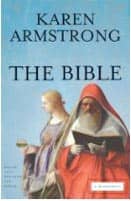 You probably know Karen Armstrong already because you've seen her face and heard her British accent pop up in countless documentaries about religion, history, and scriptures. As a young woman in the 1960s, she became a Catholic nun for seven years, then left her order to pursue a career in education. She is largely self-taught in the fields of religious and scriptural studies through decades of research. Her most important role is that of a highly specialized journalist. In her various books, she describes everything from life in a convent, to life with epilepsy -- to the life of the Prophet Muhammad, the Buddha, and the nature of religious fundamentalism.
What's most important about her work is that she pursues each book in a style that everyday readers can understand. Here, then, is my conversation with Karen Armstrong:
You probably know Karen Armstrong already because you've seen her face and heard her British accent pop up in countless documentaries about religion, history, and scriptures. As a young woman in the 1960s, she became a Catholic nun for seven years, then left her order to pursue a career in education. She is largely self-taught in the fields of religious and scriptural studies through decades of research. Her most important role is that of a highly specialized journalist. In her various books, she describes everything from life in a convent, to life with epilepsy -- to the life of the Prophet Muhammad, the Buddha, and the nature of religious fundamentalism.
What's most important about her work is that she pursues each book in a style that everyday readers can understand. Here, then, is my conversation with Karen Armstrong:
David: Over the years, we've talked about a couple of your earlier books and I know that you've never shied away from tackling really challenging topics. Like, A History of God? It was pretty bold to take on such a cosmic challenge! But, I've got to say as we start talking about this new book: I didn't expect the story that I found between the covers of The Bible. I was expecting that you had written a standard history of how the Bible came to be. But that isn't what you wrote. You wrote a biography of the Bible. You wrote about how the Bible's character was formed through the millennia. You wrote a history of the way that people have regarded the nature of this book. How did such an unusual project get started?
Karen: "A biography of the Bible" -- that's a very good way of putting it. This is part of a series of biographies of seminal books that have affected the world. The catchy British title of this is Books That Shook the World. So, others have written about The Origin of Species and The Rights of Man, and someone else did The Quran. And I was handed The Bible and I felt that I had drawn the short straw because the Bible has had a rather longer story than, let's say, The Rights of Man. It has a very long history and it was much more difficult to write a book about all of that. So, my approach to this was to write about how the Bible has been interpreted since it was written. And I don't think the editors of the series realized what a mammoth task that was.
David: The single most surprising thing in this new book, I think for many of your readers, will be this argument that you outline that says: There was no single way of reading the Bible through most of its history. In other words, down through history, it's not as though there was a single way to interpret its meaning. There were many! And, you point out in your book that even the people who put together the original text of the Bible purposely included differing accounts from the sacred tradition so people could hear various versions of the ancient accounts. That's true, you point out, even in the Pentateuch, the first five books of the Bible.
Karen: Yes, it's true. From the very beginning, there was no attempt at a single orthodoxy with the Bible. The way the editors of the Bible incorporated these various diverse traditions in the Pentateuch gave us very different takes -- all in the same book -- on the creation story, the stories of the patriarchs, the story of the exodus from Egypt. Very different stories were put together in the Bible. And in the New Testament, you have four distinctive views of Jesus, each with distinctive slants on Jesus. There was no attempt to tie down a single meaning. The assumption was that, because God is infinite, the Bible can't be tied down to a single meaning.
Article Continued On Next Page
Page: 1 of 3
1/20/2010 5:00:00 AM
Sacred Texts
Authority
literature
Meaning
Christianity
Protestantism
Roman Catholicism
Islam
Judaism
more at patheos
1
Is This “Culture War” Catholicism—or Evangelization?
2
Is the Church responsible for the surge in measles in Utah?
3
Humans Were Never Meant to Run on Empty: God Knew It First
4
A Way to Solve the Population Problem
About
Patheos Explore the world's faith through different perspectives on religion and spirituality! Patheos has the views of the prevalent religions and spiritualities of the world.
Ad-Free & Subscriber Log-In Subscription Support
- About Us
- 2026 Calendar
- Videos
- Podcasts
- Library of World Religions
- Faith In Media Tracker
- Advertise With Us
- Write for Us
- Privacy Policy
- Terms of Service
- Do Not Sell My Data
- Contact Us
- Radiant Digital
- Manage Newsletter Subscriptions
- Unsubscribe From Notifications
- Sitemap
Copyright 2008-2026, Patheos. All rights reserved.
Subscription Support Ad-Free & Subscriber Log-In
Follow Patheos